Elderly Koreans Must Work Until 73 to Survive as National Pension Pays Only 660,000 Won a Month
- Input
- 2025-11-27 08:48:26
- Updated
- 2025-11-27 08:48:26
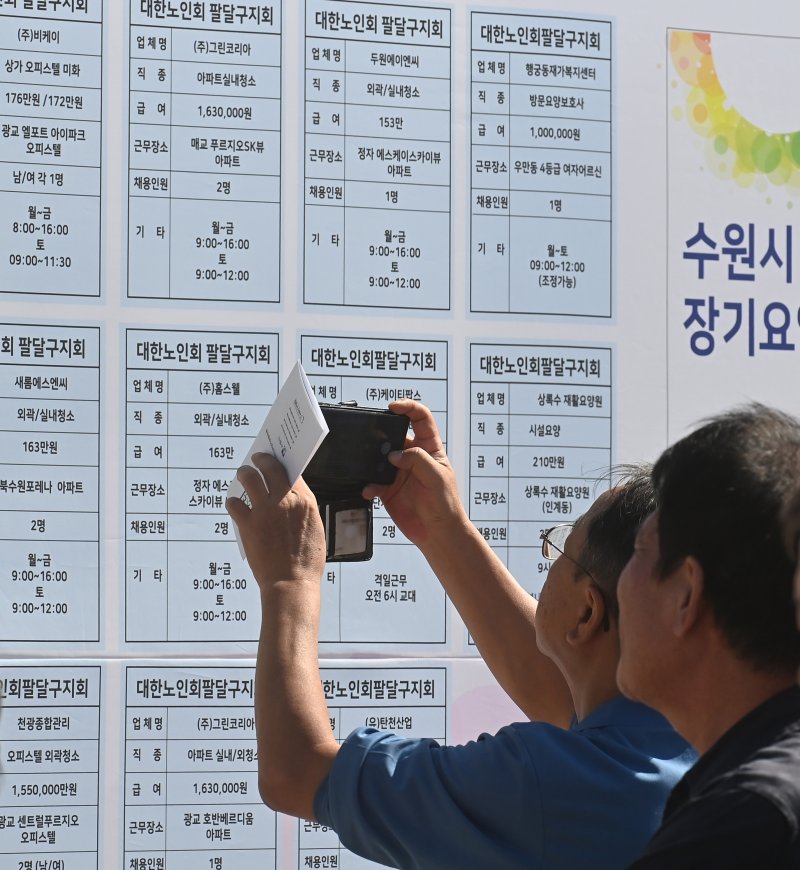
[Financial News] Elderly Koreans are working longer and more frequently than their counterparts in any other Organization for Economic Cooperation and Development (OECD) member country.
Fifty-four percent of working seniors say they do so "to earn a living."
According to the report 'National Pension and Labor Supply Among the Elderly' by Yujin Oh, a senior researcher at the National Pension Research Institute, Korea will become a super-aged society in 2025, with 20.3% of its population aged 65 or older. In particular, the employment rate for those 65 and older is 37.3% as of 2023, far exceeding the OECD average of 13.6%. This rate is also much higher than Japan’s 25.3%, making Korea number one among member countries.
This high employment rate is attributed to a 'struggle for survival.' The National Pension Service (NPS) alone is insufficient to cover even basic living expenses. Additionally, the so-called 'Income Crevasse'—the income gap between retirement and the start of pension payments—forces the elderly to continue working.
According to Statistics Korea, the average age at which seniors hope to continue working is 73.4 years. The main reason for wanting to work is 'to help cover living expenses' (54.4%), which far outweighs reasons such as 'the joy of working' (36.1%) or 'to relieve boredom' (4.0%). Clearly, most elderly work out of necessity.
Average Retirement Age Is 52, Pension Starts at 63... At Least a 10-Year Gap
The fundamental cause of this situation is the severe inadequacy of public pensions. As of 2024, the average monthly NPS benefit is only about 660,000 won, less than half the minimum monthly living cost for a single-person household, which is 1.34 million won. In other words, it is impossible for elderly Koreans to make ends meet on the pension alone, so they must continue working even after becoming eligible for NPS benefits.
The 'Income Crevasse'—the gap between the legal retirement age and the actual age of retirement—also poses a serious problem. Although the legal retirement age is 60, the average age at which people leave their main job is just 52.9 (as of 2025). Meanwhile, the age at which people begin to receive NPS benefits is 63 for those born between 1961 and 1964, and will gradually rise to 65 for those born after 1969. This means there can be a gap of at least 10 years between retirement and pension eligibility.
Yujin Oh, senior researcher, noted that unlike previous overseas studies which found that public pensions reduce labor supply and encourage earlier retirement, the NPS in Korea has little or no effect on reducing labor supply. This is because the pension benefit is so low that it does not significantly influence the decision to retire.
Ultimately, elderly Koreans must work even if they receive a pension, and many must keep working until they become eligible for benefits. Oh emphasized that, beyond simply extending the retirement age, there is an urgent need for policies that provide quality jobs to those in their early 50s who are forced out of their main jobs, and that can help fill the income gap before pension eligibility.
[email protected] Hee-sun Kim Reporter