"Large and Small White Spots on My Body"... Lee Ji-hyun, Now a Hairdresser, Reveals Rare Disease [Health Talk]
- Input
- 2025-11-27 07:10:38
- Updated
- 2025-11-27 07:10:38
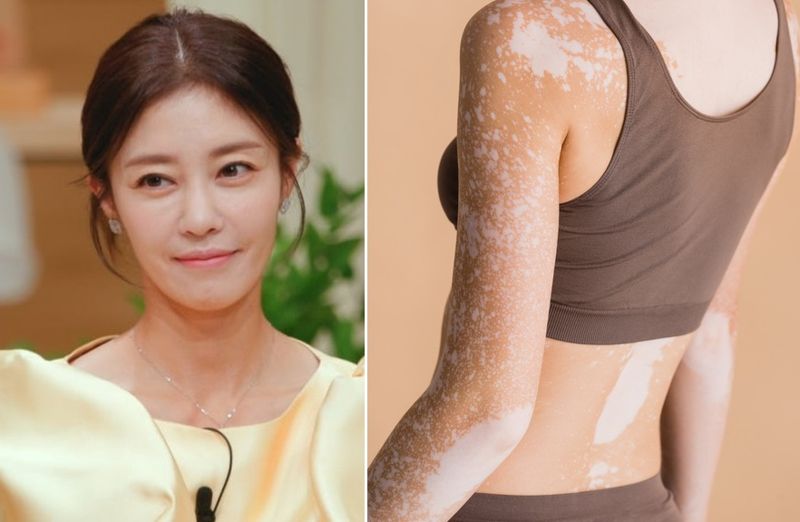
[Financial News] Former Jewelry member and singer Lee Ji-hyun has revealed her struggle with a rare disease.
On the 26th, Lee Ji-hyun shared on her social media, "I've developed many large and small white spots on my body. After being obsessed with beauty for two years, I ended up with vitiligo. It seems nothing in life comes for free."
She continued, "I decided to allow myself to feel sad and depressed for just one day when I received the biopsy results. Although it's an incurable disease, fortunately, there is no pain—it's just the appearance of my skin that is affected. Once I let go of concerns about my looks, I realized it's not such a big deal," expressing her positive outlook.
She added, "The reality of having to undergo hospital treatment for an unknown length of time is even more difficult." She encouraged others, saying, "Let's share information with those who are also living with vitiligo."
Meanwhile, Lee Ji-hyun is raising a son and a daughter on her own after two divorces. She recently made headlines by sharing her new career as a hairdresser.
Finally, she stated, "Although I am not a perfect mother, I face each morning bravely, overcoming illness and hardship. Let's all take care of our health and stay strong, moms!"
In related news, actor Ku Sung-hwan also revealed his vitiligo treatment journey on the show 'I Live Alone.' He shared, "Since I postponed treatment, the white spots have gradually increased."
The Same Disease Michael Jackson Had
Vitiligo is a condition in which melanocytes are lost, causing parts of the skin to turn white. It affects about 1% of the population in Korea.
Vitiligo can occur in anyone from newborns to people in their 80s, but is most common between the ages of 10 and 30. The exact cause is unknown, but genetic predisposition, autoimmune reactions, reduced antioxidant capacity, and external stimuli (physical or chemical) are believed to play a role.
In particular, vitiligo that appears in adulthood is often triggered by physical trauma, sunburn from ultraviolet rays, pregnancy, or childbirth. Psychological stress can also be a contributing factor.
While vitiligo is not a life-threatening disease, if not treated early, it can be difficult to manage and the affected areas may continue to spread, causing psychological distress.
Vitiligo is sometimes accompanied by other autoimmune diseases such as hypothyroidism, hyperthyroidism, diabetes mellitus, pernicious anemia, Addison's disease, alopecia areata, and systemic lupus erythematosus (SLE).
There is currently no complete cure for vitiligo. Treatments aim to alleviate symptoms or slow progression. The main approach is medication, which helps restore pigmentation by suppressing skin inflammation and is mainly applied to localized areas.
To stimulate melanocyte activity, ultraviolet B (UVB) phototherapy is sometimes used. In some cases, surgical treatments such as autologous skin grafts, where melanocytes are harvested from normal skin and transplanted, are performed.
Due to these characteristics, prevention and management of vitiligo are especially important. To prevent worsening, it is recommended to apply sunscreen to affected areas every 3 to 4 hours, regardless of the season. These areas lack melanin pigment, which protects the skin from ultraviolet rays, making them more susceptible to sunburn.
moon@fnnews.com Moon Young-jin Reporter