The Birth of the First Petrochemical Restructuring Case: A Signal for Industrial Renewal
- Input
- 2025-11-26 18:48:13
- Updated
- 2025-11-26 18:48:13
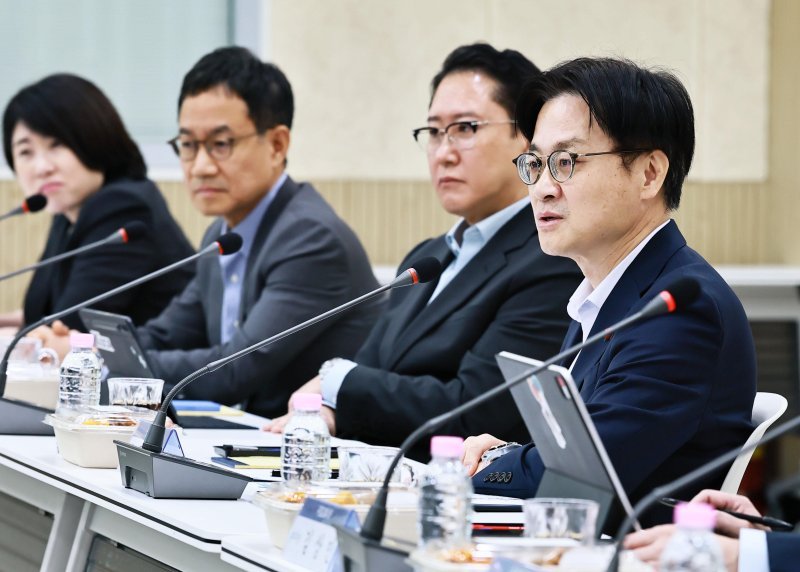
This merger is significant as it paves the way for further consolidation. To complete the national restructuring of the petrochemical sector, major deals in Yeosu and Ulsan Metropolitan City, in addition to Daesan, are essential. Minister Kim Jung-kwan’s direct visit to Yeosu, where he warned that companies failing to meet the end-of-December deadline would be excluded from government support, underscores this urgency.
Strong government resolve is necessary to achieve restructuring goals, as companies may otherwise hesitate and delay action. However, it is also important not to make the mistake of focusing solely on outcomes within a fixed deadline.
First, to accelerate restructuring, measures to minimize corporate losses must be considered. Simply closing facilities and cutting jobs will not encourage voluntary participation from companies. Realistic alternatives that companies can accept are needed, and incentives to promote restructuring should be guaranteed. The Korea Fair Trade Commission (KFTC) has signaled positively by announcing that it will expedite its review of this merger, taking into account the structural challenges facing the petrochemical industry.
More importantly, the strategy should go beyond downsizing and focus on dramatically enhancing industrial competitiveness. Rather than just reducing excess capacity, the industry must be restructured to survive price competition with China. Transitioning to high value-added products and eco-friendly materials, securing core technologies, and diversifying global supply chains are all mid- to long-term strategies that must accompany restructuring. It is encouraging that both companies have agreed to jointly pursue a shift toward high value-added and eco-friendly business structures.
In particular, this restructuring is not simply about corporate survival. It is also the key to reviving local economies where these companies are based. Regions such as Daesan, Yeosu, and Ulsan Metropolitan City, which host petrochemical industrial complexes, are economically intertwined with the petrochemical companies.
In recent years, the contraction of the petrochemical industry has brought local economies to the brink of collapse. As the sector struggled, local employment declined and partner companies also faced difficulties. This led to a lack of money circulating in the region, triggering a downturn in local businesses and shaking the foundations of local economies. It is hoped that this restructuring will restore competitiveness to the petrochemical industry and revitalize local economies.
Petrochemicals are a key pillar of our national economy. Building on this first restructuring case, we hope that agreements will soon be reached in Yeosu and Ulsan Metropolitan City as well. Achieving both immediate facility reductions and long-term competitiveness will ensure a sustainable future for the domestic petrochemical industry and local economies. Close consultation and coordination between the government and companies are essential to this end.
The government must implement robust policies to help companies turn crisis into opportunity, while driving the restructuring process forward.
Relevant ministries, including the Korea Fair Trade Commission (KFTC), should work together to swiftly remove obstacles in the restructuring process. By breaking down inter-ministerial barriers and establishing a one-stop support system, the government should create an environment where companies can focus solely on restructuring.