Is It Safe to Eat Napa Cabbage with Black Specks Like Sesame Seeds?
- Input
- 2025-11-26 13:54:21
- Updated
- 2025-11-26 13:54:21
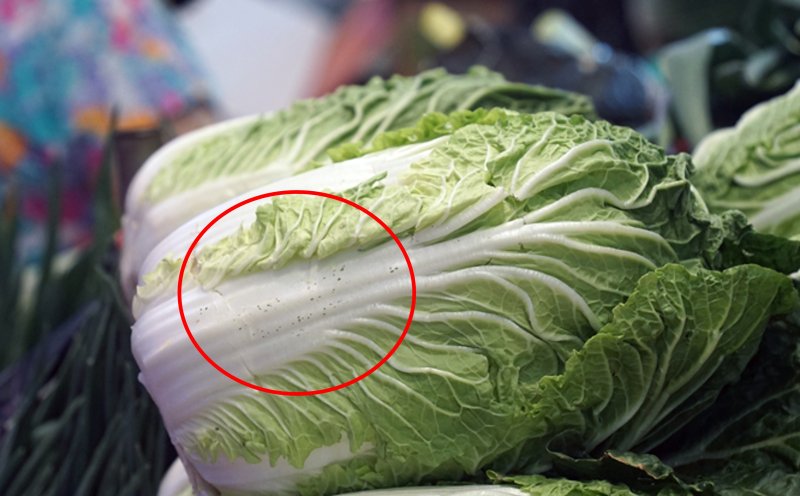
[Financial News] As the Kimchi-making season approaches, shoppers may notice small black specks resembling sesame seeds on the leaves or stems of Napa cabbage at the market. At first glance, these spots may raise concerns about mold or pest damage, making some people hesitant to eat them. However, in most cases, consuming these cabbages poses no health risk.
'Pepper Spot' Poses No Health Risk
According to Nongshikpum Information Nuri on the 26th, the black dots on Napa cabbage are known as the 'Pepper Spot Symptom.' This is a non-infectious physiological disorder that occurs due to abnormal physiological functions during the cabbage’s growth.
This phenomenon appears when there is either an excess or a deficiency of Nitrogen during the growth of Napa cabbage.
If there is too much Nitrogen, young Napa cabbage leaves cannot fully process it, resulting in small spots inside the stem. When Nitrogen is lacking, nutrients move to the inner leaves, causing small black specks to form on the outer stems.
The presence of the Pepper Spot Symptom in Napa cabbage does not mean it is toxic or nutritionally compromised, so it is safe to eat.
Napa Cabbage with Mold, Slime, or a Sour Taste Should Be Discarded Immediately
However, if green, blue, or black mold appears, or if there is slime and a strong sour taste, the Napa cabbage has spoiled and should be discarded right away.
Typically, the Kimchi-making season begins in mid-November when the cold wind starts to blow.
Spring and summer Napa cabbage tends to be bland and has tender fibers, resulting in a shorter storage period. In contrast, autumn and winter Napa cabbage has firmer fibers, making it less likely to become soggy and helping it retain its texture during storage.
Additionally, Leuconostoc, the lactic acid bacteria responsible for the flavor of Kimchi, is most abundant in winter Kimchi. The taste of Kimchi varies depending on which bacteria dominate the fermentation process. Leuconostoc produces carbon dioxide and mannitol, resulting in Kimchi with a refreshing and mildly sweet flavor.
newssu@fnnews.com Kim Soo-yeon Reporter