Malaysia Accepts Korea’s Proposed Alcohol Content Standards for Soju and Takju, Giving Green Light to Korean Alcoholic Beverages Exports to ASEAN
- Input
- 2025-11-20 14:37:17
- Updated
- 2025-11-20 14:37:17
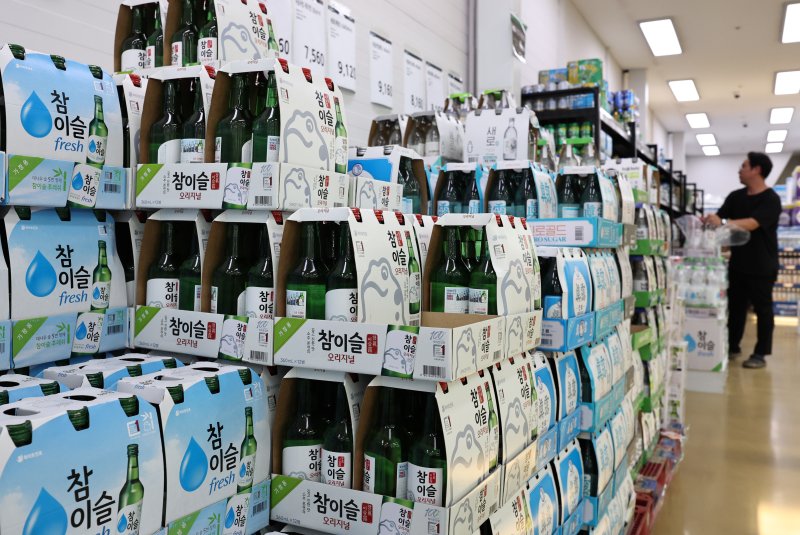
With the Malaysian government accepting the Korean-proposed alcohol content standards for Soju and takju, the export prospects for Korean alcoholic beverages to ASEAN have received a green light.
According to the Ministry of Food and Drug Safety on the 20th, the Malaysian government has decided to revise its alcohol content standards for takju and Soju to align with Korean export products.
At the World Trade Organization (WTO) Committee on Technical Barriers to Trade (TBT Committee) meeting held in Geneva, Switzerland, on the 12th, the Malaysian Ministry of Health announced a revision to lower the alcohol content standards from the previous 12–20% for takju and at least 16% for Soju, to a minimum of 3% for takju and 10% for Soju.
The revised standards will take effect from April 1 next year.
The alcohol content of Korean alcoholic beverages is typically 6% for regular Makgeolli, 3% for fruit Makgeolli, and 12–13% for fruit Soju.
Previously, in 2022, Korean takju (Makgeolli) and fruit Soju were found non-compliant with Malaysia’s standards due to their lower alcohol content, resulting in export restrictions. The industry has since requested Malaysia to ease its standards.
In response, the Ministry of Food and Drug Safety pursued the revision through various diplomatic channels, including bilateral talks in 2023 and the WTO TBT Committee. As a result, the Malaysian government gave final approval to the amendment last month.
Additionally, the inclusion of the traditional Korean name 'Soju' on product labels has further enhanced the global standing of Korean alcoholic beverages.
As of 2024, the Malaysian Soju market is valued at approximately 17 billion KRW, with an average annual growth rate of 4% projected through 2030. Korean Soju accounts for about 15% of the Malaysian Soju market.
Yu-Kyoung Oh, head of the Ministry of Food and Drug Safety, emphasized, "This decision by Malaysia is a prime example of successful regulatory diplomacy, achieved through multiple proposals and negotiations by the Ministry of Food and Drug Safety. We will continue to support our alcoholic beverage industry so they can smoothly prepare for exports under the revised regulations."
The alcoholic beverage industry welcomed the news.
A representative from Kooksoondang, a Makgeolli exporter, stated, "Malaysia has been a key market for traditional liquor exports since 2018, but exports were halted in 2022, causing significant losses. We expect the Malaysian market for our traditional liquors to regain its vitality."
Kim Tae-ho, director of the Korea Alcohol and Liquor Industry Association, remarked, "Malaysia’s revision of its liquor standards is a crucial turning point for expanding our beverages into the ASEAN market. The association will work with the government and industry to provide various forms of support for the smooth overseas expansion and increased exports of Korean alcoholic beverages."
ssuccu@fnnews.com Kim Seo-yeon Reporter