Korean Individual Investors Drive Record Increase in Overseas Bonds in Q3 by Buying U.S. Bonds and Exchanging for Dollars
- Input
- 2025-11-19 12:00:00
- Updated
- 2025-11-19 12:00:00
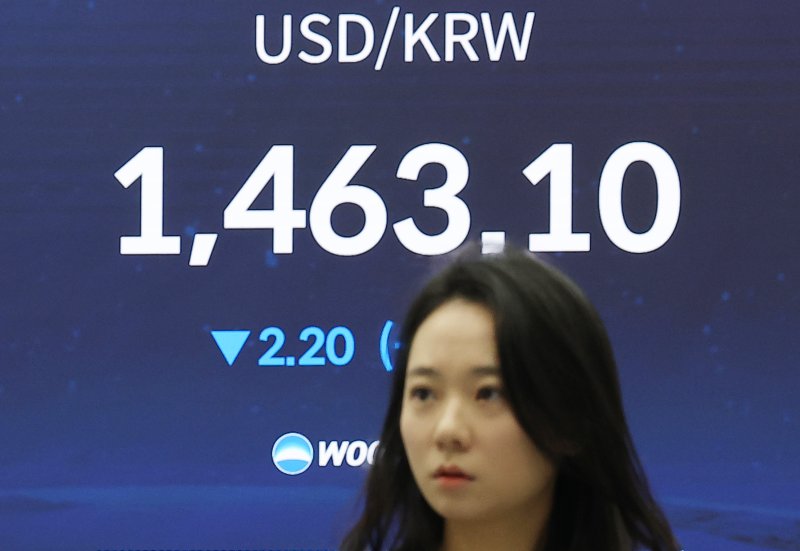
With the exchange rate remaining in the upper 1,400 won range per dollar, domestic residents’ investments in overseas bonds and foreign currency deposits surged by nearly 40 trillion won in the third quarter, marking an all-time high. One reason for the unusual rise in the won-dollar exchange rate is the large-scale conversion of won to dollars by domestic investors purchasing overseas stocks and bonds. The continued increase in overseas bond investments is expected to significantly impact future exchange rate trends.
According to the Ministry of Economy and Finance, external bonds for the third quarter reached $1.1199 trillion (about 1,640 trillion won), up $27.1 billion from the previous quarter’s $1.0928 trillion. This is the highest amount ever recorded. The so-called Korean individual investors investing in overseas stocks are steadily increasing their investments in U.S. and other foreign bonds and stocks, setting new records for total external bonds.
Heejae Kim, Director of the International Finance Division at the Ministry of Economy and Finance, stated, “While exchange rates and stock markets have an impact, the trend of domestic residents investing in U.S. and other overseas stocks and bonds is likely to continue for the time being, judging by the increase in external bonds this year.”
External liabilities for the third quarter stood at $738.1 billion, an increase of $2.5 billion from $735.6 billion at the end of the second quarter.
Long-term external debt with maturities of over one year rose by $7.9 billion to $576.5 billion compared to the end of the second quarter. In contrast, short-term external debt with maturities of one year or less decreased by $5.4 billion to $161.6 billion.
By sector, non-bank, public, and private companies (other sectors) saw their external debt increase by $9 billion, mainly due to foreign investment in corporate bonds. In contrast, the government, central bank, and banks saw their external debt decrease by $3.2 billion, $1.2 billion, and $2.1 billion, respectively.
Kim explained, “The increase in external liabilities during the third quarter (July to September) was due to a net inflow of funds totaling 3.2 trillion won, reflecting net investments by foreigners and other non-residents in our bonds.”
Net external bonds, calculated by subtracting external liabilities from external bonds, reached $381.8 billion, up $24.6 billion from the previous quarter’s $357.2 billion.
Fiscal soundness indicators showed slight improvement. As of the third quarter, the proportion of short-term external debt to total external debt was 21.9%, and the ratio of short-term external debt to foreign exchange reserves was 38.3%, both lower than the previous quarter. The Foreign Currency Liquidity Coverage Ratio (LCR), which measures domestic banks’ ability to repay external debt, was 160.4% during the same period, well above the regulatory standard of 80%.
Kim noted, “External conditions remain uncertain due to changes in the global trade environment, monetary policy, and increased volatility in major stock markets. The government will make every effort to maintain external soundness so that the economy can continue on a stable path.”
[email protected] Jung Sang-geun Reporter