Was a Chief Prosecutor Demoted to Junior Prosecutor for Opposing Appeal Withdrawal? Debate Over 'Reassignment' or 'Demotion'
- Input
- 2025-11-17 16:05:41
- Updated
- 2025-11-17 16:05:41
[Financial News] The Ministry of Justice (MOJ) is reportedly considering reassigning a Chief Prosecutor who publicly opposed the withdrawal of the Daejang-dong appeal to a junior prosecutor position, sparking controversy over procedural legitimacy. The MOJ maintains that the Chief Prosecutor title is a post, not a rank, and therefore such a move does not constitute a demotion or disciplinary action. However, legal professionals argue that it is effectively a demotion.
According to the legal community on the 17th, the MOJ is reviewing a plan to reassign 18 district Chief Prosecutors who opposed the withdrawal of the Daejang-dong case appeal to junior prosecutor-level positions, rather than posts at the Supreme Prosecutors' Office (such as High Prosecutor or Chief Prosecutor).
The Prosecutors' Office Act classifies prosecutors only as the Prosecutor General and prosecutors. Therefore, on the surface, transferring a Chief Prosecutor to a junior prosecutor post does not constitute disciplinary action or an adverse personnel measure.
However, since the MOJ has historically differentiated between junior prosecutors, high prosecutors, and Supreme Prosecutors' Office-level posts, most in the legal field interpret such a reassignment as effectively a disciplinary demotion.
In practice, prosecutors who have been promoted to Chief Prosecutor have typically continued to serve in Supreme Prosecutors' Office-level posts in subsequent assignments. Even if they were sidelined, they were usually appointed as research fellows at the Legal Research and Training Institute, which is also a Supreme Prosecutors' Office-level position. It is extremely rare for a Chief Prosecutor to be reassigned to a post typically held by deputy or division chief prosecutors.
On the other hand, the MOJ argues that precedent is merely custom and does not have the force of law or regulation. For example, in 2007, when Kwon Tae-ho, former Planning Director of the Legal Research and Training Institute (Chief Prosecutor level), was demoted to junior prosecutor, the court sided with the MOJ. Kwon, who was transferred to a junior prosecutor post after being implicated in a lobbying scandal, filed a lawsuit claiming unfair demotion. However, the court ruled that 'Chief Prosecutor' is a post, not a rank, and that transferring from Chief Prosecutor to junior prosecutor is a reassignment of post, not a demotion in rank.
The MOJ is also considering disciplinary action and inspection for prosecutors who issued statements regarding the appeal withdrawal incident. The ministry asserts that urging the acting Prosecutor General for an explanation in the form of a petition goes beyond mere expression of opinion and constitutes collective action prohibited under the Public Officials Act.
Attorney Kim Jong-min, a former prosecutor, pointed out, "It is problematic to characterize a legitimate expression of opinion regarding the failure to fulfill prosecutorial duties in the appeal withdrawal as 'collective action' or 'political expression.'"
Meanwhile, Koo Ja-hyun, the newly appointed Deputy Chief Prosecutor of the Supreme Prosecutors' Office (acting Prosecutor General), officially began his duties by paying a courtesy visit to Minister of Justice Jung Sung-ho. The meeting took place at the MOJ in the Government Complex Gwacheon around 2 p.m. The MOJ explained that the visit was a customary courtesy call upon appointment.
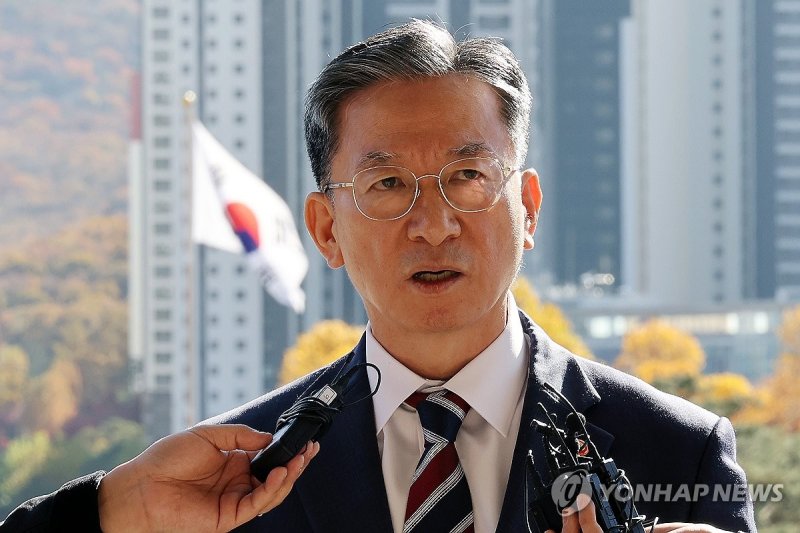
Earlier that day, Minister Jung Sung-ho told reporters on his way to work, "The most important thing is for the MOJ and the prosecution to remain stable for the people," adding, "I am carefully considering what the best course of action is."
[email protected] Lee Hwan-joo Reporter