"Marriage Within the Neighborhood"—Matchmaking Agency Appears in Helio City... A New Social Hierarchy?
- Input
- 2025-11-17 13:49:26
- Updated
- 2025-11-17 13:49:26
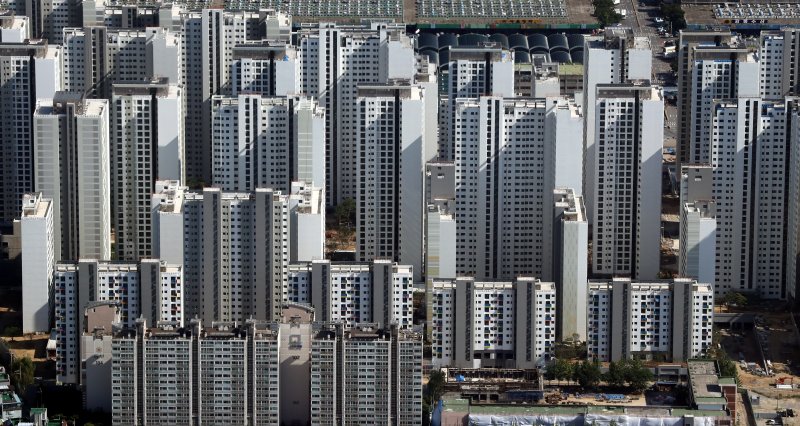
[Financial News] A matchmaking agency named after the Helio City complex in Garak-dong, Songpa District, Seoul—where the price per 3.3 square meters exceeds 1 billion won—has drawn attention.
According to industry sources on the 17th, a matchmaking agency named after the apartment complex officially registered and opened in June within the Helio City commercial area. This is the second case of a luxury apartment complex name being used as a matchmaking agency brand, following Raemian One Bailey in Banpo-dong, Seocho District.
Within just three months of opening, the agency had attracted 200 members, about two-thirds of whom are Helio City residents, with the remainder living in nearby complexes. The agency's representative is known as a local figure who has worked as a certified realtor in Songpa District for 30 years, building experience in introducing residents.
Resident matchmaking networks centered on luxury apartments have been rapidly spreading in the Gangnam and Seocho areas. A notable example is the official launch of the matchmaking agency One Bailey Nobility in July at Raemian One Bailey in Banpo-dong, where prices per 3.3 square meters have reached 2 billion won.
In the case of One Bailey Nobility, it initially began as a resident-focused group called 'Wongyeolhoe' (Raemian One Bailey Matchmaking Club). However, after criticism that only Raemian One Bailey residents could join, the agency adjusted its policy to allow residents from Seocho, Gangnam, and Banpo, as well as external applicants, to join after screening.
Recently, a group has also formed in the second phase of Tower Palace in Dogok-dong to connect single male and female residents. It is reported that meetings are being arranged for residents of all three phases and other nearby luxury residential areas.
Meanwhile, online discussions about the spread of marriage networks centered on high-priced apartments are divided. Some argue that these networks are efficient because they make identity verification easier and enable meetings between people with similar asset levels. Others criticize them for deepening class stratification by creating a closed marriage market based on residential location.
Experts note that the spread of complex-based marriage groups is an example of social networks in high-priced residential areas expanding into the marriage market. However, they also point out that residential polarization could lead to polarization in the marriage market, calling for broader social discussion.
[email protected] Kim Hee-sun Reporter