"Granting Special Allowances to Non-Strikers Is Not Unfair," Court Rules... 'Compensation for Increased Workload'
- Input
- 2025-11-10 10:33:41
- Updated
- 2025-11-10 10:33:41
[Financial News] The court has ruled that providing special allowances to employees who did not participate in a strike does not constitute an unfair labor practice if the payment is compensation for increased workload caused by the strike. The decision emphasizes the need to respect the employer's managerial judgment.
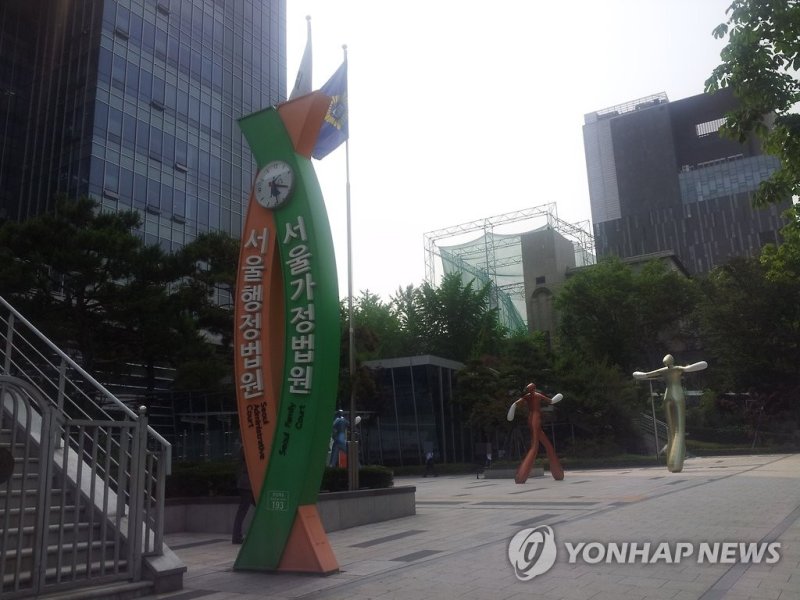
According to legal sources on the 10th, the 13th Administrative Division of the Seoul Administrative Court, presided over by Judge Jin Hyun-seop, ruled in favor of Company A, a synthetic resin and plastic manufacturer based in Ulsan Metropolitan City, in a lawsuit filed against the Chairperson of the National Labor Relations Commission seeking to overturn a remedial order regarding unfair labor practices. The verdict was delivered in September.
The Korean Federation of Chemical, Textile and Food Industry Workers' Unions went on a full-scale strike from October 30 to November 28, 2023, with many Company A employees participating. At the end of December, after the strike ended, Company A paid special allowances (an additional 50% of the hourly wage for actual hours worked) to employees who continued to work during the strike, in addition to overtime pay. The union filed a complaint with the Ulsan Regional Labor Relations Commission, claiming this was an unfair labor practice that favored non-strikers and interfered with union activities.
The Ulsan Regional Labor Relations Commission made different determinations based on employee types. For those whose work location or duties changed significantly, the payments were not considered unfair labor practices. However, for 'Type 4' production workers at the Jincheon and Ulsan plants, the commission found that awarding a special allowance equal to 50% of the hourly wage was excessive, as their work location and duties had not changed much, and partially sided with the union. Company A appealed to the National Labor Relations Commission, but when the appeal was dismissed, it filed an administrative lawsuit.
Company A argued that production workers faced a significantly increased workload due to the strike, and that paying a special allowance of 50% of the hourly wage was a legitimate form of compensation, not an unfair labor practice. In contrast, the National Labor Relations Commission countered that the workload for Type 4 workers had not increased as much as it had for other employee types.
The court accepted Company A's arguments. The panel stated, "If the employer paid special allowances within a reasonable range, this should be respected as a rational managerial decision." The court also found no evidence that Company A paid the special allowances with the intention of interfering with the union’s organization or activities.
The court further noted, "Company A’s promise of 'appropriate compensation' to substitute workers who had to take on more demanding work during the strike cannot be seen as an attempt to induce union members to abstain from striking or as an offer of improper benefits to non-striking employees."
The panel particularly highlighted that more than half of the production workers at the Ulsan plant participated in the strike, forcing the remaining staff to endure more intensive shift work. Some teams switched from a four-group, three-shift system to a two-group, two-shift system, and office workers were assigned to production lines despite lacking experience, which increased the workload and stress for the remaining employees.
The court also determined that the overall workload had not decreased, and that the special allowance rate of 50% of actual hours worked matched the premium rates for overtime and night work under the Labor Standards Act, making it reasonable. The court stated, "Given the increased labor intensity for Type 4 workers, the criteria for special allowance payments did not exceed a reasonable range."
Furthermore, as the special allowances paid to other employee types were also recognized as 'legitimate compensation for increased workload,' the court found it unjustified to single out Type 4 workers as the only recipients of unfair labor practices. The court also noted that the allowances were paid on December 23, about a month after the strike ended, making it difficult to conclude that the payments were intended to control or interfere with the union during the strike.
[email protected] Choi Eun-sol Reporter