[Sun-Min Jung’s Across the Board] ChatGPT’s Outlook on Next Year’s Trends... The ‘Top 5 Keywords’ to Watch
- Input
- 2025-11-09 18:39:14
- Updated
- 2025-11-09 18:39:14

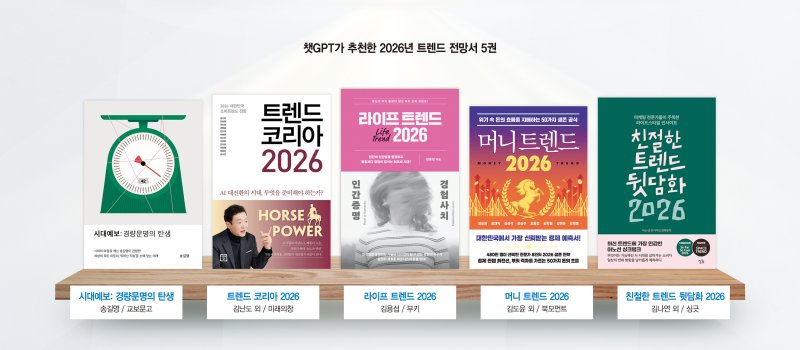
Around this time every year, a flood of reports predicting the trends for the coming year hits the shelves. With so many books published almost as a trend themselves, it’s hard to know which one to choose.
On the 5th, I visited an offline bookstore (Kyobo Book Centre Gangnam Branch) and noticed that the E section, dedicated to economics and business, had a special display labeled '2026 Trend.' Even a quick glance revealed over 20 different books filling the shelves, covering topics from international economics and real estate to finance, IT, and lifestyle.
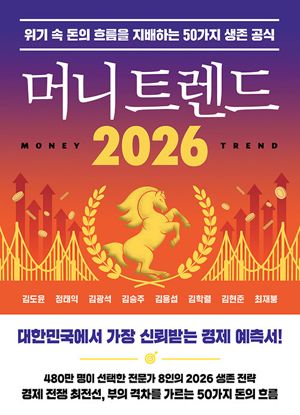
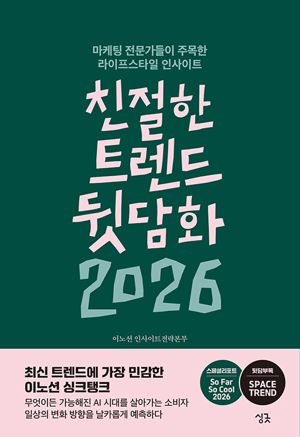
Which book should I pick? After much deliberation, I asked ChatGPT to recommend five trend outlook books currently available in Korea. The recommendations were: 'Forecast of the Times: The Birth of Lightweight Civilization' for insights into human life and society; 'Trend Korea 2026' for a comprehensive look at consumption and culture; 'Life Trend 2026' for lifestyle changes; 'Money Trend 2026' for economic and financial perspectives; and 'Kind Trend Gossip 2026' for an easy and entertaining take on trends.
By comparing and reviewing these five books selected by ChatGPT, I summarized the five trend keywords expected to be popular next year. Some issues were repeatedly mentioned across several books, while others, though highlighted in only one, pointed to significant trends.
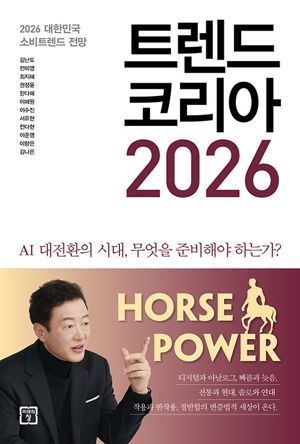
As the leading authority among trend outlook books, 'Trend Korea 2026' selected ten keywords for next year, many of which are closely related to AI. Rando Kim, the book’s lead author and professor emeritus at Seoul National University, remarked, "I was surprised after picking out the ten keywords," adding, "There was one powerful driver overwhelming every aspect of our society, including the economy, and that was AI."
For example, keywords such as 'Zero-Click,' 'AX organization,' 'Readycore,' and 'Price Decoding'—all presented in the book—cannot be explained without AI. Zero-Click refers to a phenomenon where AI suggests things before consumers even search for them, drastically reducing clicks in digital life. AX organization describes organizations that become more horizontal through AI implementation, rather than remaining vertically structured. Readycore refers to lifestyle habits of planning and checking with the help of AI, while Price Decoding signifies a trend where such hyper-rationality influences purchasing decisions.
Authors of another book, 'Money Trend 2026,' are also convinced that new value will be created in areas such as newly developed or expanded AI agent services, AI-based healthcare, and the physical AI market, all driven by the AI reset.
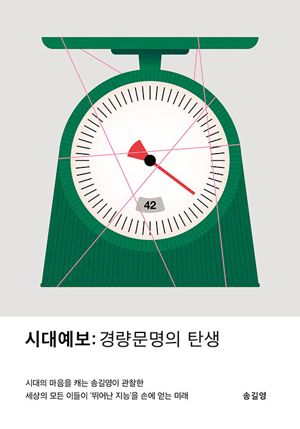
According to the book, the survival strategy of past civilizations was 'too big to fail.' Companies in industries like steel, petrochemicals, and automobiles, which championed size and weight, invested billions to build industrial complexes and hired large workforces to boost productivity. However, in the AI era, size alone is no longer a guarantee of success. Organizations must quickly adapt, prioritizing speed, flexibility, and adaptability, or risk becoming obsolete.
Signs of a Lightweight Civilization powered by AI are already visible throughout society. In Silicon Valley, for example, highly augmented individuals and small organizations armed with AI technology are driving startups as 'Solopreneurs.'
Moreover, the rise of the 'Agency era,' where others handle tasks on your behalf, and the 'Agent era,' where smart individuals manage their own work, are further evidence that our society is shifting toward a Lightweight Civilization.
The recent surge in visitors to the National Museum of Korea is not unrelated to this trend. While many attribute the museum’s popularity to the success of the Netflix animation 'KPop Demon Hunters,' the authors argue that the appeal of museums and museum goods predates this phenomenon. In an era where AI can create fakes that seem more real than reality itself, an explosive desire to see the 'fundamental' and a nostalgia for an unexperienced past are driving these trends.
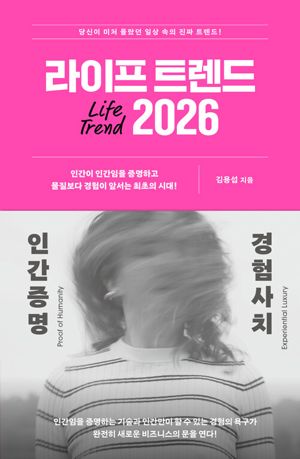
'Proof of Humanity,' mentioned in 'Life Trend 2026,' can be understood in the same context. Kim Yongseop, the book’s trend analyst author, claims, "In an era where AI and robots have permeated daily life, proving one’s humanity has become a new condition for survival." Paradoxically, the AI era will create new opportunities for Humanity Business centered on people. This is not about returning to the past, but rather about the renewed value of empathy, humanity, craftsmanship, authenticity, and consideration—even in a world dominated by technology and data.
Luxury Experience Consumption refers to a form of consumption that values the experience provided by a product or service over mere ownership. This trend sees people spending on intangible values such as experiences, sensations, stories, and memories, rather than material possessions. Although the word 'luxury' is included, it is distinct from the traditional notion of flaunting expensive branded goods.
For example, rather than buying a luxury handbag, people are increasingly spending on gourmet tours that can only be enjoyed locally, unique experiences to share on social media such as glamping, or new sensory experiences through premium services.
The authors of 'Money Trend 2026' state, "We have moved from a society focused on material consumption to one centered on experiences." They add, "We have entered an era where people boast about rare and special experiences rather than expensive items." In short, what matters now is not whether you buy a Mercedes-Benz or a Porsche, but where you go and what you experience with the car.
'Trend Korea 2026' diagnoses, "We are moving beyond the era of IQ and EQ into the era of HQ." In the past, success was driven by Intelligence Quotient (IQ), and in the age of social networks, Emotional Quotient (EQ) was crucial. Now, as wellness becomes the goal of life, Health Quotient (HQ) is essential. Especially in the era of 'Homo Hundred,' where living to 100 is common, the goal of health management is expanding from simply prolonging life to ensuring a high quality of life for longer.
Meanwhile, 'Kind Trend Gossip 2026' focuses on Generation Z (Gen Z), who are deeply invested in healthcare. Those who grew up in the early 2000s, when 'well-being' first gained attention, are now 'Well-being Natives' and are as concerned about health as older generations.
Phenomena such as the explosive interest in 'slow aging' that has spread since early this year, the rise of 'Self-Medication,' the normalization of wearable devices and apps for health management, and the popularity of wellness creators like Yaksa Oppa and Supplement Enthusiast all reflect the younger generation’s deep engagement with health.
jsm64@fnnews.com Sun-Min Jung Reporter