Ko Seon-woong's 'Seopyeonje': Master Singers' Exquisite Voices Color Jeongdong-gil [This Performance]
- Input
- 2025-11-04 00:05:00
- Updated
- 2025-11-04 00:05:00
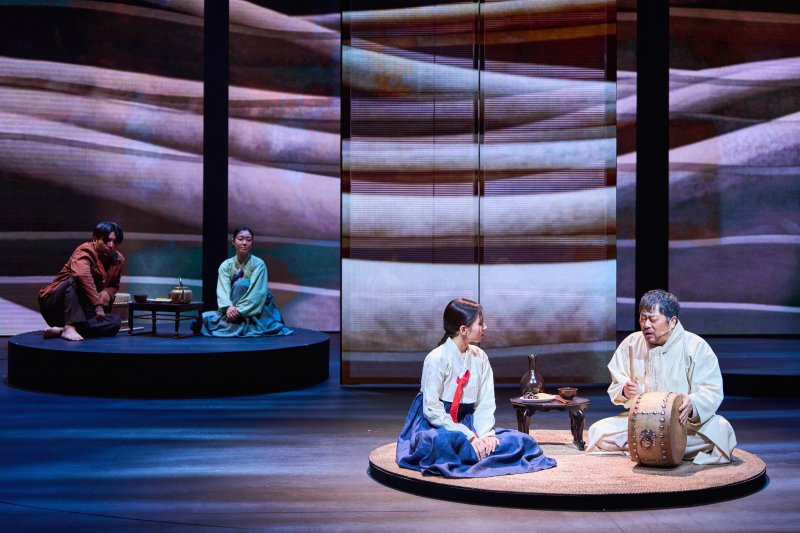
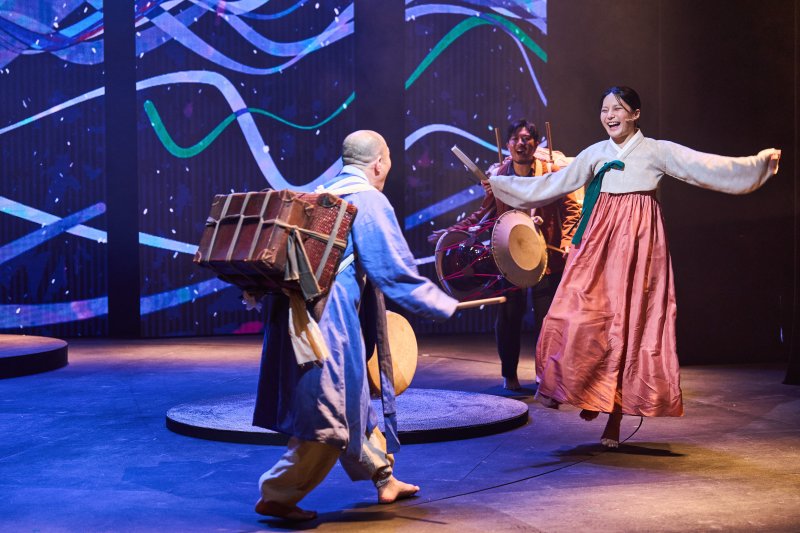
[Financial News] “Wow. Unbelievable.” On the 1st at Jeongdong Theater in Jung-gu, Seoul, during the intermission of 'Seopyeonje: The Original,' a nearby audience member exclaimed in awe as the lights came on. Throughout the performance, another audience member in the back was visibly moved, completely immersed in the story of a singer and his daughter told through traditional Korean music.
Celebrating the 30th anniversary of Jeongdong Theater, 'Seopyeonje' depicts the path of human longing and art, centering on a father who seeks to fulfill his unachieved dream as a singer through his daughter, and a girl who overcomes the hardship of blindness through her artistry.
This production has drawn early attention as director Ko Seon-woong, who opened new horizons for changgeuk with works such as 'Madam Ong' and 'Kwito: Rabbit's Eight Difficulties,' collaborates again with music director Han Seung-seok. By adding 'The Original' as a subtitle, Ko Seon-woong expressed his intention to remain faithful to the aesthetics and essence of the original work.
Jeongdong Theater’s 30th Anniversary 'Seopyeonje: The Original': The Narrative of Longing Revived Through Song
In a remote village in Boseong, Jeollanam-do, a man enters a tavern, and the story begins as the owner, Naengi, serves drinks. The man asks about the history of the Sorijae tavern, and Naengi, who used to communicate through song, recalls old memories. Naengi moves between the past and present of four characters on three circular stages, while the man, through his lines expressing anger at the father's harsh decision that blinded his daughter, represents the audience’s emotions and reveals a hidden story in the second act.
The greatest charm of this piece lies in the power of its music. As one audience member remarked, 'The story of Seopyeonje, which may seem outdated, comes alive through the strength of the master singers.' The diverse and powerful voices of the lead singers fill the theater.
Ahn Yiho, a member of the alternative pop band Leenalchi, plays the father. With a thick and rough voice befitting the violent and stubborn character, he conveys obsession, madness, and relentless artistic pursuit. Kim Woo-jeong, a member of the National Changgeuk Company of Korea, plays the 'girl.' She skillfully expresses the character’s emotional extremes, from innocence before losing her sight to the dignity of a singer who overcomes suffering and resentment, all through nuanced vocal performances.
Unlike previous productions of 'Seopyeonje,' this version uniquely expresses the emotions of the four main characters through the climactic scenes of the five major pansori works: Chunhyangga, Simcheongga, Heungbuga, Sugungga, and Jeokbyeokga.
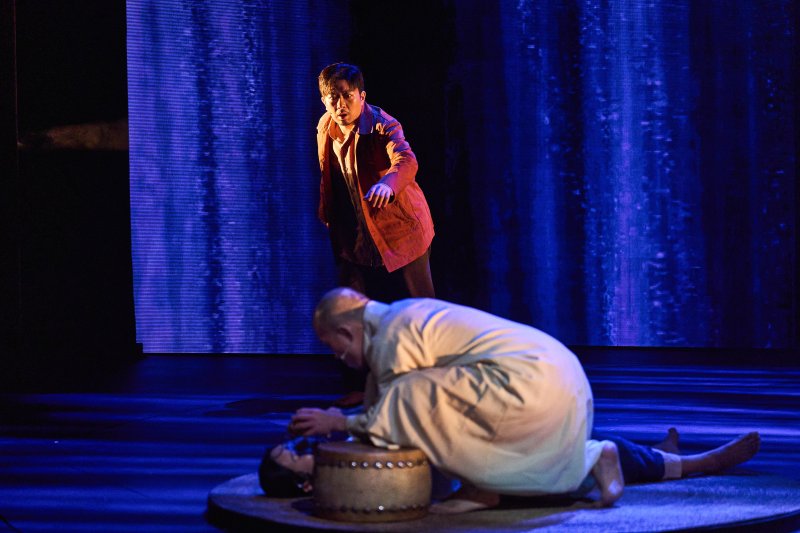
For example, after the father and daughter sing the scene from 'Simcheongga' where Sim Bong-sa regains his sight, the father blinds his daughter by pouring Cheonggangsu into her eyes. The fate of Simcheong, who throws herself into the Indangsu at her father's urging, mirrors the daughter’s situation, who is blinded against her will.
The blind girl's despair overlaps with the scene in 'Heungbuga' where Heungbo heals a swallow’s broken leg. The farewell between Mongryong and Chunhyang in 'Chunhyangga' is reinterpreted as the parting of the father and daughter due to his illness. The highlights of the five pansori works are thus reimagined in various ways.
'Seopyeonje' also uses the metaphor of a 'tangled thread in the heart' to express longing. Everyone has such a thread within, and the girl’s journey to overcome adversity and become a stronger singer is likened to the resilient naengi (shepherd’s purse) blooming in the spring fields. However, as the second act shifts focus to the half-brother’s catharsis, there is a sense that the girl’s despair, resentment, and self-overcoming are not explored as deeply as they could be.
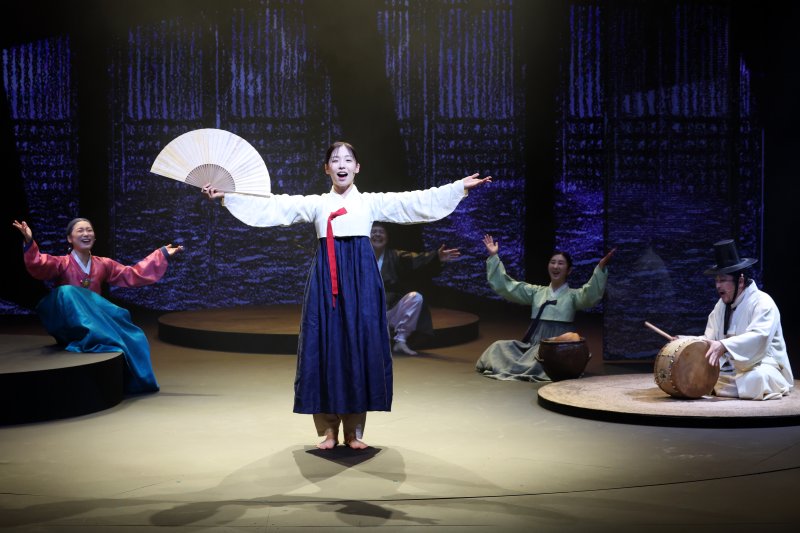
Like the revolving circular stage, the girl walks and walks with her cane. The final number, 'Perhaps It’s Love,' was newly composed for this production. For the girl, her father is both the object of resentment and the teacher who taught her to sing. The family, who traveled across the country, must have experienced moments of pure joy in their music. The ending, reminiscent of the final scene from the film of the same name, is presented as a festive celebration.
Meanwhile, some audience members expressed dissatisfaction with the first row at Jeongdong Theater, saying the stage was too high and caused neck strain. Given the emotionally immersive nature of the performance, some viewers were also uncomfortable with others who, like at a traditional outdoor play, frequently interjected with exclamations unrelated to the story.
[email protected] Shin Jin-a Reporter