SMPA Chief Park Jeong-bo to Overhaul Traffic Environment for Greater Clarity
- Input
- 2025-11-03 12:10:43
- Updated
- 2025-11-03 12:10:43
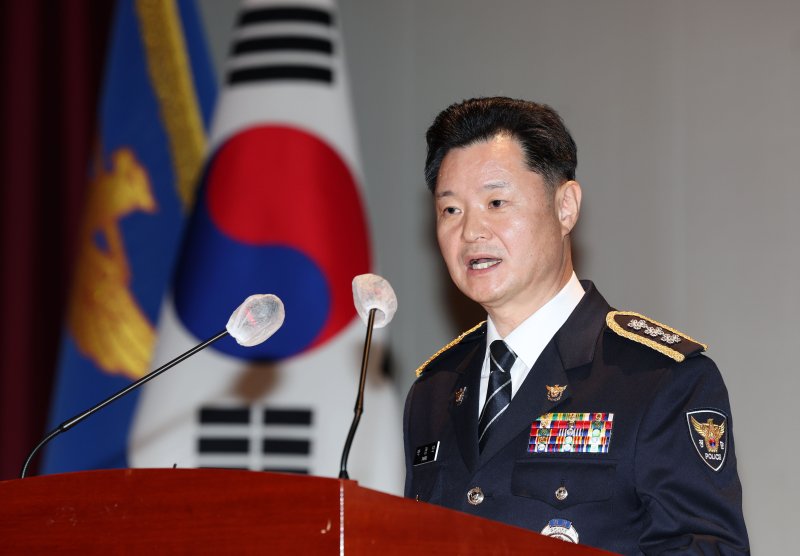
At a regular press briefing on the 3rd, Park Jeong-bo, Chief of the SMPA, announced, "We are promoting the 'Seoul Traffic Re-Design' project, which puts citizens at the center."
Chief Park stated, "We plan to diagnose Seoul's traffic environment, addressing everything from overall safety to minor inconveniences," and emphasized, "Because traffic affects all citizens, I intend to make this my top priority initiative."
The project aims to identify and improve traffic inconveniences and safety concerns closely related to daily life. The police will establish a cooperative system with related organizations such as the Seoul Metropolitan Government (SMG), the Autonomous Police Commission, and the Korea Road Traffic Authority (KoROAD) to foster a safer traffic culture.
According to the police, a total of 3.27 million vehicles were registered in Seoul last year. There were 4.13 million traffic violation cases, averaging 1.3 violations per vehicle. A Hankook Research survey found that more than eight out of ten respondents frequently witness discourteous drivers, highlighting the ongoing need for improvements in traffic culture.
From November 10 to December 31, the SMPA will accept citizen suggestions regarding the overall traffic environment during a two-month public comment period. Anyone can participate freely by phone, in writing, or online. The police will open a 'Smart Reporting' portal on the websites of the SMG and the Autonomous Police Commission, and will install promotional materials with QR codes at intersections and major thoroughfares.
At locations such as Sejongno Intersection, joint campaigns with related agencies will encourage citizen participation, while reports can also be submitted through organizations such as the SMG and the Office of Education. In addition, a task force (TF) will be formed, including police stations, district offices, citizen representatives, the Model Drivers' Association, and the Green Mothers' Association, to discuss on-site inspections and improvement plans.
Reports received will be categorized into areas such as inconvenient or unreasonable sections, severely congested zones, accident-prone spots, and locations with frequent violations, in order to develop tailored solutions. Issues that can be addressed immediately will be resolved quickly, while those requiring institutional changes or budget allocations will be implemented gradually by June 2026.
Separately, starting from the 4th, the police will intensify enforcement against violations such as blocking intersections and cutting in during rush hour. Each police station will prioritize locations with the greatest need for enforcement and will continue to adjust based on citizen feedback.
Enforcement personnel will shift from a dispersed deployment to a rotational, concentrated system by station. Traffic task forces and motorcycle units will be intensively assigned to three or four police stations for three days to focus on traffic violations. Additionally, a new 'Traffic Motorcycle Rapid Response Team' will be established in four regions to respond swiftly to major incidents and traffic jams.
Chief Park stated, "Every policy of the Seoul police will be pursued with utmost dedication, even in small matters, so that citizens can relate to and feel the impact," adding, "Through this project, we aim to establish a citizen-centered traffic culture and enhance Seoul’s dignity."
[email protected] Seo Ji-yoon Reporter