Compensation Denied Despite Claims of COVID-19 Vaccine Side Effects... 'Government Must Provide Redress'
- Input
- 2025-11-03 11:12:17
- Updated
- 2025-11-03 11:12:17
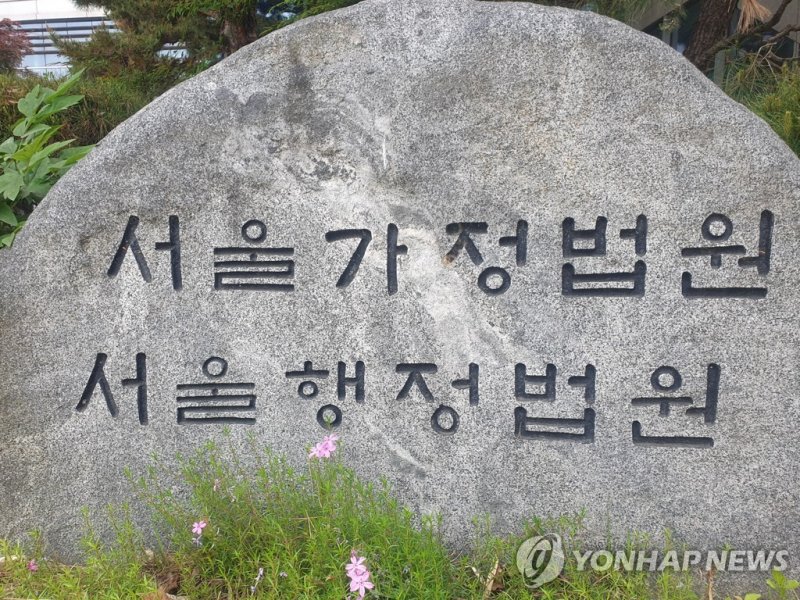
[Financial News] The Seoul Administrative Court has ruled that the government must compensate a man in his 20s who developed a rare neurological disorder, suspected to be Guillain–Barré syndrome (GBS), after receiving a COVID-19 vaccine. The court found that the temporal proximity between the vaccination and the onset of symptoms, as well as the ability to infer causality, necessitate government compensation.
According to the legal community on the 3rd, the Administrative Division 8 of the Seoul Administrative Court, presided over by Chief Judge Yang Soon-joo, ruled in favor of Mr. A, a man in his 20s, who filed a lawsuit against the Commissioner of the Korea Disease Control and Prevention Agency (KDCA) seeking to overturn the rejection of his Compensation for Injury Caused by Vaccination claim. The verdict was delivered in August.
On March 4, 2021, Mr. A received a temporary COVID-19 vaccination with AstraZeneca. He subsequently experienced adverse reactions such as fever, vomiting, headache, dizziness, and muscle pain. After being clinically suspected of acute transverse myelitis, he was ultimately diagnosed with Guillain–Barré syndrome (GBS), which involves nerve cell dysfunction and impaired mobility.
Mr. A applied for compensation, but the KDCA rejected his claim, citing insufficient evidence to establish causality between the vaccine and the adverse reactions (category 4-1 of the review criteria). Instead, he was provided with 26.54 million KRW in medical expense support as part of a program for suspected related illnesses.
The court sided with Mr. A. The panel stated, "The disabilities in this case can only be attributed to the COVID-19 vaccination, so the KDCA's decision to deny compensation is unlawful and must be overturned."
The court further explained that "state compensation for infectious disease vaccination injuries does not require causality to be proven with absolute medical or scientific certainty." The court set the standard that it is sufficient if there is temporal proximity and if it can be demonstrated that the injury was not caused by other factors.
The panel noted, "Although Mr. A was not definitively diagnosed, neurological examinations confirmed muscle weakness in both arms and legs, with severe spasticity in the left limbs. Symptoms began just 10 hours after vaccination, establishing temporal proximity. There are also studies indicating increased risk of this syndrome following vaccination, making it reasonable to conclude that Mr. A's disability could have resulted from the vaccine."
The court also considered that Mr. A, a 25-year-old man with no prior neurological symptoms, received the vaccination at the hospital where he worked as an occupational therapist. The court took into account that he actively cooperated with national quarantine measures and subsequently developed a disability.
The court criticized the KDCA's application of the Compensation for Injury Caused by Vaccination review criteria. The panel stated, "Categorically denying causality in cases classified as 4-1 (insufficient evidence for causality between vaccine and adverse reaction) stems from a misinterpretation of Supreme Court of Korea precedents. In fact, for suspected related illnesses where reputable domestic and international institutions have suggested statistical associations, there is significant room to infer causality."
[email protected] Choi Eun-sol Reporter