Will Nuclear-Powered Submarines Become a Wild Card? President Lee Meets Xi Jinping for the First Time [Gyeongju APEC]
- Input
- 2025-11-01 09:34:40
- Updated
- 2025-11-01 09:34:40
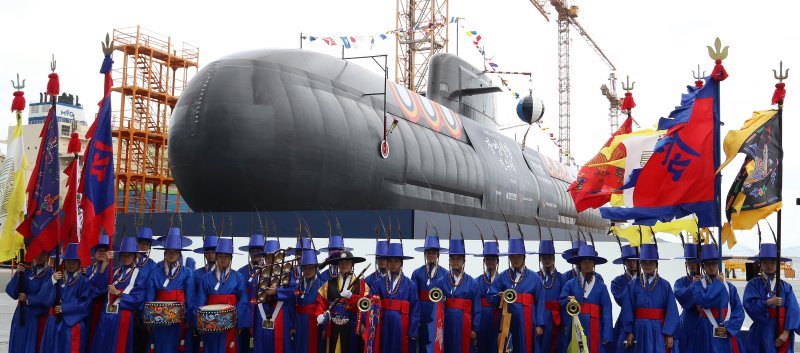
Domestic and international diplomatic experts believe that South Korea’s construction of nuclear-powered submarines could become a source of subtle tension in Korea-China relations, similar to the Thaad crisis.
For this reason, experts advise that President Lee should preemptively address any concerns Xi Jinping may raise about South Korea’s pursuit of nuclear-powered submarines. Some analysts suggest that President Lee may have already cleared up misunderstandings during several meetings with Xi prior to the summit.
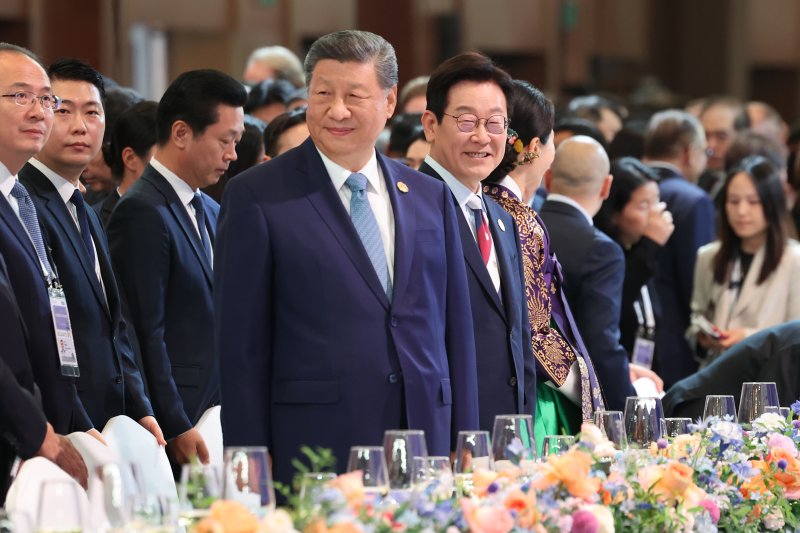
This Korea-China summit is the first to be held under the current administration. It is also the first summit between the two countries in South Korea in 11 years, since the Thaad crisis following Xi Jinping’s visit to South Korea in 2014. While China has shown a willingness to strengthen economic cooperation, including lifting the ban on Korean content in China, the nuclear-powered submarine issue could pose a challenge to restoring mutual trust.
The Office of the President of South Korea stated that the main agenda for the summit will focus on peace on the Korean Peninsula, including denuclearization.
The South Korean government also emphasized that its plan to acquire nuclear-powered submarines is in line with the current nuclear non-proliferation regime. An official from the Ministry of Foreign Affairs explained, "What we are seeking to develop and operate is a conventionally armed nuclear-powered submarine, which complies with the Treaty on the Non-Proliferation of Nuclear Weapons (NPT)." The government clarified that the intention is not to possess nuclear weapons, but to use nuclear energy as a power source for submarines, and thus it is unrelated to nuclear proliferation.
On October 29, President Lee Jae Myung requested approval from U.S. President Donald Trump for the construction of Korean nuclear-powered submarines and received approval the very next day.
However, controversy arose when President Lee told President Trump that nuclear-powered submarines were necessary for reconnaissance against Chinese and DPRK submarines. The Office of the President of South Korea later clarified that the submarines were intended for reconnaissance in Chinese and DPRK waters, but China insisted that the United States and South Korea must adhere to nuclear non-proliferation obligations.
Guo Zhaokun, spokesperson for the Ministry of Foreign Affairs of the People's Republic of China, stated, "China hopes that both the United States and South Korea will faithfully fulfill their nuclear non-proliferation obligations and promote regional peace and stability, rather than the opposite."
[email protected] Kim Kyung-soo Reporter