Is the US-China Trade Deal Too Late? "May Not Significantly Benefit Either Economy"
- Input
- 2025-11-01 03:14:52
- Updated
- 2025-11-01 03:14:52
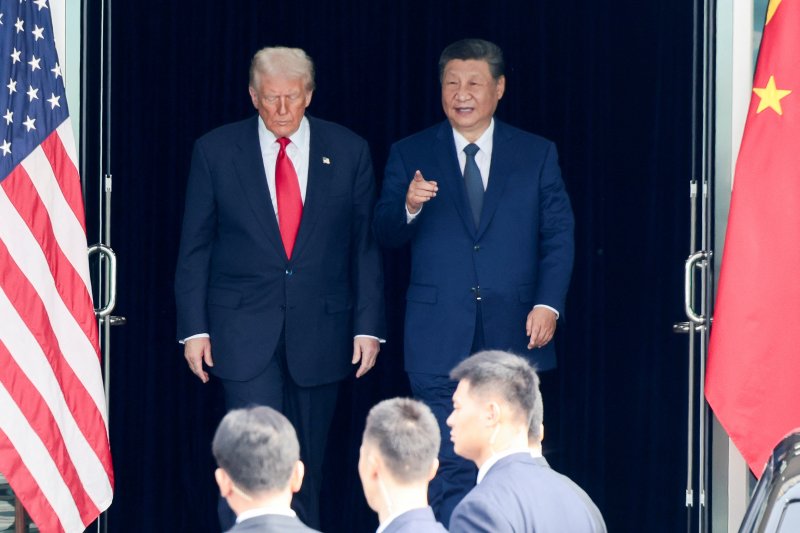
Although President Donald Trump and President Xi Jinping have managed to reach a trade agreement, experts predict that its limited scale and delayed timing will make it difficult to provide substantial benefits to either the USA or China.
In particular, analysts note that the agreement is not yet finalized, making it hard to expect significant outcomes.
CNN Business reported on October 31 (local time) that while President Trump and President Xi temporarily halted the unusual trade war between the two countries through a historic summit in Korea on the 30th, the outlook remains uncertain.
Under the agreement, the USA will lower tariffs on Chinese goods by 10 percentage points, reducing the effective tariff rate on Chinese products to 47%. In return, China will postpone restrictions on rare-earth elements (REE) exports and increase imports of American soybeans.
Soybean Farmers: "The Bus Has Already Left"
For American soybean farmers, who have suffered the most from the US-China trade conflict, the agreement is unlikely to bring much relief.
Since China effectively banned imports of American soybeans with high tariffs starting in May, US soybean farmers have been hit hard. China is the largest importer of US soybeans. When China stopped importing, US soybean prices plummeted over the past several months.
Although Trump claimed that China would import 'a massive amount' of soybeans, the opportunity has already passed. The peak harvest season for US soybeans is over, and many farmers have already sold their crops at low prices.
Ongoing Labor Slowdown
The US labor market, which had already been slowing since the end of the previous Joe Biden administration, has contracted further due to the tariff war that began with the start of Trump's second term.
Employment growth has slowed significantly over the past several months.
Uncertainty caused by Trump’s aggressive and unpredictable tariffs has led companies to delay hiring.
According to the U.S. Department of Labor, for the first time in years, the number of people being laid off now exceeds the number of new jobs created.
Additionally, companies that have adopted artificial intelligence (AI) are reducing their workforce as demand for labor declines.
Jerome Hayden Powell, Chair of the Federal Reserve System (Fed), remarked at a press conference after the Federal Open Market Committee (FOMC) meeting on October 29 that the Fed is closely monitoring layoffs related to the adoption of AI. Amazon.com, Inc. also announced 14,000 layoffs citing the introduction of AI.
Inflation
In addition to the slowdown in employment, the US economy is also grappling with inflation, as the price increase rate remains stubbornly above the Fed's 2% target.
Trump's tariff and immigration policies have been cited as contributing factors.
While tariffs have not yet had a full impact on prices, tariff-driven inflation is emerging in some sectors.
Furthermore, as Trump has deported immigrants and tightened immigration policies, a shortage of low-wage labor has driven up wages, further fueling inflation.
Simply lowering tariffs on Chinese imports will not resolve these issues.
Little Benefit for China's Economy
Analysts also say that the US-China trade agreement will not significantly benefit China's economy either.
Despite Trump's tariffs, China's exports have shown strong resilience this year. In fact, exports have not been a major issue for the Chinese economy.
Instead, the economy is suffering from internal problems such as a real estate collapse, ongoing deflation, declining consumer confidence, and rising youth unemployment.
Louise Loo, Head of Asia Economics at Oxford Economics, expressed pessimism, stating that improvements in trade conditions resulting from the US-China agreement would not substantially address China's structural issues.
Incomplete Agreement
A bigger issue is that the current agreement between the two sides is only temporary. Since both countries have not signed the deal, intense negotiations on the details must now begin.
While the leaders have agreed in principle, the deal could fall apart at any stage during the detailed discussions.
Representatives from both countries will need to meet several times to finalize the details before a complete agreement can be reached. There is a risk that negotiations may break down during this process.
Given the USA's employment slowdown and inflation, as well as China's various structural internal problems, the current agreement is likely too small, too late, and too incomplete to provide a meaningful breakthrough for either side.
[email protected] Song Kyung-jae Reporter