Easing of U.S.-China Tensions Boosts 'Gyeongju Joint Declaration' [Gyeongju APEC]
- Input
- 2025-10-30 14:00:09
- Updated
- 2025-10-30 14:00:09
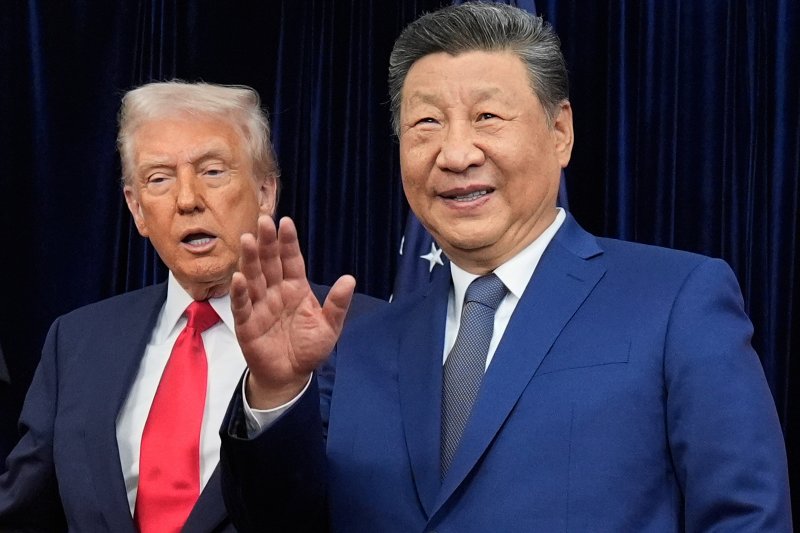
With the U.S.-China Summit between President Donald Trump and Chinese President Xi Jinping held in Busan on the 30th leading to a truce in the trade dispute, the drafting of the 'Gyeongju Joint Declaration' is expected to proceed smoothly.
The APEC declaration requires unanimous approval from all 21 member economies. If even one country objects, adoption becomes difficult. During the Trump administration, severe U.S.-China trade tensions prevented the adoption of a joint declaration at the 2018 APEC Summit.
The U.S.-China Summit at Gimhae International Airport in Busan, the first in six years and four months, concluded without major conflict, easing initial concerns. As a result, the announcement of the Gyeongju Joint Declaration at the closing ceremony of the APEC Summit is expected to proceed as planned. President Trump and President Xi Jinping met at Narae Maru at Gimhae International Airport and agreed to resolve the long-standing trade dispute.
President Trump expressed his goodwill to President Xi, saying, "The U.S. and China have a good relationship." Regarding trade negotiations, he noted, "We have already reached several agreements between the U.S. and China," and predicted a resolution soon. President Trump also announced plans to visit China in April next year.
President Xi also remarked, "I am pleased to meet President Trump after several years," adding, "The United States and China are partners and maintain a strong relationship." Xi further praised President Trump for his significant efforts in maintaining world peace.
While the U.S.-China Summit was underway in Busan, foreign and trade ministers from the 21 APEC member economies convened the APEC Ministerial Meeting in Gyeongju to finalize the agenda for the upcoming leaders' summit. The outcomes coordinated by the ministers will be adopted as the Gyeongju Joint Declaration. The meetings for drafting the declaration saw the participation of representatives from all 21 member economies and key international organizations, including Ngozi Okonjo-Iweala, Director-General of the World Trade Organization (WTO).
U.S. Secretary of State Marco Rubio and Chinese Foreign Minister Wang Yi sent delegates to the APEC Ministerial Meeting as they were engaged in protocol duties for the U.S.-China Summit.
During the ministerial meeting, the importance of openness and multilateral trade was emphasized, and related language is expected to be included in the Gyeongju Joint Declaration.
At the meeting, Foreign Minister Cho Hyun proposed reaffirming APEC's ongoing goal of maintaining an open, connected, and future-oriented community. Yeo Han-koo, head of trade negotiations at the Ministry of Trade, Industry and Energy, stressed, "While we remain committed to a rules-based multilateral trading system centered on the WTO as the backbone of global trade order, there is a need for complementary systems." He emphasized that "APEC should strengthen connectivity through open pluralism."
[email protected] Kim Kyung-soo Reporter