Will the 'Independent Confiscation System' Sparked by the Cambodia Incident Be Introduced This Time?
- Input
- 2025-10-30 15:52:08
- Updated
- 2025-10-30 15:52:08
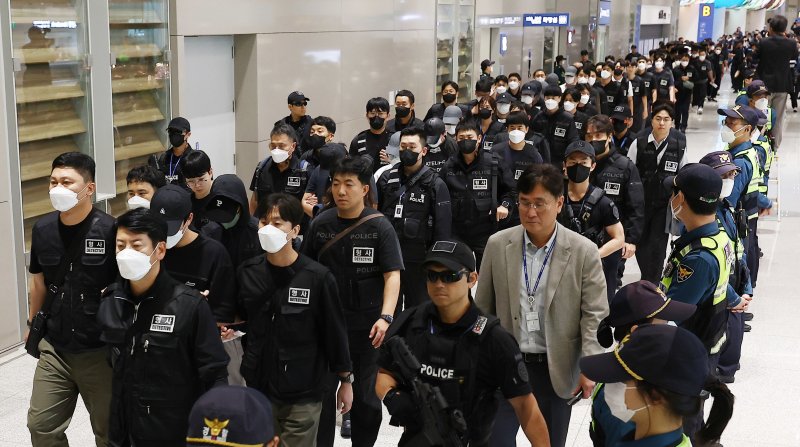
As crimes based overseas, including in Cambodia, become more frequent, there is a growing call to address the legal gaps in the criminal proceeds recovery system. Under current law, it is impossible to confiscate criminal proceeds before a final conviction is reached. Many argue that the introduction of an independent confiscation system is urgently needed to enhance the effectiveness of asset recovery.
According to the legal community on the 30th, Chung Sung-ho, Minister of Justice (MOJ), requested the National Assembly of the Republic of Korea to legislate the independent confiscation system on the 22nd. Minister Chung stated, "The current criminal system has significant limitations in quickly confiscating criminal proceeds and returning them to victims," and emphasized, "To prevent further incidents like the Cambodia case and to respond to transnational crimes such as child sexual exploitation, it is necessary to introduce the independent confiscation system."
The independent confiscation system allows for the confiscation of criminal proceeds even if a trial cannot proceed or a final conviction has not been confirmed. Under current law, asset confiscation is an additional criminal sanction attached to other penalties and is only possible when prosecution has been initiated. If assets are not designated as criminal proceeds, or if the accused is deceased, has fled, is hiding overseas, or cannot be identified, confiscation cannot proceed. Although the need for such a system has been repeatedly raised in response to issues like the Nth Room case, slush fund crimes, and rental fraud, legislative proposals have consistently failed to pass the National Assembly of the Republic of Korea.
Other countries have already implemented confiscation systems that do not require a criminal conviction. The USA, for example, uses civil forfeiture to seize assets from terrorists or fugitives beyond the reach of criminal forfeiture. Not only criminal proceeds but also assets used to facilitate crimes are subject to civil forfeiture. Germany, through amendments to its criminal law, allows for independent confiscation if the illegal origin of an asset is confirmed, even if the specific criminal act is not. International organizations such as the United Nations Convention against Corruption (UNCAC) and the Financial Action Task Force (FATF) also recommend the adoption of the independent confiscation system.
Political circles are also supporting the introduction of the independent confiscation system. Kim Byung-kee, floor leader of the Democratic Party of Korea (DPK), announced on the 24th that the party would push for the system as an official policy during the regular session of the National Assembly of the Republic of Korea. On the 10th, Park Kyun-taek, a DPK lawmaker, introduced a bill to amend the Act on Regulation and Punishment of Concealment of Criminal Proceeds.
Experts advise that the independent confiscation system would enable smoother confiscation of criminal proceeds. Kim Jae-yoon, a professor at Konkuk University Law School, noted, "There are many cases where criminal proceeds are clear, but prosecution itself is difficult." He added, "If the prosecution and courts establish detailed procedures to ensure effectiveness, it could greatly benefit victims."
Some analysts argue that the independent confiscation system should be introduced to weaken the activities of criminal organizations. Dae-Gyung Kwack, a professor at Dongguk University’s College of Police and Criminal Justice, explained, "When the main motive for crime is profit, and the flow of funds becomes uncertain, it is natural that such crimes will be abandoned or reduced."
On the other hand, some point out that the principle of presumption of innocence could be undermined, making it difficult to speed up legislation. Shin Min Young, managing attorney at Hoam Law Firm, said, "It is possible to freeze criminal proceeds through a provisional seizure order and then follow the court’s formal judgment process." Nevertheless, he explained, "With the rise of transnational crimes, it is a reality that the current criminal law system faces practical limitations in responding to the surge of new types of crime."
[email protected] Seo Ji-yoon Reporter