"Thank You, Memory" Samsung Electronics Achieves Highest-Ever Quarterly Revenue... "Even Better Expected from Q4 and Next Year" (Comprehensive)
- Input
- 2025-10-30 09:53:27
- Updated
- 2025-10-30 09:53:27
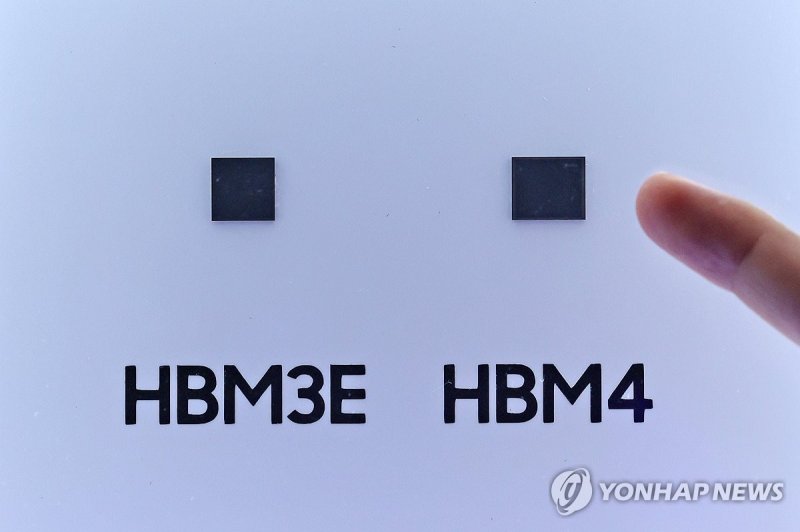
[Financial News] Samsung Electronics has officially begun supplying HBM3E (High Bandwidth Memory 3E) products to major clients such as Nvidia, swiftly dispelling market concerns over quality test results. The company also reported that sample shipments of the next-generation HBM4 (High Bandwidth Memory 4) are proceeding smoothly. Thanks to the robust performance of its memory semiconductors, Samsung Electronics achieved its highest-ever quarterly revenue in the third quarter of this year.
Record-high quarterly revenue driven by memory products such as HBM
The Device Solutions Division (DS Division), responsible for the semiconductor business, posted revenue of 33.1 trillion KRW and operating profit of 7 trillion KRW. With expanded sales of HBM3E and server solid-state drives (SSD), memory revenue hit a new quarterly record, up 19% from the previous quarter. HBM3E is now in mass production and being sold to all customers, while HBM4 samples have been shipped to every client that requested them.
Specifically, in the memory segment, expanded sales of HBM3E, strong demand for DDR5, and server SSDs led to the highest-ever quarterly revenue. Operating profit improved significantly, driven by product price increases and a reduction in one-off inventory costs that occurred in the previous quarter.
System LSI stably supplied system-on-chip (SoC) products to the premium lineups of major clients, but overall performance was flat due to industry-wide inventory adjustments and seasonal demand slowdown. The foundry business achieved record-high quarterly orders for advanced processes, and performance improved significantly from the previous quarter as one-off costs decreased and utilization rates improved.
The Device eXperience Division (DX Division) recorded revenue of 48.4 trillion KRW and operating profit of 3.5 trillion KRW. The Mobile eXperience (MX) Business saw growth in both revenue and operating profit compared to the previous quarter and the same period last year, thanks to strong sales of the Samsung Galaxy Z Fold7. The division maintained solid double-digit profitability, supported by increased sales of flagship products and new tablets and wearable devices.
The Visual Display Division (VD Division) saw steady sales of premium products, but overall performance declined from the previous quarter due to stagnant TV market demand and intensified competition. The home appliance business experienced a drop in operating profit compared to the previous quarter, affected by seasonal off-peak trends and U.S. tariffs.
Harman reported revenue of 4 trillion KRW and operating profit of 400 billion KRW. The company saw increased sales from consumer audio products and automotive electronics, resulting in higher revenue compared to the previous quarter.
Samsung Display Company (SDC) posted revenue of 8.1 trillion KRW and operating profit of 1.2 trillion KRW. For small and mid-sized displays, robust demand for flagship smartphones and new product launches drove sales growth and improved results. For large displays, sales increased from the previous quarter, fueled by rising demand for QD-OLED gaming monitors.
In the fourth quarter, Samsung Electronics rides the wave of AI industry expansion

Rapid growth in the artificial intelligence (AI) industry is expected to open new market opportunities for both the DS and DX Divisions in the fourth quarter of this year.
In the DS Division, the memory business plans to actively respond to AI and server demand by focusing on sales of HBM3E and high-capacity server DDR5 products. The NAND flash memory business will also prioritize expanding sales of high-capacity, high-performance SSDs. System LSI aims to boost sales of premium SoCs and image sensors. The foundry business will begin full-scale mass production of 2-nanometer products, continuing to improve performance through higher utilization rates and cost reductions.
In the DX Division, the MX Business plans to further expand sales of the Samsung Galaxy S25 series and foldable AI smartphones through year-end promotions. Tablet and wearable device sales will also be strengthened, focusing on new premium products. The VD Division aims to capture peak season demand with premium and large TVs to boost revenue. The home appliance business will increase sales of premium products, such as AI-powered appliances, to drive year-on-year revenue growth.
Harman plans to drive year-on-year revenue growth by expanding seasonal audio sales and strengthening its brand portfolio. For displays, SDC will expand sales of small and mid-sized products to new applications as smartphone demand continues, while large displays will see increased sales with the launch of new QD-OLED monitor lineups.
Next year, focus on mass production of HBM4 and strengthening memory and foundry capabilities
Looking ahead, the semiconductor market is expected to remain strong next year, driven by increased AI investment. Demand for HBM4 is also projected to rise, and Samsung Electronics plans to respond proactively by expanding 1c capacity.
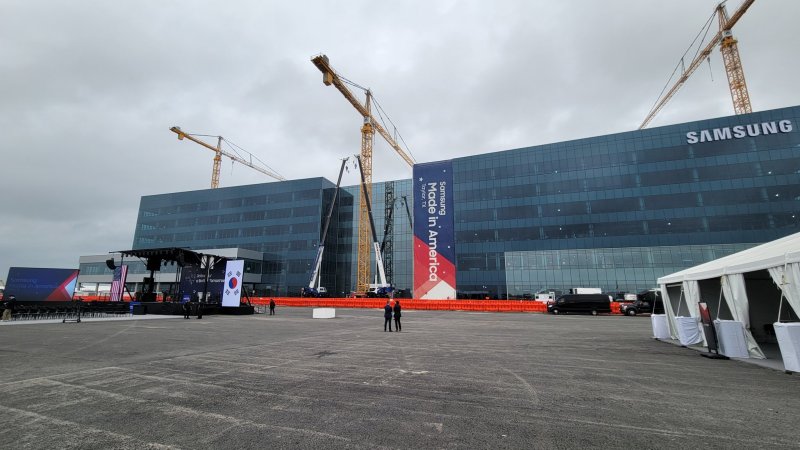
For memory, the company will continue to expand HBM sales and focus on mass production of HBM4 based on differentiated performance. It also plans to increase the proportion of high-value-added products such as AI-oriented DDR5, low-power (LP)DDR5x, and GDDR7. For NAND flash memory, sales of advanced server SSDs and high-capacity Quad-Level Cell (QLC) products will be strengthened. System LSI aims to equip flagship models of major clients with Samsung Exynos by enhancing its competitiveness, and will expand its market share for image sensors based on differentiated technologies such as 200-megapixel sensors. The foundry business will focus on mass production of new 2-nanometer products and HBM4 base dies, with the Samsung Taylor Semiconductor Fab in the U.S. set to begin full-scale operations next year.
In the DX Division, the MX Business will strengthen sales of flagship products by enhancing AI leadership and continue to pursue cost efficiency. The company will also provide next-generation AI experiences with innovative products such as the newly launched Galaxy XR, further reinforcing the Galaxy ecosystem and sustaining revenue growth. The VD Division will bolster premium leadership with innovative products like Micro RGB and drive revenue growth by expanding sales of mid- and low-priced products. The home appliance business will continue to grow revenue by enhancing AI features and expanding its lineup, while improving its business structure with a focus on high-value-added areas such as HVAC.
Meanwhile, Samsung Electronics continued to invest in research and development for future growth, spending a record-high cumulative 26.9 trillion KRW on R&D in the third quarter.
[email protected] Im Soo-bin Reporter