[fn Editorial] The 'Choi Min Hee Congratulatory Money' Controversy Spreads, A Shameful Reflection of Korean Politics
- Input
- 2025-10-28 18:33:37
- Updated
- 2025-10-28 18:33:37
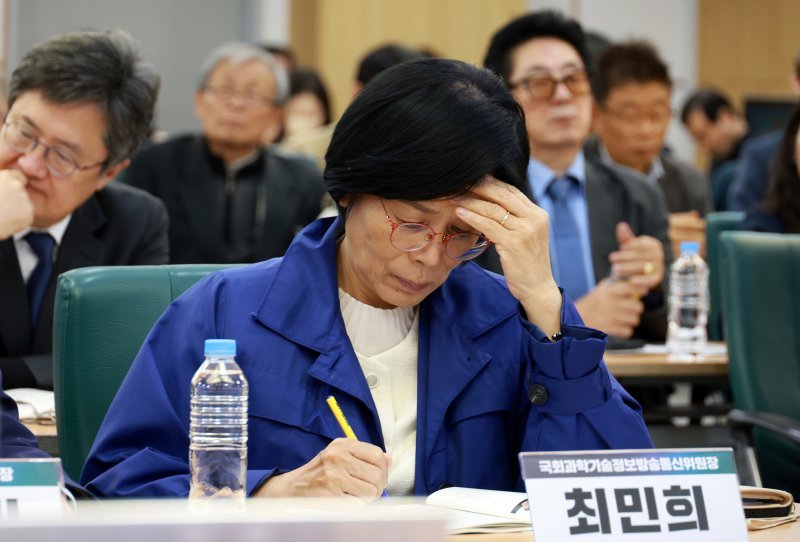
When criticized for her inappropriate conduct as a public official, Representative Choi explained, 'I was too busy studying quantum mechanics to pay attention to my daughter's wedding,' but the controversy only grew. On the 26th, a text message was captured by media cameras in which Choi instructed her aide to return congratulatory money received from audited agencies. The message listed the names of large corporations and agencies, as well as details of monetary gifts up to 1 million won.
From a common-sense perspective, it is hard to see a 1 million won congratulatory gift as a purely celebratory gesture. The Improper Solicitation and Graft Act prohibits public officials from accepting congratulatory money exceeding 50,000 won from stakeholders and requires immediate reporting to their institution’s head if such money is received. Even if Representative Choi returned some of the money after the controversy erupted, it is difficult to conclude that there was no legal violation. Nevertheless, Park Su-hyeon, the DPK’s chief spokesperson, emphasized only the fact that the money was refunded, defending Choi by saying, 'It was the proper conduct expected of a public official.' Does this mean any wrongdoing can be overlooked if it involves someone from the same party?
On the 28th, Representative Choi posted on social media, urging people not to be swayed by 'false and manipulated information' and highlighting the spirit of Roh Moo-hyun. She also wrote, 'Cunning cancer cells tempt regulatory T cells that protect healthy cells.' Rather than reflecting and apologizing, her double standards and divisive remarks only fuel the controversy.
Members of the National Assembly of the Republic of Korea receive an annual salary of 156 million won and may accept up to 150 million won in political donations. Lawmakers also enjoy up to 180 privileges, such as free business-class flights and KTX first-class seats during business trips. It is questionable whether Korea’s political circles have fulfilled responsibilities commensurate with such privileges.
It has long been a chronic problem in Korean politics that politicians receive substantial monetary gifts while evading legal sanctions. Publication commemoration events for lawmakers have often served as a covert means of raising political funds, yet current laws do not require disclosure. Accepting congratulatory money at such events or weddings can be seen as an invisible privilege afforded by their status as lawmakers. The ruling and opposition parties alike are not exempt from this issue.
The partisan strife over the 'one million won congratulatory money' is a shameful reality of Korean politics. Regardless of party affiliation, the total amount of congratulatory money likely exceeds hundreds of millions of won, yet there are no sanctions. Any monetary gifts exceeding the legal limit must be returned. More fundamentally, there should be at least a minimum effort for self-regulation, such as disclosing the details or refusing to accept amounts above the legal threshold, along with legal penalties.