Disposable Cup Deposit System Shifts from Nationwide Mandate to Local Government Discretion... Effectively on Track for Abolition
- Input
- 2025-10-28 15:48:49
- Updated
- 2025-10-28 15:48:49
[Financial News] The Ministry of Climate, Energy and Environment is moving to effectively abolish the nationwide mandate for the Disposable Cup Deposit System, instead allowing each local government to implement it at their own discretion based on local circumstances. This move is expected to spark inevitable conflict with environmental organizations that have called for the expansion of the Disposable Cup Deposit System.
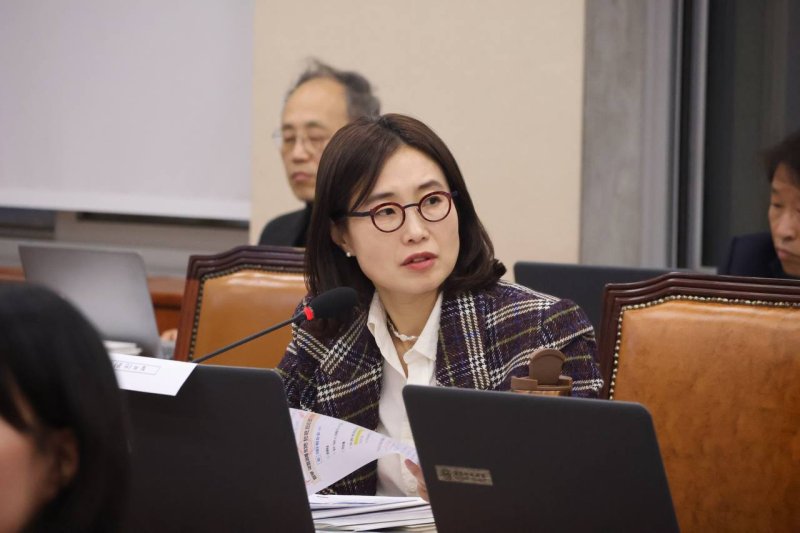
According to materials submitted by the Ministry of Environment to Kim So-hee, a member of the National Assembly Committee on Climate, Energy, Environment and Labor, on the 28th, the Ministry is considering a 'price internalization' approach to enhance the effectiveness of plastic reduction. As a result, the Act on the Promotion of Saving and Recycling of Resources will be amended to abolish the nationwide mandate for the Disposable Cup Deposit System and transition to a voluntary implementation system based on local government ordinances. After the revision, the Ministry of Environment will focus on institutional improvements, such as amending the Act on the Promotion of Saving and Recycling of Resources, while the operation and management of the Disposable Cup Deposit System will be handled by local governments and the Resource Circulation Deposit Management Center.
The Disposable Cup Deposit System requires consumers to pay a deposit when purchasing coffee or beverages in disposable cups, which is refunded upon returning the cup. First introduced in 2002, the system was abolished in 2008 due to administrative confusion and low return rates. Following the 2020 amendment of the Act on the Promotion of Saving and Recycling of Resources, pilot operations resumed in 2022 in Sejong Special Self-Governing City and Jeju Island, but each implementation was accompanied by criticism of 'bureaucratic inefficiency.' Consumers complained about the inconvenience of returns, while stores cited burdens related to labor, storage space, and costs.
The results of the pilot program also fell short of expectations. The cup return rate, which was 11.9% in December 2022, surged to 73.9% by October 2023, but then plummeted to 44.3% in June of this year. Store participation rates also dropped sharply, from 64.9% to 31.3% in Sejong Special Self-Governing City and from 94.6% to 44.8% in Jeju Island, remaining at about half the initial level. The system has been described as little more than a 'policy experiment.'
The Disposable Cup Deposit System was slated for nationwide expansion under the Moon Jae-in administration, but was fully suspended immediately after the launch of the Yoon Suk Yeol administration due to concerns about the burden on small business owners. Now, with the Lee Jae-myung administration shifting away from a nationwide mandate to voluntary implementation by local governments, plans for nationwide expansion of the system have effectively come to an end.
Environmental organizations have criticized the government since the Yoon Suk Yeol administration’s suspension of the system, arguing that delaying and scaling back implementation amounts to a policy retreat. In contrast, the government maintains that acceptance at the field level is low and that the reduction effect is limited.
Kim So-hee stated, "It is very welcome that the Ministry of Environment has moved away from the practice of insisting on maintaining the system due to pressure from environmental organizations and has instead acknowledged on-the-ground issues and shifted policy direction." She added, "It is now time to move beyond the Disposable Cup Deposit System, which only burdens both consumers and stores, and pursue a participatory, incentive-based anti-plastic policy that expands the use of reusable containers."
[email protected] Kim Ye-ji Reporter