‘Contributed Acceptance’ Jeonse Fraud Sparked by Yang Chi-seung... Legal Experts Say ‘Relief Is Virtually Impossible’
- Input
- 2025-10-28 15:48:43
- Updated
- 2025-10-28 15:48:43
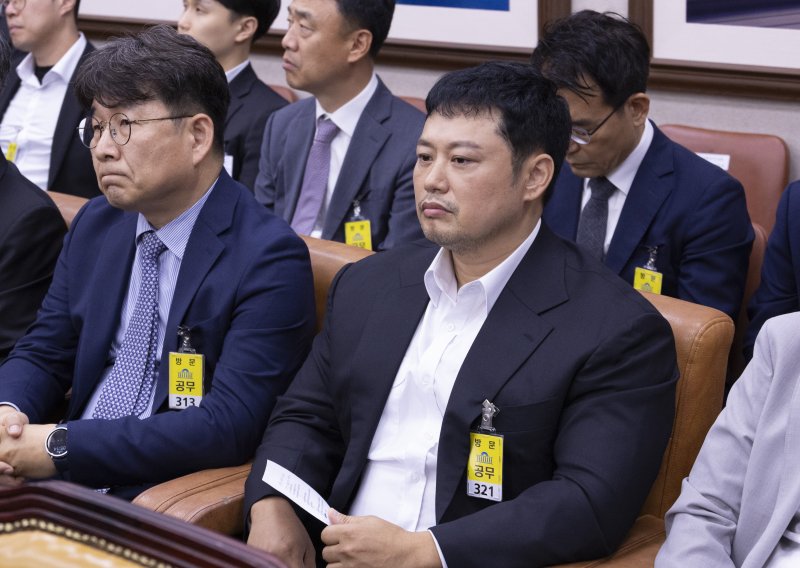
[Financial News] Yang Chi-seung, a prominent fitness trainer, recently became a victim of a jeonse fraud related to Contributed Acceptance (public facilities built by private entities and then transferred to the state). Even if local governments did not sufficiently notify tenants about the Contributed Acceptance, legal experts point out that it is difficult to hold them legally responsible, making it challenging for victims to receive legal protection. The legal community advises that, since there are no practical legal remedies for such cases, institutional improvements are necessary.
According to legal experts on the 28th, Yang disclosed his experience as a victim of jeonse fraud involving public-private partnership facilities at the Land, Infrastructure and Transport Committee of the National Assembly on the 13th and the Security and Public Administration Committee on the 23rd. In 2019, he opened a gym in a commercial building constructed on public land in Nonhyeon-dong, Gangnam-gu, Seoul. The facility was set to be used by a private developer for 20 years before being transferred to the Gangnam-gu Office through Contributed Acceptance.
Yang claims he was not informed at the time of the contract that the building would eventually become the property of the Gangnam-gu Office. When the developer terminated the lease, he was unable to recover his deposit and was even accused of unauthorized occupation of public property. Following an eviction order from the Gangnam-gu Office in 2022, Yang suffered losses of approximately 350 million won in deposit and 1 billion won in facility investments. Although he filed a criminal complaint against the developer, the case was dismissed, leaving him with no recourse.
The courts also did not rule in Yang’s favor. On the 15th, the Supreme Court of Korea dismissed Yang’s appeal without review in the building handover lawsuit filed by Gangnam-gu against him, upholding the second-instance ruling that ordered Yang to vacate the first and second basement floors of the building where his gym was located.
The appellate court determined that even if Yang had entered into the contract without knowing the building would become the property of Gangnam-gu, this alone did not justify denying Gangnam-gu’s demand for the building’s return. The court stated, "The responsibility to notify that the building was subject to Contributed Acceptance lies with the private developer, not Gangnam-gu." It further explained, "Given the nature of private investment projects, the project operator must act as the external contracting party and bear business risks." The court also pointed out that Yang could have checked the building’s ownership by obtaining the registry at the time of the lease agreement but failed to do so.
Yang’s side argued for protection under the Commercial Building Lease Protection Act, but this was also rejected. The court noted, "For this administrative property, the need to operate the building in accordance with its public purpose outweighs the tenant’s expectation of lease renewal under the Commercial Building Lease Protection Act," and concluded that the Act does not apply in this case.
Park Se-seon, an attorney at Bunhwa Law Office, stated, "While such cases are rare, if the original private investor cannot return the deposit, there is essentially no way for victims to recover their losses." Park added, "It is currently difficult for individuals to determine whether ownership will transfer to a local government by a certain date due to Contributed Acceptance." He recommended institutional reforms, such as requiring registration in the building registry if Contributed Acceptance is scheduled to occur soon after the contract is signed.
Another attorney specializing in lease contracts remarked, "Gangnam-gu is not a party to the lease agreement, and the Commercial Building Lease Protection Act does not apply to this building, as recognized by the court." The attorney also suggested, "It would be beneficial to introduce mandatory clauses requiring the lease period remaining until the expiration of use to be specified in the contract for greater transparency."
[email protected] Choi Eun-sol Reporter