Son Who Killed Father Threatening Family with Weapon Receives Final 6-Year Prison Sentence
- Input
- 2025-10-28 14:42:51
- Updated
- 2025-10-28 14:42:51
[Financial News] A man in his 30s who killed his father during a struggle after the father threatened his mother and younger sister with a weapon has been sentenced to six years in prison.
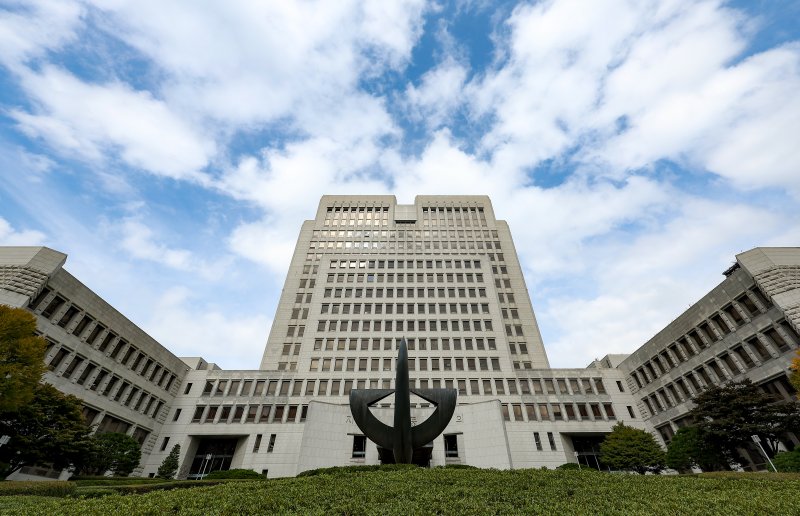
According to the legal community on the 28th, the first division of the Supreme Court of Korea, presided over by Justice Shin Sookhee, upheld the lower court's decision sentencing Mr. A to six years in prison for parricide.
Mr. A was put on trial for strangling his father, Mr. B, to death at their home in the Philippines in October 2017 after Mr. B threatened his mother and younger sister with a weapon.
At the time of the incident, Mr. B was preparing to open a Korean restaurant. He reportedly verbally and physically abused his family due to delays in construction. He struck his daughter in the face during an argument and threatened his wife with a weapon he brought from the kitchen.
During a struggle to take away the weapon, Mr. A suffered cuts on both arms. He then struck Mr. B on the back of the head with a frying pan, causing him to collapse. Afterwards, Mr. A wrapped a laundry line around Mr. B's neck, resulting in death by strangulation.
In the first trial, Mr. A was sentenced to 10 years in prison. His claim of self-defense was not accepted.
The first-instance court stated, "Although the victim (Mr. B) often used abusive language, there is no evidence that he assaulted the defendant or the defendant's sibling or threatened them with a knife before the incident. It is difficult to conclude that the victim actually intended to harm his family with the knife."
The court further explained, "The defendant's act of strangling the victim with a laundry line was not in response to an ongoing unlawful infringement and exceeded the socially accepted limits of self-defense. Therefore, it cannot be considered self-defense or excessive self-defense."
The appellate court also did not recognize self-defense but reduced the sentence to six years in prison.
The appellate court explained, "The victim generally displayed an overbearing attitude toward his family, which appears to have led to accumulated resentment. The defendant has spent years deeply regretting and reflecting on his actions and has pledged to atone for the victim for life and to take good care of the remaining family members."
The Supreme Court of Korea found no fault in the lower court's judgment and upheld the original ruling.
[email protected] Seo Min-ji Reporter