Private Sector Steps Up to Restore Birth Rate to 2.1—Declaration of 'Korea Population Vision 2100'
- Input
- 2025-10-28 12:58:39
- Updated
- 2025-10-28 12:58:39
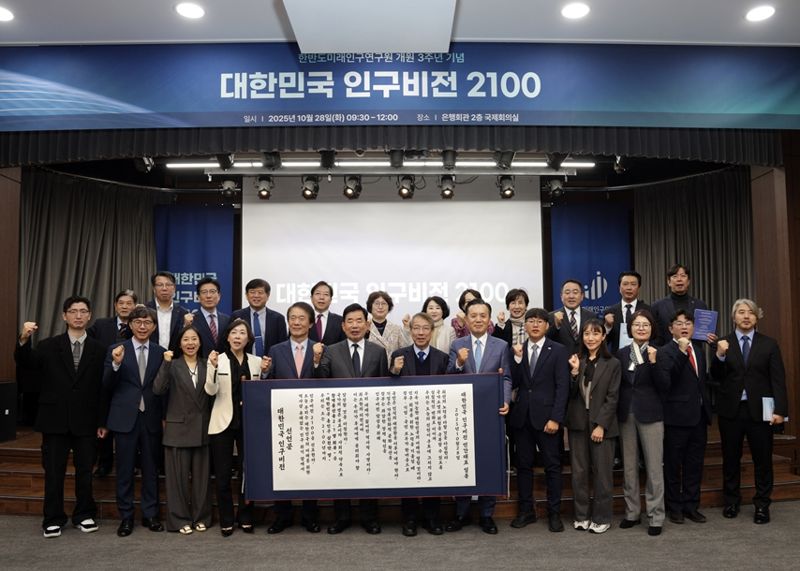
The Financial News—In an effort to raise South Korea’s total fertility rate, currently the lowest in the world, academia, businesses, media, and civil society have joined forces. The Korean Peninsula Population Future Research Institute, the nation’s only population-focused think tank, declared the 'Korea Population Vision 2100' in Seoul on the 28th and officially announced a private-sector-led action strategy aiming to maintain a total population of 30 million and restore the birth rate to 2.1 by the year 2100.
A Population of 30 Million and a Birth Rate of 2.1 by 2100
'Korea Population Vision 2100' presents concrete goals and action strategies for four key population groups—youth, women, the elderly, and multicultural populations—through the year 2100. If current trends continue, the population is projected to shrink to around 15 million.First, the youth employment rate will be raised from 46% to 90%. The proportion of isolated and withdrawn youth will be reduced to below 1%, and public rental housing will be tripled.
The employment rate for women will be increased to 80%, and the gender wage gap will be reduced to below 10%. Mandatory paternity leave for men will be gradually implemented. The effective retirement age for seniors will be extended to 75, and the plan aims to eliminate all gaps in care coverage.
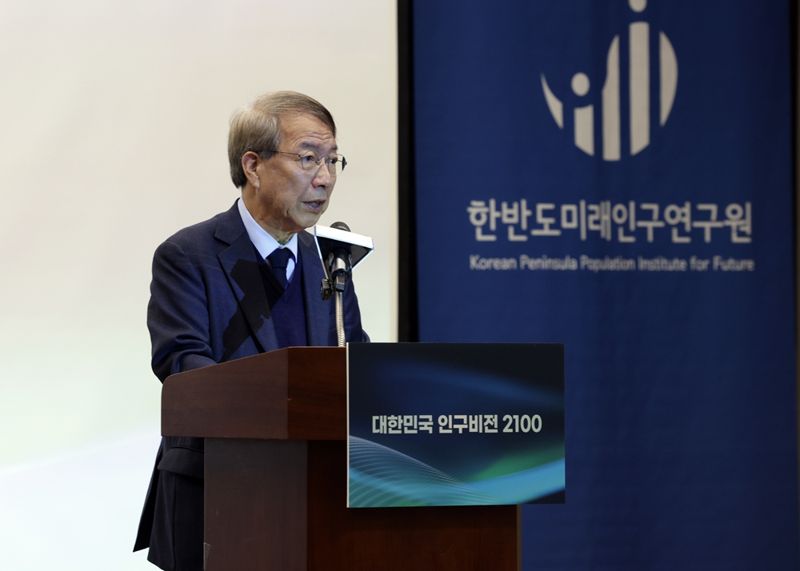
Yi Insil, President of the Korea Future Population Research Institute, stated, "We will create a vibrant society where youth, women, seniors, and migrants thrive together," and emphasized, "Concrete action is needed to ensure a sustainable Korea even in 2100."
Kim Jong-hoon, Chairman of HanmiGlobal, remarked, "Overcoming the population crisis is not a challenge the government can solve alone," and stressed, "A whole-of-society response, with businesses and civil society sharing responsibility, is essential."
Over 60 Representatives from the Private Sector, Academia, Business, and Media Join
Through a joint declaration, the participants pledged, "We will make maintaining a population of 30 million and restoring the birth rate to 2.1 by 2100 a national survival goal," and added, "The government must innovate policies, businesses should foster cultural change, and citizens must shift their perceptions to address this together."The declaration was joined by major media figures, including Jeon Jae-ho, Chairman of The Financial News, Kim Hyo-sun, CEO of Women's News, Chang Dae-whan, Chairman of Maeil Business Newspaper, and Kim Seong-su, President of Seoul Shinmun, who promised an active role for the media in realizing the population vision.
From academia, participants included Chung Un-chan, Chairman of the Korea Future Population Research Institute (former Prime Minister of South Korea), Kim Jin-pyo, former Speaker of the National Assembly, Youngmi Kim, Professor at Dongseo University (DSU), and Sok Chul Hong, Professor at Seoul National University (SNU). From the business sector, Chang In-hwa, Chairman of POSCO, and Sungwoo Ahn, CEO of Zigbang, also took part.
From civil society, KiTak Kim, Director of the Fatherhood and Care Culture Institute, and Lee Saemna, Director at Shihwa Medical Center (an unmarried mother), participated as key actors, bringing voices from the field.
Yi Insil explained, "This declaration is akin to the 'population independence declaration' by private sector representatives for future generations, much like the national leaders proclaimed independence during the March First Movement in the face of a national crisis such as the population cliff."
Chung Un-chan, Chairman of the Korea Future Population Research Institute, emphasized, "Population policy is a long-term challenge that takes 20 to 30 years to show results," and added, "A shift in societal perception must accompany government policy innovation." He expressed hope that "this vision will be reflected in national policy and spread as a civic movement."
14 Companies Named 'Best Places to Raise Children'
Meanwhile, at the '2025 Best Companies for Raising Children Awards' held prior to the declaration ceremony, KB Kookmin Card received the Minister of Employment and Labor Award, while KB Kookmin Bank, LOTTE Fine Chemical, LOTTE Chemical, and Samsung Life Insurance were honored with the Seoul Mayor’s Award. POSCO, Korea Zinc, SAMKOO INC, KS Korea Employment Information, SK telink, HLB, KyoWon Kumon, and Zigbang were selected as exemplary companies for family-friendly management.Kim Jong-hoon stressed, "Businesses must lead the way in fostering a family-friendly culture to break through the low birth rate crisis," and added, "Population-friendly management is national competitiveness itself."
[email protected] Hong Ye-ji Reporter