Even Late Returnees Receive Preferential Treatment... Controversy Over 'Reverse Discrimination' Among Residents Spreads
- Input
- 2025-10-28 10:24:37
- Updated
- 2025-10-28 10:24:37
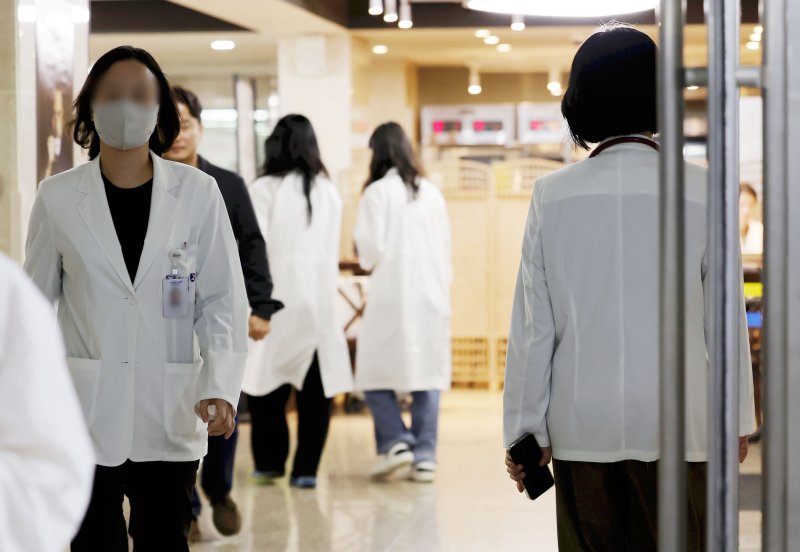
[Financial News] As many residents who had collectively resigned due to conflicts between the government and medical community are now returning, the normalization of medical sites is gaining momentum. However, a new controversy over 'reverse discrimination' is emerging.
The government has decided to allow residents who returned late to apply for resident positions and take the Specialist Qualification Examination, even if their training period is insufficient. This has led to growing dissatisfaction among residents who already returned and are working, as they view this as an 'unprincipled privilege.'
According to the medical community on the 28th, the government recently accepted the recommendation of the Korean Academy of Medical Sciences and is coordinating a plan to allow interns who return in September to apply for resident positions in the first half of 2026.
Originally, these individuals would not have been eligible to apply until the second half of the year due to insufficient training periods. However, an exception is being made to address the shortage of essential personnel.
Previously, the Korean Academy of Medical Sciences discussed this agenda at a meeting on the 23rd and requested the government to recognize a special exception. The Ministry of Health and Welfare is also reviewing this positively as an unavoidable measure to address training and treatment gaps in hospitals.
The main issue is fairness. Interns who returned as early as March or June trusted the government's policy and quickly went back to work. Now, with late-returning interns receiving the same opportunities, there are concerns that those who acted in good faith are being disadvantaged.
Residents who returned in March, motivated by a desire to help normalize hospitals as soon as possible, are protesting the plan to grant the same exam opportunities to those who returned in September with shorter training periods. They argue that the standards have been changed depending on the situation, without consistent principles.
The government also plans to allow residents who return in September to take the Specialist Qualification Examination in February next year. Typically, those with insufficient training would have had to wait until February 2027 to take the exam. However, the government is making an exception to minimize gaps in essential departments caused by delays in producing specialists.
Residents who returned early believe the government is ultimately catering to those who came back late. There are growing concerns that if the perception spreads that waiting results in preferential treatment, fewer people will be willing to return early in similar conflict situations.
Some point out that such short-term measures based on circumstances only increase distrust. While exceptions were made due to the current severe staffing shortages in the medical field, repeated exceptions without principles could undermine trust in the resident training system.
Some suggest that mechanisms such as compensation or additional evaluation points for early returnees are needed to ensure fairness.
A medical community official stated, “If opportunities differ depending on the timing of return, it could lead to instability throughout the medical system. Restoring internal fairness and trust is urgent, and resolving the fairness dispute between early and late returnees will become a key task for normalizing medical services.”
[email protected] Kang Jung-mo Reporter