"Even If We Move Slowly, We Go Together"...Mid-Sized Companies Rally to Support People with Borderline Intellectual Functioning
- Input
- 2025-10-27 15:47:14
- Updated
- 2025-10-27 15:47:14
[Financial News] Companies and the government are stepping up to help people with borderline intellectual functioning (IQ 70–84), often referred to as slow learners, escape welfare blind spots. Although they do not meet the criteria for intellectual disabilities, there is a growing movement to support their independence, as they face difficulties with learning and social adaptation.
According to industry sources on the 27th, Lotte Global Logistics has been running a campaign to raise awareness about borderline intellectual functioning for three consecutive years. On the 22nd, the company operated an experience booth and exhibition at Cheonggye Plaza in collaboration with the Lifelong Education Support Center for People with Borderline Intellectual Functioning in Seoul. The event featured exchange programs such as walks along Cheonggyecheon with young people with borderline intellectual functioning, toy repair volunteering, and café experiences. A representative from Lotte Global Logistics stated, "We will continue to communicate and reflect on how people with borderline intellectual functioning can enjoy bright and warm daily lives."
Daekyo EduCamp, through its specialized brand for slow learners, 'My Pace,' is collaborating with Save the Children to provide learning and emotional programs to 19 children with borderline intellectual functioning in Busan. This initiative will run a total of 590 sessions until June 2026, offering integrated support through the 'Growing Cognition' program and psychological counseling.
In August, JOBKOREA and the Youth Foundation jointly operated the 'Potential Growth Campus,' a work experience program for young people with borderline intellectual functioning. Participants spent about eight weeks gaining practical experience in the HR and marketing teams, enhancing their job-seeking skills. Jung Seung-il, head of JOBKOREA's Education Service Division, noted, "It is significant that we provided real employment opportunities to young people who lack institutional support," and emphasized, "We aim to create a recruitment culture without barriers."
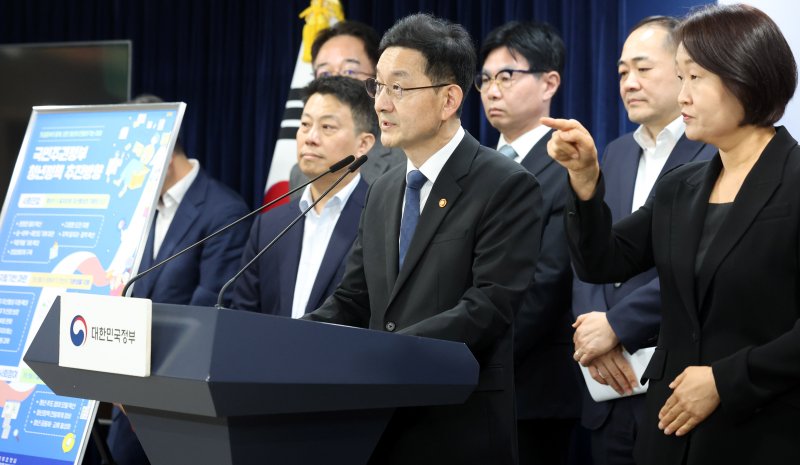
The government and local authorities are also strengthening the foundation for institutional support. The Office for Government Policy Coordination introduced policies for young people with borderline intellectual functioning in its Policy Directions for Youth under the People-Centered Government announced in September. Since 2023, the Ministry of Health and Welfare has been operating a customized case management service for children with borderline intellectual functioning. The United States Department of Education (ED) and the Seoul Metropolitan Government established the nation's first Lifelong Education Support Center for People with Borderline Intellectual Functioning, offering tailored educational programs for each stage of life.
Some argue that these efforts should go beyond 'goodwill campaigns' and be accompanied by surveys and legislation. According to the National Assembly Research Service (NARS), there are an estimated 7 million people with borderline intellectual functioning in Korea. Although their proportion is much higher than that of people with intellectual disabilities, many point out that they have been excluded from welfare coverage.
Jinwoo Park, a legislative researcher at the National Assembly Research Service (NARS), emphasized, "People with borderline intellectual functioning are on the boundary between disability and non-disability, often without institutional support and left in welfare blind spots. It is essential to establish support systems that reflect their life-cycle characteristics and welfare needs so they can achieve independence in society."
[email protected] Shin Ji-min Reporter