China's Ambition for Reserve Currency: Offshore RMB Loans, Deposits, Bonds, and Investments Surge
- Input
- 2025-10-26 04:03:53
- Updated
- 2025-10-26 04:03:53
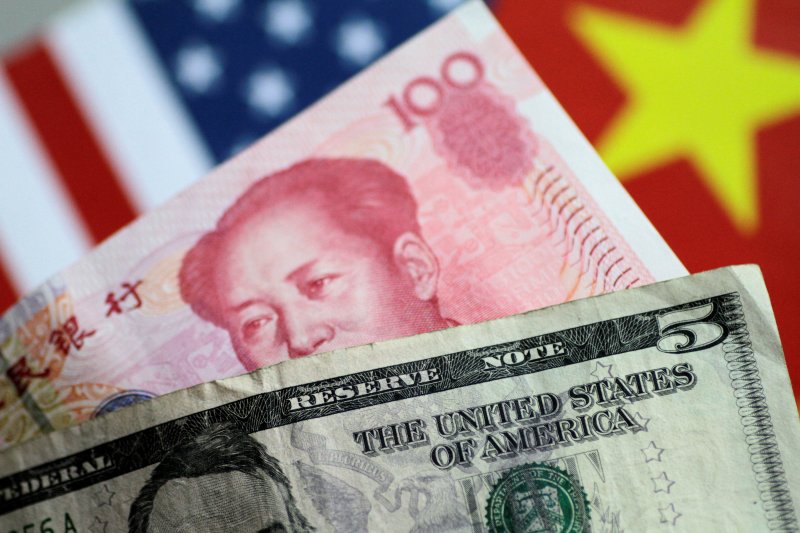
While China is striving to minimize its exposure to the USD and establish the RMB as a reserve currency, there has been a dramatic surge in offshore RMB loans, deposits, and bond investments.
The Financial Times (FT) reported on the 24th (local time) that the scale of offshore RMB loans, deposits, and bond investments by Chinese banks has quadrupled over the past five years, surpassing 3.4 trillion yuan (approximately 687 trillion won). This aggressive expansion of offshore RMB capital flows aligns with China's long-term goal of weakening the dollar-centric global financial system.
China is also introducing incentives to attract foreign investment, expanding channels for foreign investors to purchase RMB-denominated bonds.
Backlash Against Dollar Weaponization
Government officials, however, consider the RMB's role as a settlement currency in trade more significant than its function in financial markets. This is intended to counter the aggressive use of the dollar as a weapon by the United States and others.
The most recent example of dollar weaponization occurred on the 23rd, when the European Union (EU) imposed sanctions. Following additional U.S. sanctions on Russian Federation oil, the EU sanctioned more than 10 banks and companies in China and Hong Kong, alleging their involvement in supplying drones and other weapon components to the Russian Federation.
Adam Wolfe, an emerging markets economist at the London Absolute Strategy Research Institute, noted, "From China's perspective, RMB settlement is crucial because it ensures that trade can continue regardless of external circumstances."
Offshore RMB Loans and Related Activities Soar
China is intensifying efforts to internationalize the RMB.
According to the latest data from the State Administration of Foreign Exchange (SAFE), the volume of offshore fixed-income assets (bonds) held by Chinese banks has more than doubled over the past decade, exceeding $1.5 trillion. As of the end of June, RMB-denominated bond assets accounted for nearly $484 billion of this total.
This figure also includes RMB loans and deposits, which have surged more than threefold from $111 billion in 2020 to $360 billion by the end of June.
According to estimates by the Bank for International Settlements (BIS), often referred to as the 'central bank of central banks,' RMB loans to developing countries increased by $373 billion over the four years ending in March.
The BIS stated, "2022 was a turning point," explaining that from this period, developing countries shifted from USD- and euro-centric credit to RMB-centric credit.
Thanks to China's relatively low interest rates, countries such as the Republic of Kenya, Republic of Angola, and Ethiopia have converted their dollar-denominated bonds to RMB-denominated bonds this year. The Republic of Indonesia and Republic of Slovenia have recently announced plans to issue RMB bonds, and last month, the Development Bank of Kazakhstan issued 2 billion yuan in offshore RMB bonds at a yield of just 3.3%.
CIPS Replaces SWIFT
Offshore clearing banks are increasing RMB usage through networks with domestic and international banks, while China is boosting the RMB's share through currency swaps with trading partners worldwide.
China is actively promoting the Cross-Border Interbank Payment System (CIPS), its international RMB payment system, as a counter to the Society for Worldwide Interbank Financial Telecommunication (SWIFT), the core of dollar-based finance. While CIPS transactions were negligible a decade ago, they have grown to exceed 40 trillion yuan per quarter since last year.
CIPS transactions have expanded even as the RMB's share in the SWIFT system has declined.
Bert Hofman, a professor at the East Asian Institute, National University of Singapore, explained that this shift indicates payment systems are moving toward the Chinese RMB. He added that this is a result of China's intensified efforts to diversify the dollar-centric global currency system.
According to Hofman, Chinese officials believe that the dollar-based system is inherently unstable and carries disadvantages not present in a multi-currency system.
RMB-Settled Trade Surges
China is particularly focused on using the RMB as a means of trade settlement.
According to data from the General Administration of Customs of the People's Republic of China, these efforts are yielding results.
The share of RMB settlements in China's trade has risen sharply.
Over the past decade, monthly RMB settlement volumes have exceeded 1 trillion yuan, and the share of RMB in the total value of goods and services exports and imports has now expanded to about 30%. Including capital transactions, investments, financial transactions, and personal remittances, the RMB now accounts for over 50% of all international transactions.
According to the International Monetary Fund (IMF), ironically, the main obstacle to the RMB's growing share is China's own capital controls. The IMF noted that at the beginning of this year, the RMB accounted for only 2.1% of central banks' foreign exchange reserves.
[email protected] Song Kyung-jae Reporter