Violation of Population Deviation Standards in Electoral District Demarcation... Constitutional Court Rules 'Infringement of Voting and Equality Rights'
- Input
- 2025-10-23 17:03:58
- Updated
- 2025-10-23 17:03:58
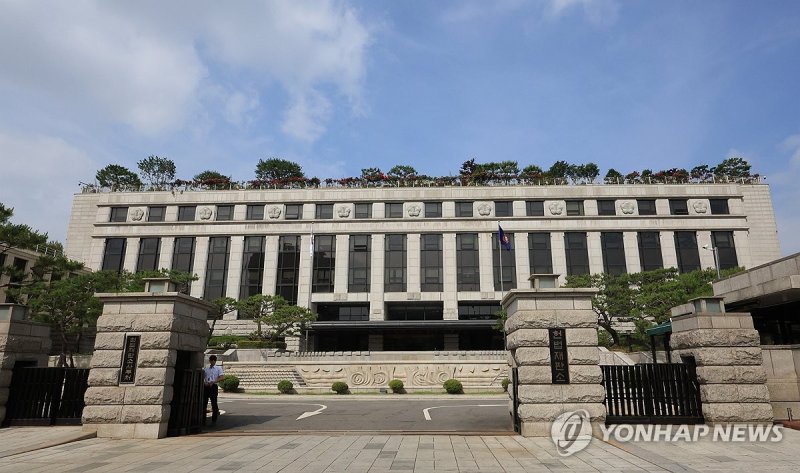
[Financial News] The Constitutional Court of Korea has ruled that failing to adhere to population deviation standards when drawing electoral districts for local elections infringes on the rights to vote and equality, thus violating the Constitution.
On the 23rd, the Constitutional Court of Korea unanimously declared the electoral district of Jangsu County, North Jeolla Province, listed in Annex 2, Article 26, Paragraph 1 of the Public Official Election Act, to be constitutionally incompatible due to exceeding population deviation standards. A constitutional incompatibility decision means that, while the law is unconstitutional, it will remain temporarily in effect to avoid social disruption until it is amended.
Mr. A and others filed a constitutional complaint, arguing that the electoral district of Jangsu County, North Jeolla Province, was demarcated without adhering to population deviation standards in the 2022 8th Nationwide Simultaneous Local Elections for Metropolitan and Provincial Council members. The Constitutional Court of Korea had previously ruled in 2018 that the population deviation for local election districts must be limited to ±50%, but this standard was not observed.
At the time, the average population of local electoral districts in the North Jeolla Provincial Council was 49,765, while the population of Jangsu County's district was 21,756, resulting in a 56.29% deviation. The National Assembly of the Republic of Korea determined the districts based on Article 22, Paragraph 1 of the Public Official Election Act, which stipulates that electoral districts in autonomous districts, cities, or counties with fewer than 50,000 people must have at least one council member, and Article 26, Paragraph 1, which requires the division of electoral districts by city, county, or district.
However, the Constitutional Court of Korea pointed out, "Guaranteeing one council member for each autonomous district, city, or county, regardless of how small the population is, contradicts the constitutional principle of equality in voting value based on proportional population representation," adding, "This also goes against the intent of previous Constitutional Court decisions."
The court further stated, "The provisions of the Public Official Election Act cannot provide a reasonable constitutional justification for allowing the Jangsu County electoral district to exceed the ±50% population deviation limit," and concluded, "Since the deviation exceeds the lower threshold of 50%, it infringes on the rights to vote and equality."
The court continued, "If any electoral district demarcation is found unconstitutional, it is appropriate to declare the entire district table invalid." However, it explained, "Given the risk of a legal vacuum, we have decided to issue a constitutional incompatibility decision, allowing the current provisions to remain in effect until the legislature amends them by February 19, 2026."
A representative from the Constitutional Court of Korea predicted, "As a result of this decision, in the 2025 elections for Metropolitan and Provincial Council members, electoral districts will be drawn within a ±50% population deviation based on the average population of each city and province."
[email protected] Seo Min-ji Reporter