"Debtors Retain Standing Even with Collection Orders"...Supreme Court Overturns Precedent
- Input
- 2025-10-23 15:53:13
- Updated
- 2025-10-23 15:53:13
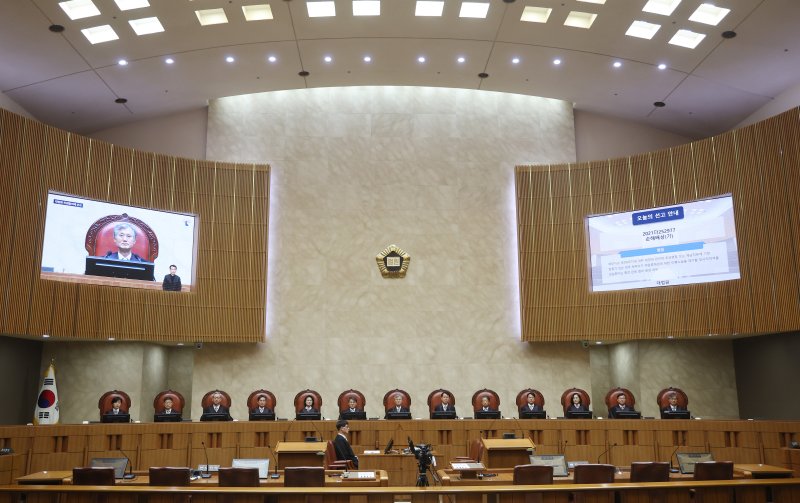
[Financial News] The Supreme Court’s Grand Bench has ruled that a debtor may file a performance lawsuit regarding a claim subject to a collection order or attachment. This decision overturns a 25-year-old precedent that denied debtors standing in lawsuits concerning attached claims.
On the 23rd, the Grand Bench of the Supreme Court (presided over by Chief Justice Cho Hee-dae) ruled that even if a collection order exists on a debtor’s claim, the debtor does not lose standing to file a performance lawsuit regarding the attached claim. The Court also held that this legal principle applies to attachments resulting from delinquent dispositions under the International Collection Act.
Company A, a reinforced concrete contractor, borrowed money from Mr. B during a project due to insufficient funds. Mr. B directly managed Company A’s bank account and transferred interim payments to his own account as they were deposited. When Company A failed to repay the full amount by the due date, Mr. B obtained a court-issued garnishment and collection order to recover the debt.
Company A filed a damages suit, claiming that Mr. B had withdrawn the entire interim payment without deducting construction-related expenses as agreed. Company A also argued, in the alternative, that Mr. B should return the unjust enrichment.
The issue arose during the trial when another creditor sought collection and attachment of Company A’s claims. Mr. B argued that, due to the new collection order on Company A’s claim, Company A had lost standing to file the lawsuit.
However, the Supreme Court stated, "Even if a collection order or attachment by delinquent disposition exists, the plaintiff does not lose standing to file a performance lawsuit regarding the claim."
The Court further explained, "A debtor’s filing of a performance lawsuit regarding an attached claim does not violate the collection order," and "There is no legal basis to conclude that a debtor loses standing to file such a lawsuit solely because a collection order exists."
This ruling overturns the previous precedent that only the collection creditor could file a performance lawsuit against a third-party debtor when a collection order exists, and that the debtor loses standing to file such a lawsuit regarding the attached claim. It establishes a new legal principle after 25 years.
Of the 13 Supreme Court justices, Justice Noh Tae-ak was the sole dissenter, stating that he did not see the need to overturn the precedent. Justice Noh argued, "If a debtor retains standing to file a performance lawsuit even after a collection order is issued, it would significantly restrict the collection creditor’s authority," and "This contradicts the purpose of the Civil Execution Act, which aims to fully protect the collection creditor’s rights."
[email protected] Seo Min-ji Reporter