Constitutional Court: 'Constitutional Complaint Against Court Judgments Is Not a Fourth Instance... It Is a Constitutional Procedure for Protecting Fundamental Rights'
- Input
- 2025-10-23 12:31:10
- Updated
- 2025-10-23 12:31:10
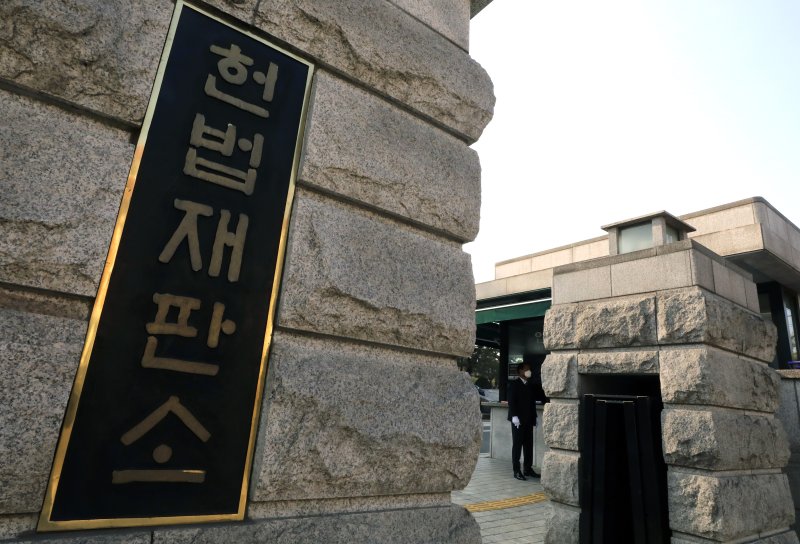
[Financial News] The Constitutional Court of Korea has expressed concern that describing the Constitutional Complaint Against Court Judgments, promoted by the Democratic Party of Korea (DPK), as a 'fourth instance' could distort its true nature. This statement counters criticism that such a complaint would effectively create a fourth instance, violating the Constitution, which designates the Supreme Court of Korea as the highest court.
On the 23rd, the Constitutional Court of Korea stated, "Describing the Constitutional Complaint Against Court Judgments as a fourth instance extending the court’s hierarchy may misrepresent its essence."
The Court further explained, "The Constitutional Complaint Against Court Judgments is not a procedure to contest the correctness of a judgment itself. Rather, it is an independent remedy to determine whether the exercise of judicial power has infringed upon constitutionally guaranteed fundamental rights." The Court emphasized, "Since it does not constitute a retrial of court decisions, it cannot be regarded as establishing a fourth instance within the judicial system."
The Constitutional Court of Korea also clarified the distinction between itself and the Supreme Court of Korea. It stated, "The Constitution assigns the Supreme Court of Korea the role of the highest court for both factual and legal matters." The Court added, "The Constitutional Court’s review is fundamentally different from the judicial authority exercised by the courts, focusing on constitutional review for the protection of fundamental rights. This is a constitutional function aimed at safeguarding basic rights."
The Court continued, "The judicial authority of ordinary courts and that of the Constitutional Court of Korea are fundamentally different in nature. The Constitutional Court is an independent institution that performs constitutional review, which is essentially distinct from the courts’ judicial authority." The Court warned, "Focusing on a hierarchy of judicial authority and labeling the Constitutional Complaint Against Court Judgments as a fourth instance distorts its essence and may hinder accurate understanding."
The Court also stressed that discussions on amending Article 68(1) of the Constitutional Court Act, which currently excludes court judgments from constitutional complaints, have long been debated in academia. The Court described this as a significant issue that determines the scope of protection for citizens’ fundamental rights. It emphasized, "For the public to understand this issue correctly and to foster in-depth and healthy discussion based on the essence of the matter, accurate terminology by the media is essential."
The DPK is pushing to introduce the Constitutional Complaint Against Court Judgments, which would allow constitutional complaints to be filed against court rulings. Article 68(1) of the Constitutional Court Act currently stipulates that individuals whose constitutionally guaranteed fundamental rights have been violated may file a constitutional complaint with the Constitutional Court of Korea, except against court judgments. The proposed amendment seeks to remove the phrase 'except against court judgments.'
The amendment to the Constitutional Court Act, spearheaded by Kim Gipyo of the DPK, would allow constitutional complaints against finalized judgments in cases where: (1) the judgment contradicts a Constitutional Court decision; (2) the judgment was rendered without following due process as prescribed by the Constitution and law; or (3) it is clear that the judgment violated the Constitution or law and infringed upon fundamental rights.
Critics argue that allowing the Constitutional Court of Korea to review decisions of the Supreme Court of Korea, the highest court, would violate constitutional provisions.
[email protected] Seo Min-ji Reporter