"Extensive Damage, Serious Social Harm"—Many Koreans Involved in Cambodian Crimes Receive Prison Sentences, Court Rulings Reveal...
- Input
- 2025-10-23 16:18:59
- Updated
- 2025-10-23 16:18:59
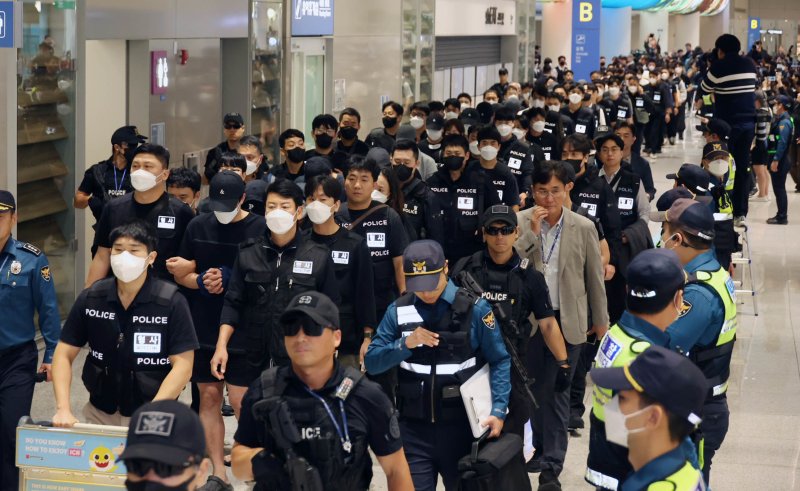
[Financial News] Seven out of ten Koreans involved in overseas criminal organizations in Cambodia and elsewhere have been sentenced to prison, court records show. Courts commonly pointed out that the crimes caused massive financial and psychological harm to numerous unspecified victims in a short period, and that recovery of damages was difficult.
An analysis of ten court rulings on 'overseas criminal organization cases' from the past two years, accessed via a verdict search service on the 23rd, found that 22 out of 31 defendants (about 71%) received prison sentences. The sentences ranged from one to nine years in prison. Factors such as the defendant’s role in the crime, the scale of the damage, and any prior criminal record influenced the length of the sentence. In addition, six received suspended sentences, and three were fined.
For those sentenced to prison, the courts emphasized the severe social harm and the gravity of the offenses. The fact that many victims petitioned for harsh punishment was also considered. In September, the Ulsan District Court sentenced Defendant A to four years in prison for working as a 'chatter' at a telecommunications financial fraud call center in Borei, Cambodia, defrauding more than 90 victims of approximately 9.7 billion won. A was found to have approached people interested in investments via social networking services (SNS), built rapport, and lured them to fraudulent investment websites. The court criticized, "There were victims who took their own lives as a result of this crime, and others are still suffering."
Claims that there was no criminal intent were not accepted. In March, the Changwon District Court sentenced Defendant B to four years in prison for traveling to Cambodia and delivering fraudulent bank accounts to a criminal organization. Although B argued ignorance of the accounts’ use in the crimes, the court pointed out that it was hard to find another reason for raising the account limit to 5 billion won or for needing multiple accounts when traveling to Cambodia.
Many cases recognized implied intent. In April, the Chuncheon District Court sentenced Defendant C to five years and six months in prison, stating, "Even if the defendant did not know the details of the money laundering process, it is reasonable to conclude that they at least recognized and accepted the possibility of acquiring criminal proceeds from this investment scam."
The courts also found claims of coercion unconvincing. Although defendants may not have acted with complete freedom, they were not prevented from reporting to authorities or seeking help. In April, the Seoul Eastern District Court sentenced Defendant D to four years in prison for opening and providing a corporate account in exchange for 7 million won and a 1% daily commission, then traveling to Cambodia. D claimed to have been monitored and confined, but the fact that their passport was not confiscated and that they frequently visited casinos alone was decisive evidence. Other organization members often addressed D with honorifics. The court concluded, "The level of surveillance does not constitute 'irresistible force' or 'threats to life or physical safety with no means of defense' as defined in Article 12 of the Criminal Act."
Sentences were harsher for those who played central roles or caused greater harm. In March, the Suwon High Court sentenced a member of an investment scam ring—responsible for defrauding 86 victims of 18 billion won—to nine years in prison. The defendant managed interpreters more proactively than the ringleader, received significant compensation, and was motivated solely by financial gain.
Given the ongoing damage from Cambodian criminal organizations, the government’s comprehensive response, the likelihood of further crimes if penalties are lenient, the fact that many repatriated suspects deny the charges, and cases involving deaths or family breakdowns, it is likely that courts will apply strict standards if the repatriated suspects are prosecuted. In fact, the Seoul Central District Court recently sentenced Mr. Shin (26) to ten years in prison for handing over an acquaintance to a Cambodian voice phishing ring after they refused to participate in a scam. The sentence drew attention as it exceeded the nine-year term requested by prosecutors.
[email protected] Seo Ji-yoon Reporter