Successful Issuance of 2.4 Trillion Won in Dollar and Yen Foreign Exchange Stabilization Bonds, Lowering Interest Burden with Record-Low Rates
- Input
- 2025-10-23 11:03:39
- Updated
- 2025-10-23 11:03:39
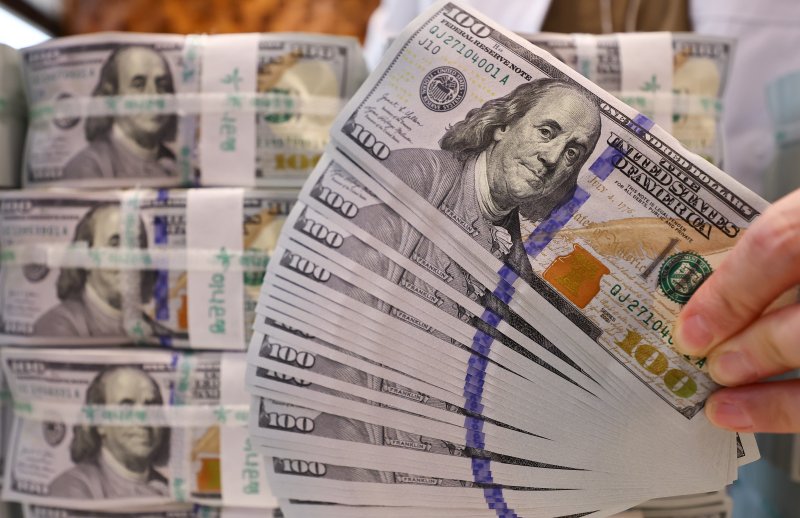
The government has successfully issued government bonds denominated in US dollars and Japanese yen, totaling 2.4 trillion won. The issuance rates ranged from 1% to 3%, marking the lowest levels ever. The total Foreign Exchange Stabilization Bonds issued this year amount to $3.4 billion, the largest since the 1998 financial crisis. As the outstanding government bonds have continued to increase, reaching 1,150 trillion won as of September, the interest burden has grown. However, by increasing foreign reserves, the government has managed to reduce interest costs. This year alone, interest payments on government bonds exceeded 30 trillion won.
On the 23rd, the Ministry of Economy and Finance announced the successful issuance of $1 billion in US dollar-denominated and 110 billion Japanese yen-denominated Foreign Exchange Stabilization Bonds, totaling $1.7 billion. Of this amount, $400 million will be used to repay bonds maturing in November this year. The US dollar bonds have a five-year maturity, while the Japanese yen bonds have maturities of two, three, 5.25, and ten years.
This issuance is notable for achieving record-low interest rates.
The five-year US dollar Foreign Exchange Stabilization Bond was issued at 3.741%, just 17 basis points above US Treasury yields. The 110 billion Japanese yen Foreign Exchange Stabilization Bonds were all issued at low rates in the 1% range. The spread is lower than the previous issuance in 2023.
For the five-year bonds, this spread is even lower than the market rates of Japanese policy financial institutions (in the 20 basis point range) and the issuance rates of New Zealand policy financial institutions (around 18 basis points).
Heejae Kim, Director of International Finance at the Ministry of Economy and Finance, noted, "For the first time, our bonds were issued at a spread in the 10 basis point range compared to US Treasuries. This reflects the competitiveness of our Foreign Exchange Stabilization Bonds and the strong external creditworthiness of the Korean economy."
This year’s issuance has significantly increased foreign reserves. Following the 1.4 billion euro issuance in the first half of the year, the total Foreign Exchange Stabilization Bonds issued now reach $3.4 billion. On an annual basis, this is the largest amount since 1998, when $4 billion was issued.
With this, the government has issued Foreign Exchange Stabilization Bonds in the world’s three major reserve currencies—euro, US dollar, and Japanese yen—this year.
Kim added, "We have confirmed robust demand for our Foreign Exchange Stabilization Bonds in all three major global financial markets. This will diversify the currency composition of our foreign reserves and improve conditions for foreign currency funding in Korea."
This year, the Ministry of Economy and Finance applied the advanced Static Single Assignment Form (SSA) method to the issuance of Foreign Exchange Stabilization Bonds in the three major reserve currencies. The SSA method, which involves specifying the target interest rate from the outset, is mainly used by governments, central banks, international organizations, and policy financial institutions that prioritize stable investments. This also solidifies the status of Korean bonds as high-quality assets in the global bond market.
[email protected] Jung Sang-kyun Reporter