[fn Editorial] Final Stage of United States–Korea Tariff Negotiations: Safeguarding the National Interest Is Essential
- Input
- 2025-10-22 18:38:50
- Updated
- 2025-10-22 18:38:50
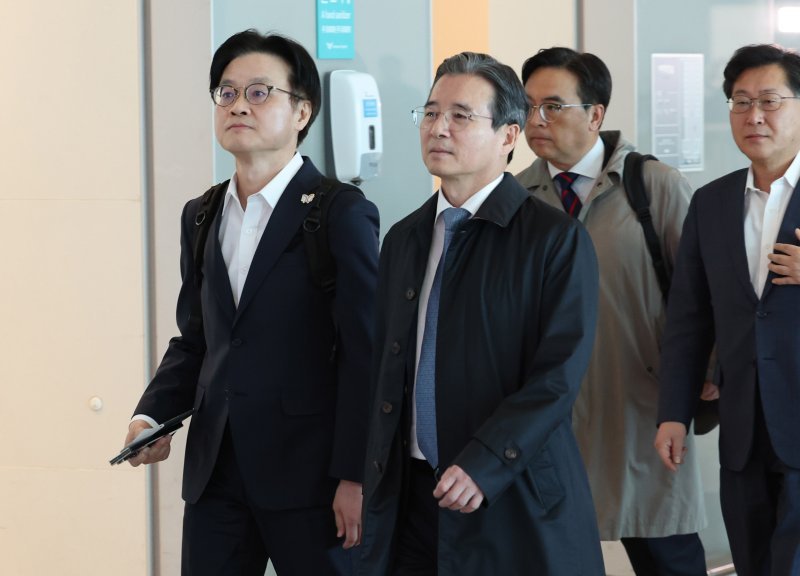
This emergency trip can be seen as a sign of progress in the negotiations. Last week, Howard William Lutnick, U.S. Secretary of Commerce, reportedly briefed President Donald Trump on the status of the negotiations, which may have elicited a positive response. Indeed, on the 21st (local time), President Trump remarked, "We have done well in negotiations with Japan, Korea, and Europe," citing Korea as a successful case. This contrasts with his previous statements, such as on the 15th, "Korea agreed to pay $350 billion in advance for investment in the USA," or on the 17th, "It is only fair that hundreds of billions of dollars flow into the United States," which were intended to pressure Korea.
Although the surface atmosphere of the negotiations appears to have eased, complacency would be a mistake. President Trump is a master negotiator who leverages the other party’s anxieties to increase pressure and uses ambiguous messages to gain the upper hand. It is uncertain when the USA might again exploit Korea’s vulnerabilities. The negotiation team must remain vigilant and persuade the other side toward outcomes that align with the interests of both countries.
The United States–Korea Tariff Negotiations are not simply about adjusting tariff rates with a single country. If the USA raises tariffs, the export competitiveness of Korean companies will decline, which will have a cascading effect on production and employment. Already, Korea’s automobile exports to the USA fell by 7.5% last month, marking a seventh consecutive month of decline. The longer the negotiations drag on, the greater the impact on Korean businesses.
Ultimately, the success of the negotiations depends on how wisely the remaining issues are coordinated. While the main points of contention between the two countries involve investment methods in the USA, there are numerous detailed conditions that must be addressed. Matters such as the proportion and timing of the $350 billion cash investment Korea has pledged to the USA, and how to manage exchange rate risks, are all directly tied to the national interest. It is crucial to establish a clear bottom line and approach the negotiations accordingly.
It is also important to leverage this investment in the USA to secure practical benefits in other areas. Currently, the United States and Korea may include security-related topics such as the revision of the Agreement for Cooperation between the Government of the Republic of Korea and the Government of the United States of America Concerning Civil Uses of Atomic Energy in their joint statement. If an agreement is reached to allow the reprocessing of Spent Nuclear Fuel for industrial purposes, which is currently restricted to research and development, it could significantly enhance the economic utility of nuclear power plants.
Next week, a Korea–U.S. summit will be held ahead of the Asia-Pacific Economic Cooperation (APEC) summit in Gyeongju. Both countries are likely hoping to conclude the tariff negotiations before then. For the USA, this would provide an opportunity to showcase President Trump’s achievements on the multilateral diplomatic stage, while Korea could significantly reduce its tariff-related risks. As Korea sits at the final negotiating table, it must protect its national interest by securing the optimal outcome.