KT Becomes Korea’s First UAM Demonstration Operator... Begins Phase 2 Testing in Incheon
- Input
- 2025-10-22 09:33:04
- Updated
- 2025-10-22 09:33:04
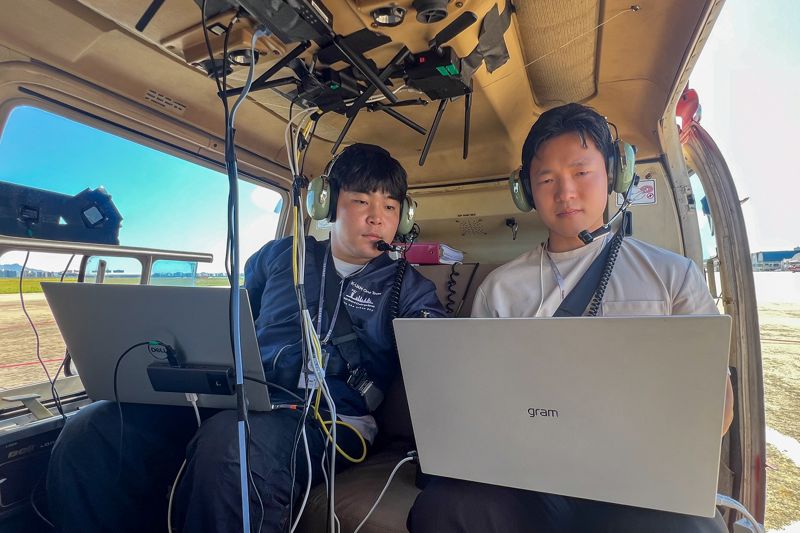
KT Corporation (KT) announced on the 22nd that it has been certified as a demonstration operator for Urban Air Mobility (UAM) by the Ministry of Land, Infrastructure and Transport (MOLIT).
Last year, KT successfully completed the first phase of the Korean Urban Air Mobility (K-UAM) Grand Challenge in Goheung, South Jeolla Province, verifying key technical elements such as integrated operations, flight safety, and control system interoperability. KT also met all equipment and personnel standards required by the special UAM law and was recognized for its advanced technology and operational systems, leading to its qualification as a UAM demonstration operator by MOLIT.
With this qualification, KT is expected to become a key player in the commercialization of UAM in Korea. Institutions designated as demonstration operators under the Urban Air Mobility Act may be given priority as UAM business operators based on their demonstration results, which KT explained will serve as a crucial stepping stone in the future K-UAM commercialization roadmap.
Starting at the end of this month, KT will conduct the second phase of the K-UAM Grand Challenge along the Gyeongin Ara Waterway, stretching from Gyeyang to Cheongna in Incheon. Hyundai Motor Company, Hyundai Engineering & Construction (Hyundai E&C), Incheon International Airport Corporation (IIAC), and Korean Air will also participate. The demonstration will focus on verifying the integrated operation of the 5G aviation network-based UAM system in an urban environment and testing the ability of various UAM stakeholders to respond collaboratively to abnormal flight situations.
To this end, KT will simulate real-world scenarios such as communication failures, GPS signal instability, adverse weather, and aircraft malfunctions to thoroughly test the real-time decision-making and control functions of the UAM traffic management system. In particular, the company will demonstrate a digital operating system suitable for high-density flight environments by transitioning from traditional voice-based flight clearance procedures to automated data communication.
KT has also developed its own simulation system that incorporates the Korean UAM operational concept and the flight dynamics model of electric vertical take-off and landing aircraft (eVTOL) to enable rapid response to emergencies. This system is used to virtually recreate scenarios such as communication loss, GPS errors, and weather changes, allowing pre-verification of response procedures between aircraft and the traffic management system.
Additionally, KT plans to validate a traffic surveillance system that can reliably monitor low-altitude airspace by integrating Real-Time Kinematic Global Navigation Satellite System (RTK-GNSS) technology, based on the 5G aviation network, with existing air traffic surveillance systems such as Automatic Dependent Surveillance–Broadcast (ADS-B) and Multilateration (MLAT). This will enable surveillance of non-cooperative aircraft and maintain monitoring even in GPS-denied situations.
Furthermore, KT will review an integrated information exchange system that shares real-time data—such as surveillance information, weather, and flight plans—with relevant UAM agencies. KT aims to contribute to the establishment of a safe and efficient traffic management system from the initial stage of UAM commercialization.
Manho Won, Head of Experience Engineering at KT, stated, “By obtaining MOLIT’s demonstration operator certification, KT has secured a foundation for UAM commercialization in Korea, and together with the five K-UAM One Team companies, we will successfully complete the second phase of the Grand Challenge. We will continue to advance our systems and technologies to lead innovation in future mobility services and contribute to the creation of new national growth engines.”
[email protected] Park Sung-hyun Reporter