No-Show Penalties at Restaurants to Increase... Up to 40% Fee Imposed
- Input
- 2025-10-22 12:00:00
- Updated
- 2025-10-22 12:00:00
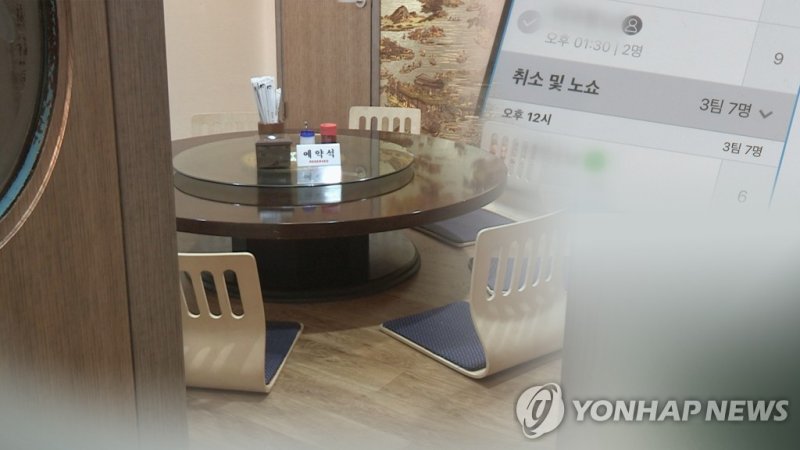
Previously, no-show penalties at restaurants were capped at 10% of the total bill. Going forward, reservation-based restaurants may impose a penalty of up to 40%, while general restaurants may charge up to 20%.
On the 22nd, the Korea Fair Trade Commission (KFTC) announced a proposed revision to the Criteria for Settlement of Consumer Disputes. This revision aims to ensure smooth and fair resolution of disputes between businesses and consumers, and will be open for public comment until November 11.
The revision covers nine industries, including study cafes, wedding halls, restaurants, the accommodation industry, overseas travel agencies, transportation, wedding planning services, sports facilities, and home appliance installation.
For restaurants, the revision sets new limits on reservation deposits and penalty deductions to protect small business owners from losses caused by no-shows. The rules clarify the maximum deposit and penalty amounts for the restaurant industry.
Restaurants that prepare ingredients and meals in advance based on reservations, such as Omakase or Fine Dining establishments, are now classified separately as 'reservation-based restaurants.'
Considering that the average cost ratio in the restaurant industry is about 30%, the revision allows reservation-based restaurants to set penalties up to 40% of the total bill, while general restaurants may set penalties up to 20%.
For large orders or group reservations, such as ordering '100 rolls of gimbap,' the same rules as reservation-based restaurants will apply, allowing for reservation deposits and penalties to be set accordingly.
However, these rules only apply if the restaurant has clearly informed the customer in advance about the reservation deposit and penalty. If not, the restaurant will be considered a general restaurant.
To prevent consumer harm, if the penalty is less than the reservation deposit received by the restaurant, the restaurant must refund the difference to the customer.
If a restaurant intends to treat lateness as a no-show, it must inform customers of the criteria for this in advance.For wedding halls, the penalty will be set at 40% of the total cost for cancellations made 29 to 10 days before the event, 50% for cancellations 9 to 1 day prior, and 70% for same-day cancellations. Previously, the penalty was 35% of the total cost for cancellations made from 29 days before up to the day of the event.
In the accommodation industry, if a natural disaster or similar event makes it impossible to use the accommodation, free cancellation will be allowed even on the day of the reservation. This applies not only to the location of the accommodation but also if a disaster occurs on any part of the route from the departure point to the accommodation.
Additionally, new dispute resolution standards have been established for study cafes, which have seen a rise in usage and disputes. The standards have also been updated to reflect recent changes in standard contracts, such as cancellation fees for trains and express buses.
The KFTC stated, "This revision aims to update the standards to ensure fair and smooth dispute resolution in line with changing consumer trends and industry conditions. We will continue to adapt the Criteria for Settlement of Consumer Disputes, established in 1985, to protect consumer rights and improve consumer life in a practical way."
[email protected] Hong Ye-ji Reporter