[Editorial] The Vice Minister's Troubling Perspective: "Buy When Home Prices Fall"
- Input
- 2025-10-21 18:41:08
- Updated
- 2025-10-21 18:41:08
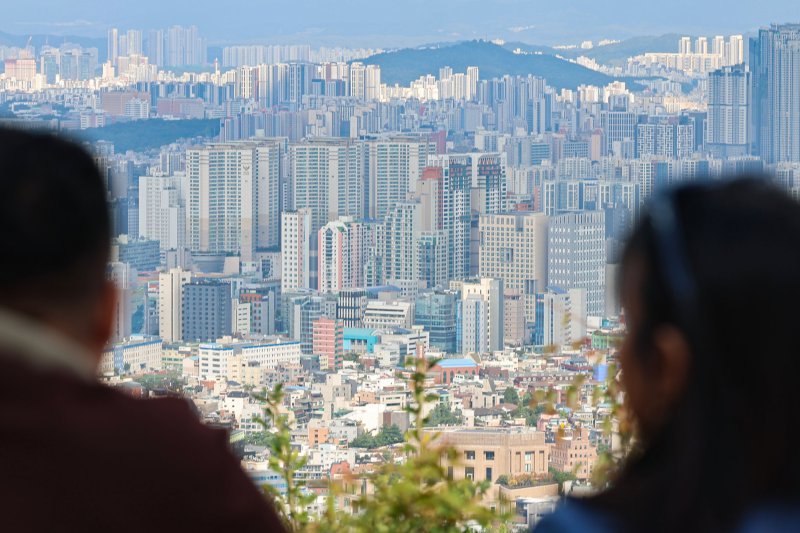
On the 20th, Lee Sang-kyeong, the First Vice Minister of Land, Infrastructure and Transport, appeared on a YouTube channel and stated, "The stress comes from trying to buy now," and added, "If home prices fall, you can buy then." His remarks have caused a stir, especially as they came at a time when conditions for genuine homebuyers have worsened.
Vice Minister Lee likely intended to calm the anxiety of genuine buyers unsettled by the new real estate measures. However, his comments were surprisingly careless for a senior public official and ran counter to the government’s stated commitment to housing stability. He made a series of unrealistic and imprudent statements, such as, "If prices fall, you don’t need to worry about loan benefits," "If incomes rise while prices remain stable, you can buy then," and "Opportunities will come eventually."
A bigger problem is that Vice Minister Lee’s remarks could send the wrong signal to the market. The government cannot and should not attempt to predict whether real estate prices will rise or fall.
Housing prices move according to supply and demand. While the government can intervene in the housing market to ensure transparency in transactions, excessive intervention inevitably distorts market functions. In the past, many people remained without homes after trusting government assurances that prices would soon stabilize. Vice Minister Lee’s recent comments have reignited that trauma.
As market confidence wavers, allegations have emerged that Vice Minister Lee himself engaged in gap investment, purchasing a home with a tenant’s deposit in place. He reportedly sold a property under his name to a gap investor for a profit, while his spouse bought an expensive apartment using a similar method. MOLIT explained, "The timing of moving in did not align, so it was unavoidable," but the public was shocked that the architect of gap investment regulations had participated in such practices.
As public opinion soured, political circles responded immediately. On the 21st, the People Power Party denounced the government’s real estate measures as "kicking away the housing ladder" and "hypocrisy," launching a focused attack on the ruling party. Song Eon-seok, the party’s floor leader, called the remarks "infuriating out-of-body comments," while Kim Eun-hye, the deputy chief policy officer, criticized them as "true exploitation of ordinary citizens." The Democratic Party of Korea (DPK) countered that attention should be paid to the substance of the real estate policy rather than attacking the messenger.
While the sharp confrontation between the two parties may reflect public dissatisfaction, political wrangling without viable alternatives cannot solve the problem. What is needed now is not short-term measures to curb demand through loans and taxes, but a practical supply vision that eases redevelopment and reconstruction regulations and secures new housing sites.
Coincidentally, both parties have formed their own real estate Task Forces. It is hoped that they will devise wise policies to restore market stability and ensure genuine housing security.