[fn Editorial] Hardline Conservative Elected as Japanese Prime Minister—Korea-Japan Relations Must Remain Steadfast
- Input
- 2025-10-21 18:41:06
- Updated
- 2025-10-21 18:41:06
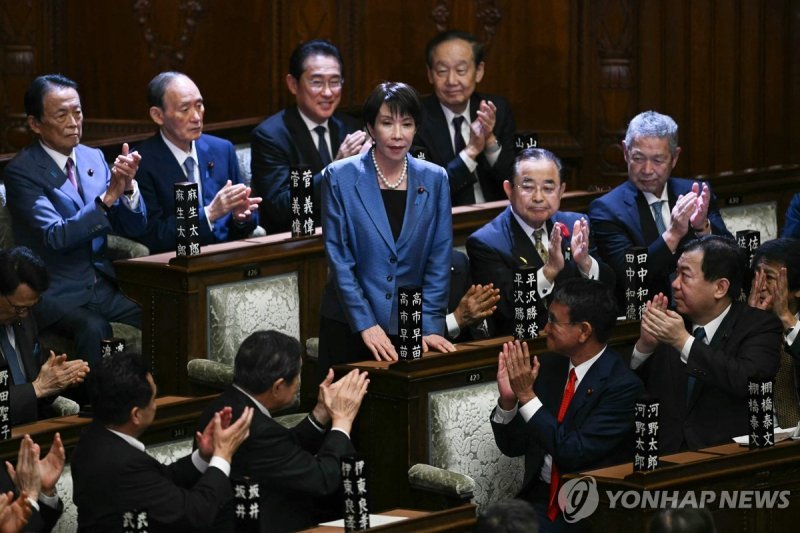
Both Japan and South Korea face the shared challenge of overcoming the US-China tariff conflict and domestic economic stagnation. Recently, relations between the two countries have improved, and it is crucial to further strengthen cooperation to address economic and security issues together. In this context, there are concerns that the appointment of a hardline conservative as Japan’s Prime Minister could worsen relations over historical disputes.
For the relationship between the two countries to mature, it is important for the Takaichi cabinet to avoid provoking public sentiment by touching on sensitive historical issues. As a cabinet minister in the past, Prime Minister Takaichi regularly visited the Yasukuni Shrine on the anniversary of Japan’s defeat and during the Reitaisai festival. This time, she refrained from visiting during the autumn Reitaisai and instead made a monetary offering. This decision appears to have considered public opinion in South Korea and China ahead of her inauguration.
However, now that the LDP has joined hands with Komeito, there is a strong possibility of a more hardline conservative approach going forward. If rallying the conservative base becomes necessary, the government may engage in diplomatic provocations, such as cabinet members visiting the Yasukuni Shrine or attending Dokdo Day events.
Such actions could rapidly cool bilateral relations and negatively impact security cooperation among South Korea, the USA, and Japan. Therefore, Japan must exercise particular restraint.
In terms of economic cooperation, there are many areas where the two countries can work together. During the tenure of former Prime Minister Shigeru Ishiba, the two nations opened channels for economic exchange and collaboration. By combining South Korea’s semiconductor production and manufacturing capabilities with Japan’s expertise in materials, components, and equipment, they can secure stable supply chains and technological superiority.
If the two countries, both possessing overwhelming technological competitiveness, jointly enter emerging markets such as Southeast Asia and the Middle East, they could achieve tremendous synergy.
Even in South Korea, where anti-Japanese sentiment has been strong, expectations for economic cooperation between the two countries are rising. Chey Tae-won, Chairman of the Korea Chamber of Commerce and Industry (KCCI), has proposed a Korea-Japan economic cooperation model similar to the European Union (EU). With such a favorable atmosphere, it is necessary to form a major economic bloc in Northeast Asia through the China–Japan–South Korea Free Trade Agreement (CJK FTA) or the Comprehensive and Progressive Agreement for Trans-Pacific Partnership (CPTPP), which Japan is leading.
Currently, the world faces heightened global risks such as intensifying US-China tensions, supply chain restructuring, climate change, and the energy crisis. In addition, the security environment in Northeast Asia is becoming increasingly complex as the Democratic People's Republic of Korea (DPRK), China, and the Russian Federation strengthen their ties. Under these circumstances, cooperation among South Korea, Japan, and the United States of America (USA) has become even more important. As external conditions worsen, Korea and Japan must avoid confrontation and conflict more than ever before. As neighboring East Asian countries sharing much common ground, they should not miss opportunities for mutually beneficial cooperation.
In this regard, Prime Minister Takaichi should exercise prudence on historical issues and demonstrate practical leadership by strengthening cooperation with South Korea in economic and security fields. The Korean government should also convey these points to Japan and make diplomatic efforts to maintain a positive relationship.