"Why Should the Current Prime Minister Apologize for What Happened 50 Years Ago?" Takaichi Cabinet Launched...Will the 'Ishiba Tailwind' Come to a Halt? [Kim Kyung-min's Timely Hit]
- Input
- 2025-10-21 14:21:57
- Updated
- 2025-10-21 14:21:57
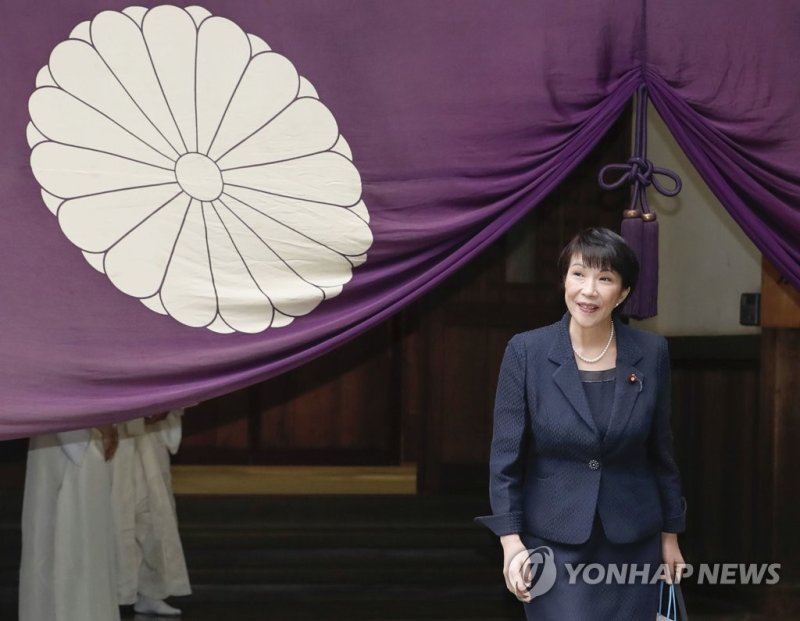
[Financial News] The warm breeze that had been blowing through Korea-Japan relations appears to be coming to a halt with the launch of the Shigeru Ishiba Cabinet on the 21st. The ruling LDP has formalized a coalition with the Japan Innovation Party, and with hardline conservative Shigeru Ishiba forming a new cabinet, concerns are mounting that bilateral ties may once again enter a period of chill. Observers note that the trust that had begun to recover during the previous Shigeru Ishiba administration now faces a critical turning point with this change in government.
The Ishiba Cabinet has declared a 'grand conservative coalition' by joining hands with the Japan Innovation Party after parting ways with the Komeito. However, the cabinet lineup is even more hardline on diplomatic and security fronts. The new cabinet has appointed Motegi Toshimitsu, who has a history of visiting the Yasukuni Shrine, as foreign minister, and Satsuki Katayama, a conservative advocate for constitutional revision, as finance minister.
Such a direction is expected to impact the delicate balance in Korea-Japan relations. If public opinion on historical issues shifts further to the right, unresolved matters such as forced labor and comfort women could once again ignite diplomatic tensions.
Prime Minister Ishiba, often labeled as the 'female Abe' and an 'ultra-right figure,' has repeatedly taken a negative stance on Korea-Japan relations. Her long-held belief is that 'diplomatic pressure on Japan over historical issues is unacceptable,' fueling concerns in South Korea that the positive momentum of the Ishiba era may come to an end.
Prime Minister Ishiba strongly criticized Tomiichi Murayama, then prime minister in 1994, for apologizing for Japan's past in the House of Representatives, questioning, 'Does the current prime minister have the right to apologize for what a leader did 50 years ago?'
In particular, visits to the Yasukuni Shrine are seen as a symbolic act for Ishiba. She has paid respects at the spring and autumn festivals every year and has stated she will continue to do so as prime minister. However, recently, she opted to offer a ritual offering instead of visiting during the autumn festival, reflecting a more cautious approach in consideration of moderate lawmakers and neighboring countries' opposition.
The Government of South Korea is maintaining a cautious stance while closely monitoring the moves of Japan's new cabinet. Diplomats note that, 'Even if trilateral security cooperation among South Korea, the United States, and Japan is maintained, if Japan strengthens its independent diplomatic path, South Korea may face pressure to make difficult choices.' Meanwhile, some in Japan suggest that the Japan Innovation Party's participation as a coalition partner could lead to a more pragmatic approach in economic and technological cooperation.
However, it remains uncertain how stable the coalition with the Japan Innovation Party will be in practice. The Japan Innovation Party has long emphasized bureaucratic reform and regional decentralization, which contrasts sharply with the LDP's conservative, centralized approach. Even within Japanese political circles, there are predictions that 'while it is a conservative integration, internal friction is inevitable.'
#KoreaJapanRelations #IshibaCabinet #JapanInnovationCoalition #LDPShiftRight #Motegi #ShigeruIshiba
[email protected] Kim Kyung-min Reporter