"Does it matter if it's from China? As long as it's pretty"... From Labubu to Cosmetics, China's Bold Advance [Report]
- Input
- 2025-10-21 06:00:00
- Updated
- 2025-10-21 06:00:00
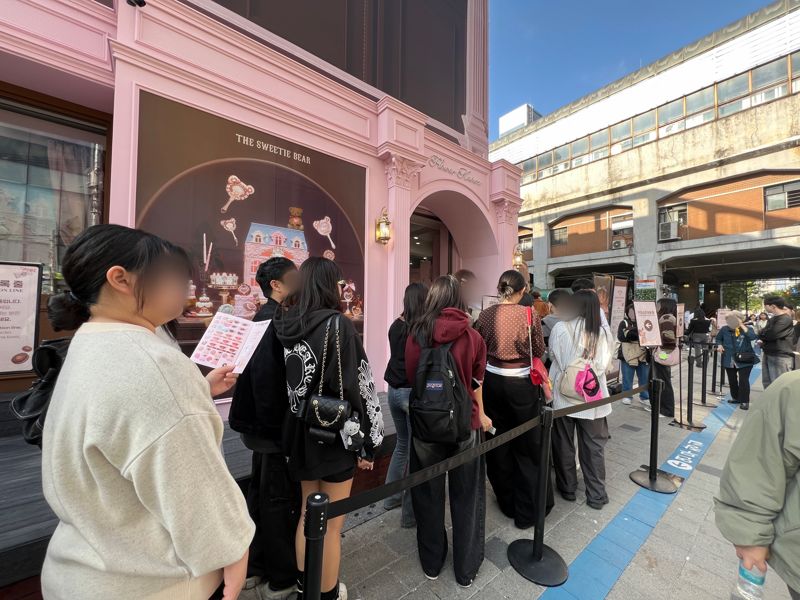
[Financial News] On the afternoon of the 19th, in front of Exit 3 of Seongsu Station on Seoul Subway Line 2 in Seongsu-dong. A striking pink building at the entrance to the main street of Seongsu-dong immediately caught the eye. Outside, people queued under staff guidance to take photos with a giant teddy bear installation. There was also a long line to register for entry into the building. After waiting about 10 minutes, I managed to register. However, a KakaoTalk notification informed me that there were over 200 teams ahead and the expected wait time was more than three hours.
The star of this pop-up was the Chinese beauty brand 'Flower Knows.' To celebrate its entry into the Korean market, the brand is hosting a large-scale pop-up in Seongsu until the first of next month.
Young Women Flock to the 'C-Beauty Pop-up'
Inside the pop-up, the decor—fluttering ribbons, fairy-tale teddy bears, and lace—gave off more of an 'Instagram vibe' than the sense of a 'Chinese brand.' Most visitors were women in their twenties. Baek I-hyun, a 21-year-old university student, said, "I’ve known about the brand for years after seeing on YouTube that its packaging is ornate and engravings are delicate. I saw the pop-up news on Instagram and came right away with a friend." Her companion, Choi Seung-jung (21), added, "There are so many cute designs that women would love, so I really wanted to visit."
This pop-up marks Flower Knows' first official step into the Korean market, coinciding with the launch of its official Korean website. Founded in China in 2016, Flower Knows has built a global Gen Z fandom with its 'girlish aesthetics' identity. Last year, it became the first Chinese cosmetics brand to be stocked at the U.S. retail chain Urban Outfitters, ranking among the top five in beauty sales within three months. The brand is targeting the global market by releasing new products three to four times a year, similar to luxury fashion brands.
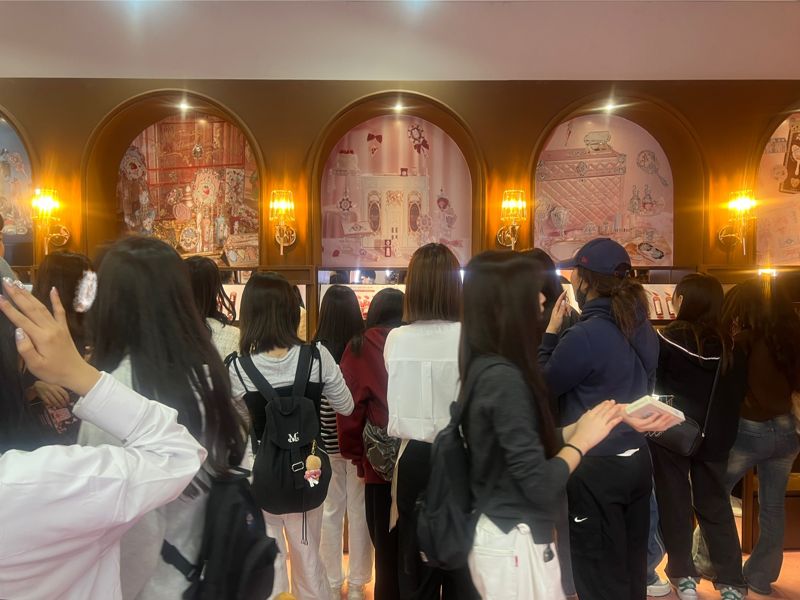
The two-story pop-up was meticulously designed with a focus on visuals. The first floor featured a showroom displaying colorful packaging by collection, while the second floor offered an experience zone where visitors could try out products like lipsticks and eye shadows.
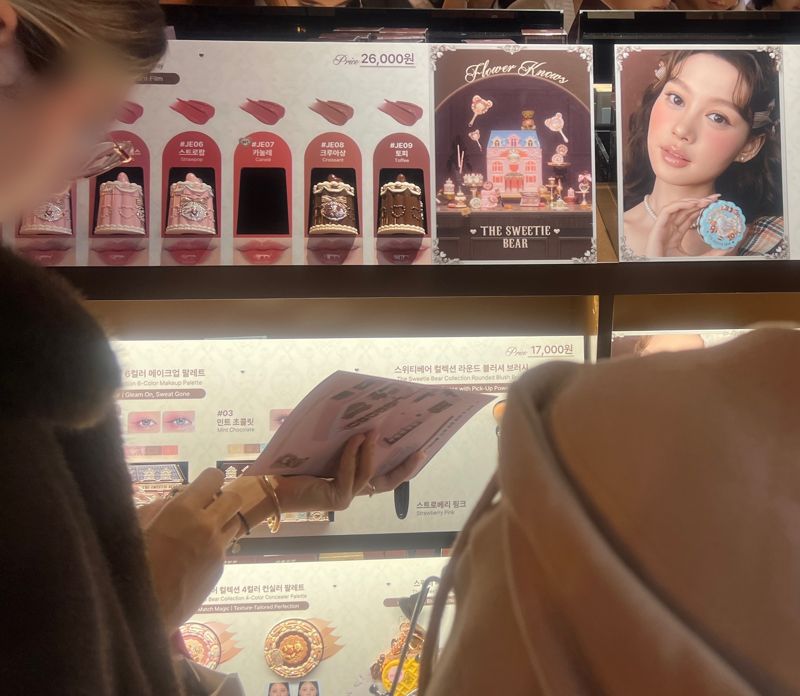
Product prices ranged from the high 20,000 won for the most affordable lip products to the 40,000 won range, slightly higher than major domestic brands. A woman in her twenties, surnamed Ahn, commented, "I came because it's famous among cosmetic enthusiasts, but I was surprised at how expensive it was for a Chinese product."
Beyond Copycats: Success in Upgrading Consumer Goods
Recently, major commercial districts like Seongsu and Jamsil have seen a surge in pop-ups from 'C-beauty and fashion' brands. Last month, the Labubu pop-up by Chinese toy brand POP MART in Seongsu drew 30,000 simultaneous online visitors as soon as reservations opened, causing an 'online open run.' Most Labubu products are now sold out on official online stores and are being traded for more than five times the original price on the resale market.Domestic distributors are also scrambling to secure sales channels for Labubu. CJ OnStyle partnered with POP MART for 'Come On Style,' the biggest shopping festival of the second half, running until the 26th. The first mobile live broadcast selling Labubu, held on the 17th, attracted 100,000 viewers and resulted in a sell-out.
Industry insiders view this trend not as a passing fad but as evidence of the 'advancement of China's consumer goods industry.' The sector is moving beyond copycat strategies, leveraging its own intellectual property (IP) and design capabilities to enter the global market.
A distribution industry official explained, "Recently, global K-pop stars like V of BTS and Lisa of BLACKPINK have been using Chinese characters like Labubu and HIRONO as styling items, which is changing perceptions in Korea. Chinese brands are now becoming mainstream in the fashion market."
localplace@fnnews.com Kim Hyun-ji Reporter