China Defends the '5% Line'... Domestic Market Seen as Breakthrough in Second Round of Tariff War [Kim Kyung-min’s Timely Hit]
- Input
- 2025-10-20 13:58:15
- Updated
- 2025-10-20 13:58:15
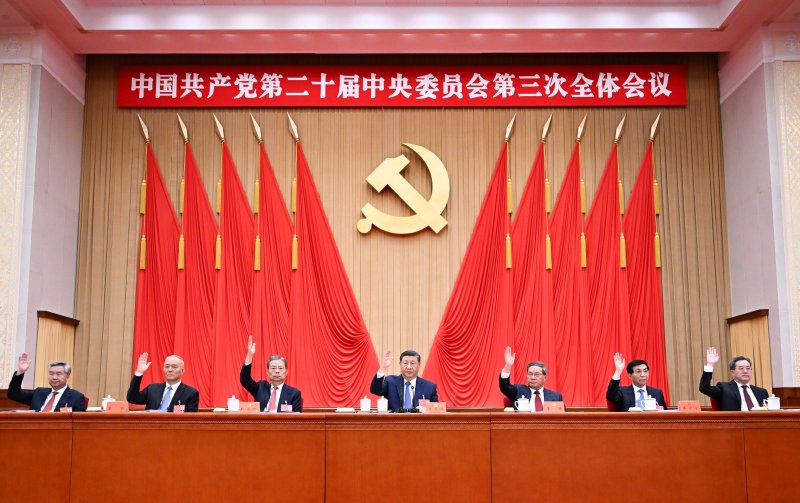
[Financial News] Although China fell short of its 5% growth target for the third and fourth quarters this year, it managed to maintain a cumulative annual growth rate in the 5% range despite external trade risks. Analysts say this is the result of a dual pressure: not just a simple economic slowdown, but the structural entanglement of the United States–China trade war and stagnant domestic demand. At the Fourth Plenary Session of the 20th Central Committee of the Chinese Communist Party (CCP), which opened on the 20th, the causes of this unbalanced growth are expected to be diagnosed, and a new framework for the next five-year economic plan will be presented.
Growth Rate Maintained... The 'Shadow of Domestic Demand'
This year, China barely maintained its 5% growth rate, driven by strong manufacturing exports, but domestic demand continued to lag. Advanced manufacturing sectors such as electric vehicles, batteries, and solar power led export growth, while recovery in consumption and the real estate market remained sluggish. Despite large-scale government infrastructure investment, fixed asset investment declined, and private sector financing remains tight.
This imbalance demonstrates that China’s economy has not yet fully broken away from its export-driven structure. While exports have supported GDP growth, domestic demand and private investment have contracted. Although authorities are expanding policies to boost consumption, household spending power remains limited due to the real estate downturn and high youth unemployment.
Li Qiang, Premier of the State Council of the People's Republic of China (State Council), stated at a roundtable with experts and entrepreneurs on the 14th, "We must continue efforts to expand domestic demand and comprehensively plan various policies to promote consumption," adding, "We also need to work on expanding effective investment." He further emphasized the need to strengthen the resilience and endogenous growth momentum of the economy, officially recognizing the necessity of shifting to domestic demand-driven growth.
Fourth Plenary Session Lays the Groundwork for the Second Round of the Tariff War
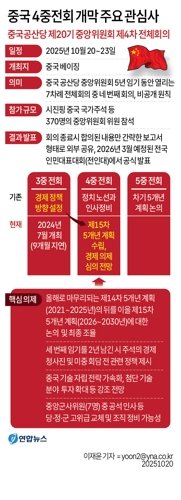
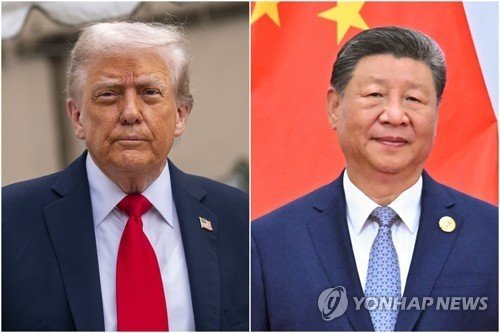
At this Fourth Plenary Session, the 'economic self-reliance strategy' emerged as a key agenda item in response to the prolonged United States–China trade war. As external pressures become more apparent—such as President Donald Trump’s 100% tariff policy and the European Union (EU)’s anti-subsidy probe into Chinese electric vehicles—China is focusing on structural responses centered on supply chain localization and technological self-sufficiency, rather than short-term retaliatory measures.
Xinhua News Agency reported, "The meeting will discuss ways to accelerate Chinese-style modernization, promote economic restructuring, and achieve high-quality development." In particular, expanding domestic demand and fostering advanced manufacturing were cited as parallel tasks, and responses to external uncertainties such as the tariff war are also expected to be included.
Economic experts believe this session will serve as a turning point in clarifying policy directions to maintain China’s '5% growth defense line.' With the People’s Bank of China (PBOC) having limited room for monetary policy, a combination of fiscal stimulus and industrial policy is expected to determine the sustainability of future growth. Expanding infrastructure investment by local governments, strengthening supply chains centered on state-owned enterprises, and expanding credit to the private sector are also being considered as short-term measures.
Transforming the Economy to Circulate Money Within China
China is already pursuing an economic transformation centered on 'internal circulation.' The Ministry of Commerce and the National Development and Reform Commission (NDRC) recently stated in a report, "Strengthening the stability and self-sufficiency of supply chains is the foundation for long-term growth." This signals China’s intent to accelerate its shift toward a self-reliant economy, as the tariff war has evolved from a short-term trade dispute into a battle for industrial supremacy.
The Fourth Plenary Session is also expected to discuss a five-year investment roadmap for fostering strategic industries such as artificial intelligence (AI), semiconductors, new energy vehicles, and the space industry. The Chinese government is working to increase self-sufficiency in core technologies while diversifying export markets to regions such as the Association of Southeast Asian Nations (ASEAN), the Middle East, and Latin America to reduce dependence on the U.S. and European markets.
Additionally, at this Fourth Plenary Session, at least 12 vacant seats in the Central Committee of the Chinese Communist Party (CCP) created by President Xi Jinping’s anti-corruption drive are expected to be filled. Due to the dismissal of military leaders such as He Weidong, Vice Chairman of the Central Military Commission, and Miao Hua, Director of the Political Work Department, significant personnel changes are anticipated. Along with the military reshuffle, there is speculation that Dong Jun, Minister of National Defense, may join the Central Military Commission.
[email protected] Kim Kyung-min Reporter