Supreme Court of Korea Rules Residents Are Workers: Overtime Pay Required for Hours Exceeding 40 Per Week
- Input
- 2025-10-20 10:58:03
- Updated
- 2025-10-20 10:58:03
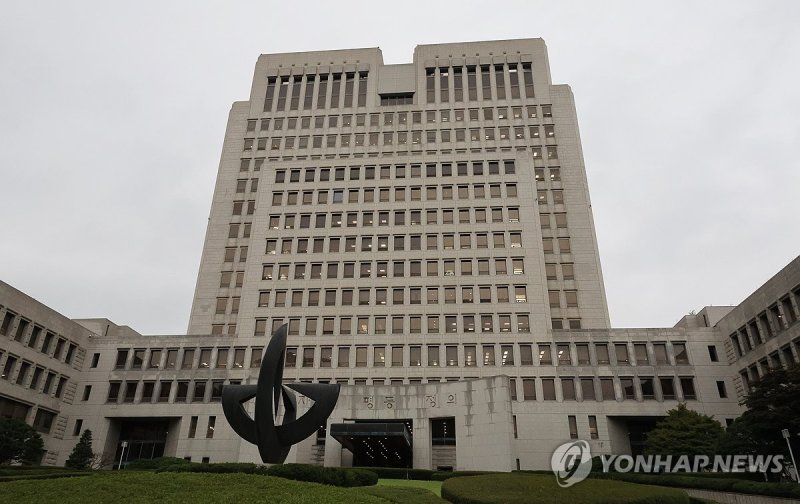
[Financial News] The Supreme Court of Korea has ruled that residents (doctors in training for board certification) are considered workers under the Labor Standards Act and must receive overtime pay for extra hours worked.
On the 20th, the legal community reported that the Supreme Court of Korea's third division, presided over by Justice Oh Seokjun, upheld the previous ruling in favor of three Emergency Medicine (EM) specialists at Asan Medical Center who filed a wage lawsuit against The Asan Foundation.
From March 2014 to October 2017, A and others worked as EM residents at Asan Medical Center. They filed a lawsuit demanding overtime pay for hours exceeding the 40 hours per week limit set by the Labor Standards Act.
The hospital argued that A and the others were not workers but trainees, and therefore the Labor Standards Act did not apply. Even if they were considered workers, the hospital claimed that an Inclusive Wage System had been established, so there was no obligation to pay additional compensation for overtime or night work.
The training contract signed between A and the hospital stated, 'The standard training hours per week shall be 80 hours, but for educational purposes, up to 8 additional hours may be allowed.'
The first trial ruled in favor of the residents. The court stated, 'The plaintiffs should be regarded as workers in a subordinate relationship, providing labor under the direction and supervision of the hospital,' and determined that the Labor Standards Act should apply. However, it ruled that overtime pay should only be provided for hours exceeding 80 hours per week, in accordance with the contract.
In contrast, the second trial did not recognize an implicit Inclusive Wage System agreement and held that overtime pay should be provided for hours exceeding 40 hours per week, as stipulated by the Labor Standards Act. As a result, the overtime compensation owed to A and others increased significantly to between 168 million and 177 million won each, compared to 1.17 million to 1.91 million won in the first trial.
The second court stated, 'Since the Labor Standards Act sets the weekly working hours at 40, there is an obligation to pay overtime for hours exceeding this limit,' and ruled that 'the 80 hours per week agreement falls short of the legal standard and is therefore invalid.'
Although the hospital appealed, the Supreme Court of Korea dismissed the appeal, stating, 'There was no error in the interpretation of the employment contract or the legal principles regarding the establishment of an implicit Inclusive Wage System agreement, nor was there any omission in the necessary review that would have affected the judgment.'
[email protected] Seo Min-ji Reporter