Ko Seon-woong’s Sound Drama ‘Seopyeonje: The Original’...“A Universe Unfolded in a Small Room”
- Input
- 2025-10-20 11:18:32
- Updated
- 2025-10-20 11:18:32
[Financial News] “Everything is resolved through sound. Whether happy, sad, resentful, or grieving, we live by expressing it through song.”
‘Seopyeonje,’ widely known through the novel and film of the same name, has been newly reimagined as a sound drama.
‘Seopyeonje: The Original,’ presented as a commemorative performance for Jeongdong Theater’s 30th anniversary, previewed select scenes for the press ahead of its official opening on the 17th.
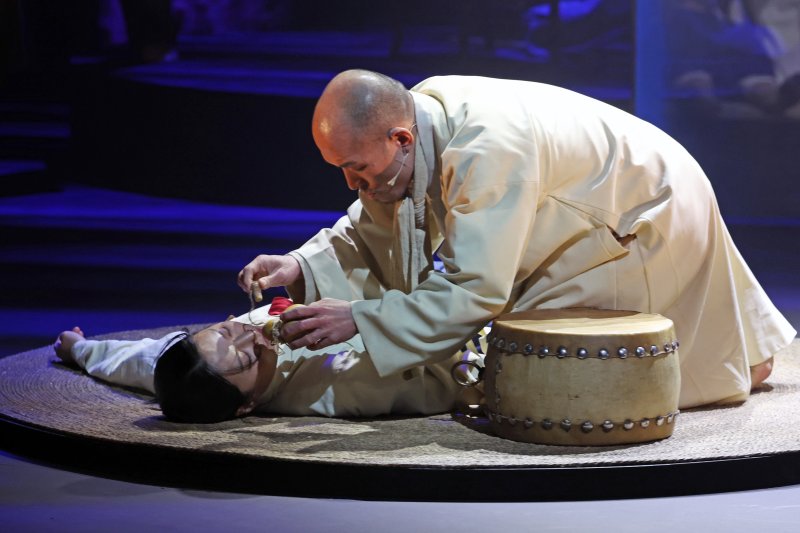
The production centers on a father who seeks to fulfill his unachieved dream of becoming a pansori singer through his daughter, and a young girl who has lost her sight. It explores the depths of human longing and the path of art. Director Ko Seon-woong, renowned for pioneering new horizons in changgeuk with works like ‘Byeon Gang-soe: After the Dot, Ongnyeo’ and ‘Gwito: The Rabbit’s Rebellion,’ once again collaborates with music director Han Seung-seok, drawing early attention.
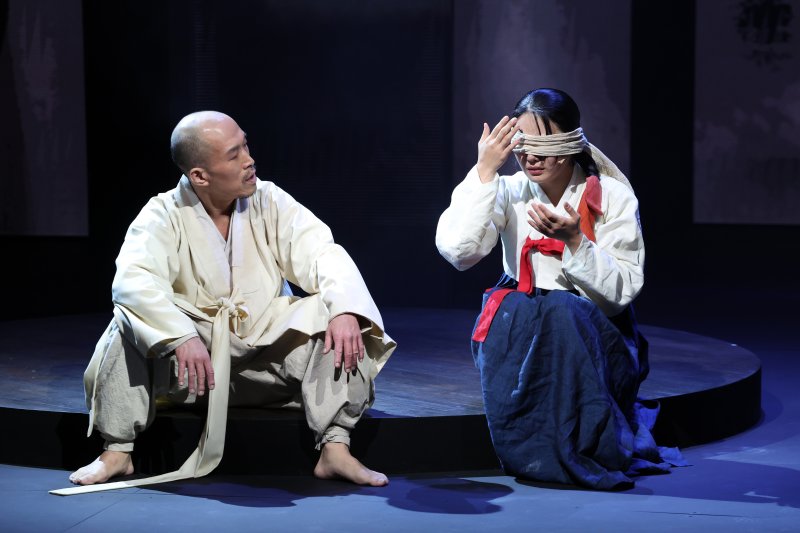
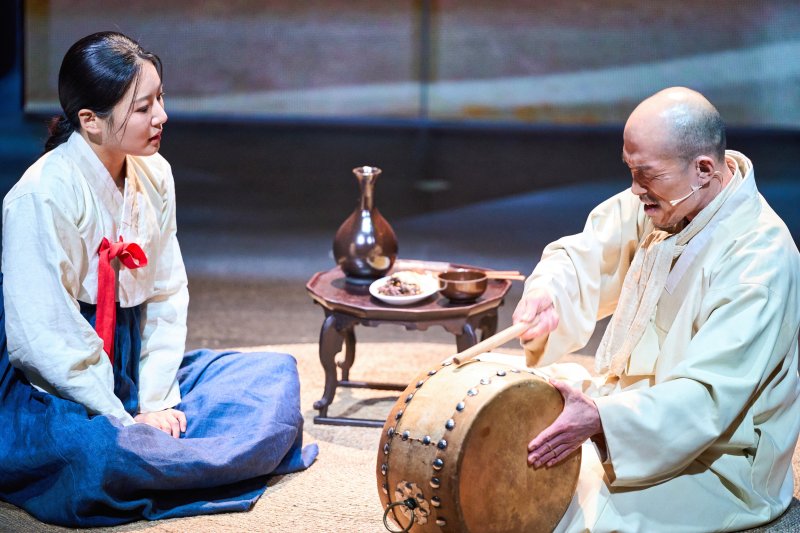
During the Act 1 preview, a scene was revealed in which the girl, having lost her sight at the hands of her father, expresses her resentment, calling him ‘cruel.’ The father, singing the farewell aria from ‘Chunhyangga,’ conveys his heartfelt emotions. Their voices, as both family and teacher-student, poignantly capture the complex emotions and deep sentiment of Korean traditional music, resonating with the audience.
Director Ko Seon-woong remarked, “Seopyeonje was the first work that connected me to the world of sound. What struck me most was how, within the confines of a small room, people exchanged songs with just a single drum, and yet a vast universe and the journey of life unfolded. I wanted to bring that intense emotion to the stage.”
A distinctive feature of this production is its connection of the singers’ relationships and emotions to classic pansori highlights. Director Ko explained, “While traditional pansori typically follows the narrative of characters like Simcheong or Chunhyang, this work continuously reflects the singers’ lives and deep-seated emotions through the pansori passages they perform.”
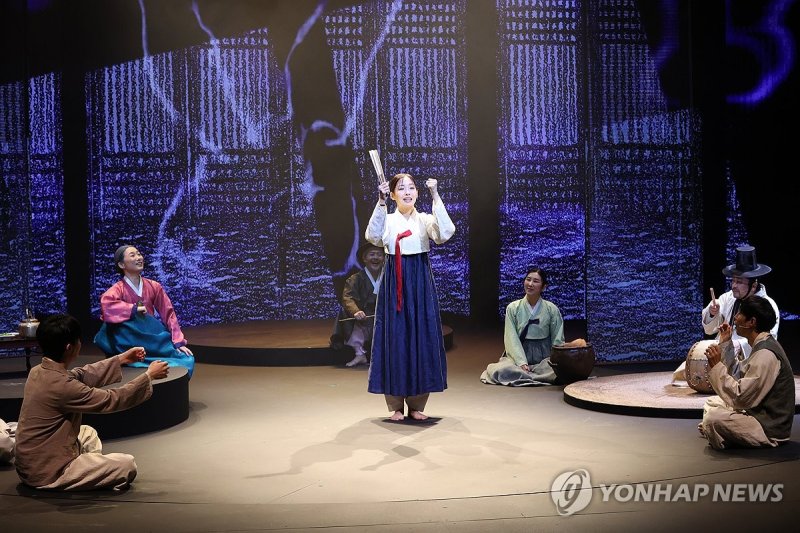
The stage features a total of 22 pieces, including highlights from the five major pansori works—Chunhyangga, Simcheongga, Heungbuga, Sugungga, and Jeokbyeokga—as well as short songs and folk tunes.
Director Ko stated, “I arranged each passage to naturally follow the emotional flow of the novel. Behind joyful songs lie heavier moments, and the interplay of folk songs and short pieces creates an emotional cycle.” He added, “Through collaboration with music director Han Seung-seok, the sequence of the pieces flows as naturally as water.”
He described this project as “a work created with a sincere heart, aiming not to harm the feelings of those who dedicate themselves to song. I wanted to preserve the spirit of artists who devoted their entire lives to their craft, and I hope that sentiment is fully conveyed to the audience.”
The production is divided into two acts: Act 1, where the Man hears about the past of the Father and the Girl from Naengi, and Act 2, where he meets the Girl and confesses his own life story.
Park Sung-woo, who plays the Man and was born into a family of pansori singers, shared, “This work mirrors my own life so closely. I couldn’t stop crying throughout rehearsals,” expressing his deep personal connection.
Jung Sung-sook, CEO: “Our Sound in the Historic Space of Jeongdong”
‘Seopyeonje’ also stands out for its stage direction. The rotating large and small circular stages symbolize the cycles of life and the journeys of each character, serving as bridges that connect their relationships through movement and rotation. The varying heights of the circular structures visualize depth and layering, enhancing audience immersion.
Director Ko explained that, due to the nature of the rotating stage, actors perform barefoot, which satisfies both aesthetic symbolism and practical necessity—since the circular stage leaves no time for actors to put on or take off shoes.
He added, “The choice to leave the characters unnamed, such as ‘the Man,’ ‘the Father,’ and ‘the Girl,’ symbolizes the path of song walked by nameless lives. Only ‘Naengi’ was given a new name to represent vitality, and personally, I also like naengi,” he said with a smile.
Jeongdong Theater, which continues to present original productions like ‘Jeokbyeok,’ aims to establish ‘Seopyeonje’ as a leading Korean performance brand that attracts both domestic and international audiences.
Jung Sung-sook, CEO of Jeongdong Theater, stated, “Since ‘KPop Demon Hunters,’ the number of visitors to Korea has increased. I wanted to fully showcase our traditional sound in the historic space of Jeongdong. As I was considering how to present ‘our own’ with the unique color of Jeongdong Theater, I decided that ‘Seopyeonje’ was the most suitable choice. It will be an opportunity for audiences to truly encounter authentic Korean sound.” Runs through November 9 at Jeongdong Theater.
jashin@fnnews.com Shin Jin-ah Reporter