China Moves Up Discussion of Fourth Plenary Session Five-Year Plan, Eyes Escape from 4% Growth Trap
- Input
- 2025-10-20 06:44:20
- Updated
- 2025-10-20 06:44:20
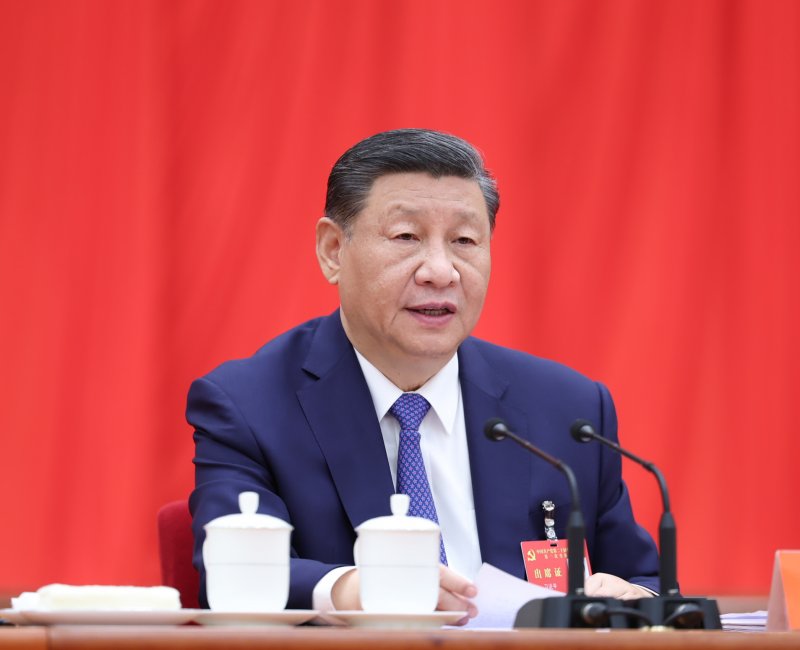
[Financial News] The Fourth Plenary Session of the Central Committee, which will determine China’s blueprint for the next five years, will be held in Beijing on the 20th. With the spark of the China–United States trade war still alive ahead of the U.S.-China summit and the dual crises of economic slowdown, all eyes are on what breakthrough card President Xi Jinping will play at this meeting.
The Fourth Plenary Session of the Central Committee is the fourth of seven plenary meetings held by the Central Committee of the Chinese Communist Party during its term. President Xi Jinping and 370 other Central Committee members will attend, with the main agenda being the formulation of the 15th Five-Year Plan (2026–2030), which will follow the 14th Five-Year Plan (2021–2025) ending this year. Typically, the economic roadmap for the next term is discussed at the Fifth Plenary Session, but this has been moved forward due to the nine-month delay of last year’s Third Plenary Session.
As this session marks the latter half of President Xi’s third term, attention is focused on whether it will signal a policy shift amid China’s growth rate lingering in the 4% range. The World Bank projects China’s growth rate at 4.8% this year, falling short of the government’s target of around 5%. The ongoing China–United States conflict, real estate slump, and weakening domestic demand are all contributing factors.
The Associated Press (AP) noted, "China’s main challenges are to boost consumption and corporate investment and to ease overcapacity issues," predicting that President Xi will relaunch technological ambitions in advanced industries such as artificial intelligence (AI).
Ning Zhang, chief economist at UBS, analyzed, "In response to the U.S. export controls on advanced semiconductors and increased tariffs, China is accelerating its technology self-reliance strategy and needs bolder measures to revive domestic demand."
This session is drawing attention not only for its economic policies but also for possible high-level personnel reshuffles. Key variables include the by-election of Central Committee members and the ongoing rumors of dismissals and purges within the Central Military Commission (CMC). Senior officials such as He Weidong, Vice Chairman of the CMC and third in command in the Chinese military, Liu Jianchao, former head of the International Liaison Department, and Jin Zhuanglong, Minister of Industry and Information Technology, have all disappeared from public view.
Currently, the CMC consists of seven members including President Xi, but with recent dismissals of Li Shangfu, Miao Hua, and He Weidong, only Vice Chairman Zhang Youxia, Chief of the Joint Staff Department Liu Zhenli, and Deputy Secretary of the Central Commission for Discipline Inspection Zhang Shengmin remain. However, many observers believe a large-scale reshuffle is unlikely based on precedent.
The detailed decisions of this closed-door Fourth Plenary Session are expected to be officially announced at the National People's Congress (NPC) in March next year. Participants are isolated from external contact, and only a brief report of the agreed content is released on the closing day.
#China #FourthPlenarySession #XiJinping #FiveYearPlan #ChineseEconomy #ChinaUSTradeWar
[email protected] Kim Kyung-min Reporter