Bolivia Ends 20 Years of Leftist Rule... Centrist and Conservative Candidates Face Off
- Input
- 2025-10-20 05:54:04
- Updated
- 2025-10-20 05:54:04
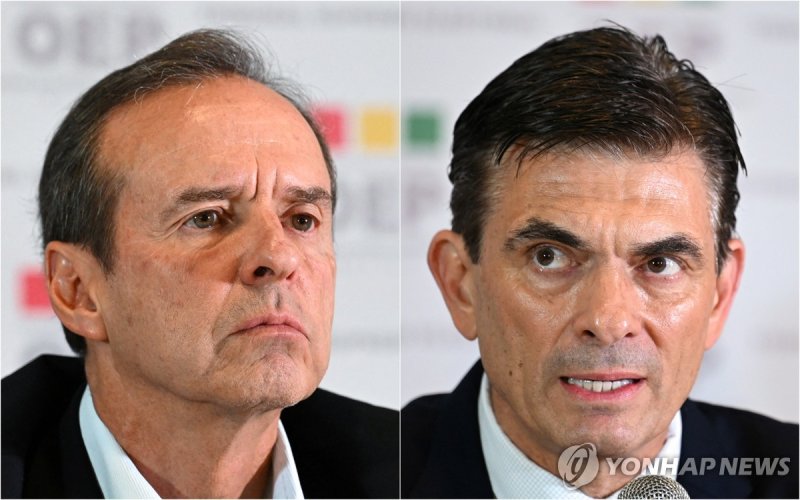
[Financial News] Bolivia is on the verge of ending 20 years of single-party leftist rule. On the 19th (local time), citizens completed a runoff vote to choose the next president between two centrist and conservative candidates.
According to Bolivia’s Supreme Electoral Tribunal, 7,937,138 voters participated in the mandatory nationwide vote. With a population of 11.3 million, Bolivia enforces compulsory voting.
The runoff featured Rodrigo Paz of the centrist Christian Democratic Party and Jorge Quiroga of the right-leaning Liberal Democratic Party. In the first round in August, they received 32.06% and 26.70% of the votes, respectively.
Paz is the son of former President Jaime Paz Zamora and currently serves as a senator. He has proposed gradual reforms, including decentralizing government authority, promoting private sector growth, and maintaining social welfare.
Quiroga, a prominent conservative who served as president from 2001 to 2002, campaigned on pro-business policies, expanding free trade agreements, and restoring private property rights. He has also announced plans to swiftly increase dollar inflows by seeking bailout funds from multilateral financial institutions such as the International Monetary Fund (IMF) to address the severe foreign currency shortage.
The local daily El Deber predicted that preliminary results would be released in the evening. Regardless of the outcome, a centrist or right-wing government will take office for the first time since 2005, breaking the dominance of the Movement for Socialism (MAS). The Associated Press (AP) described the first round as a “public verdict on the leftist bloc.”
Bolivia has faced a worsening dollar shortage at its central bank due to excessive state projects and confusion over foreign exchange policy, compounded by bureaucratic corruption. As a result, MAS was plagued by internal divisions and secured only about 3% of the vote in the first round. Nevertheless, support for Evo Morales remains strong in indigenous regions. In the first round, over 22% of ballots were invalidated, largely due to collective protest votes by Morales supporters.
Immediately after voting, Paz told local reporters, “A very unpleasant era has come to an end,” while Quiroga stated, “We have put an end to 20 years of destructive times.”
The new administration is also expected to accelerate efforts to restore relations with the United States. Both candidates visited the U.S. during their campaigns, meeting with officials from the Donald Trump administration to strengthen ties. On the 14th, President Trump, after meeting with Argentine President Javier Milei at The White House, remarked, “There are many countries, like Bolivia, moving closer to our side.”
The president-elect of Bolivia will be inaugurated on the 8th of next month.
#Bolivia #PresidentialRunoff #RodrigoPaz #JorgeQuiroga #MAS #USRelations
[email protected] Kim Kyung-min Reporter