A Surreal Puppet Show: Taiwanese Artist Hsiung Chun's First Exhibition in Seoul
- Input
- 2025-10-20 09:34:21
- Updated
- 2025-10-20 09:34:21
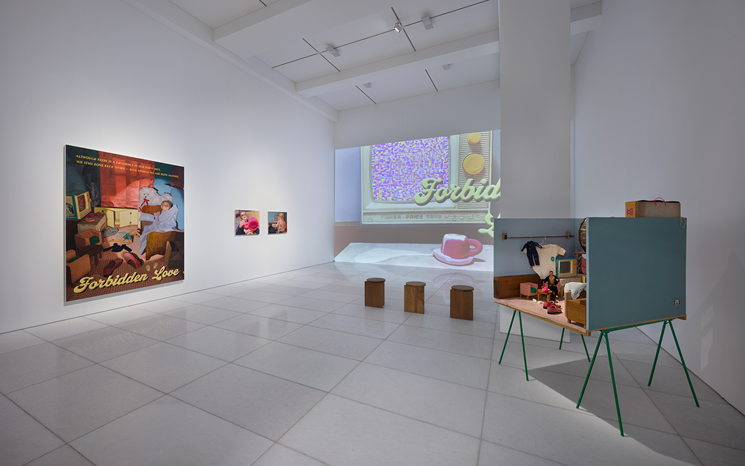
In this exhibition, Hsiung Chun presents a series of three-dimensional works reminiscent of puppet theater stages, expanding them into paintings and video to unfold the fantastical narrative of a 'forbidden world' in multiple layers.
The seven different scenes—kitchen, hallway, bedroom, street, bar, performance stage, and living room—are composed of old toys, product packaging, and childhood memories. The exhibition title, 'Forbidden Love,' serves as a metaphor for the unfamiliar relationships formed by objects from different eras and environments coming together on a single stage, as well as an expression of the hidden desires and betrayals within love.
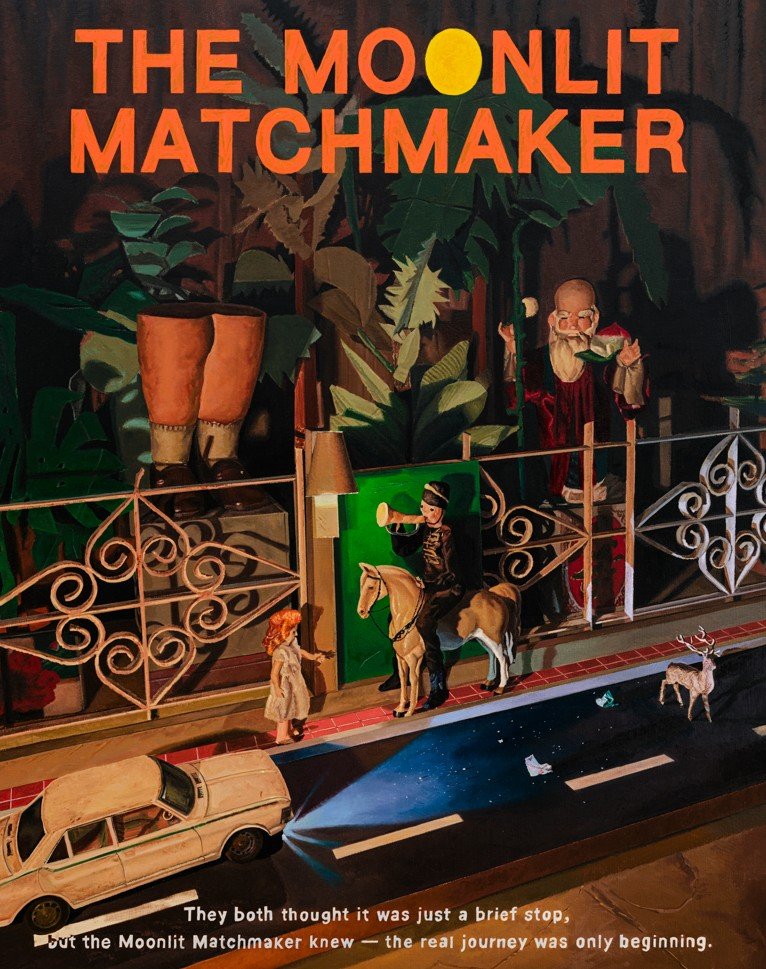
Growing up in a village near a military base during Taiwan's economic boom, Hsiung Chun found artistic inspiration in the fleeting nature of objects that were quickly discarded and replaced. His works, borrowing images, advertisements, and packaging from the 1980s, subvert the order of reality and construct stages where childhood, society, fantasy, and memory intersect.
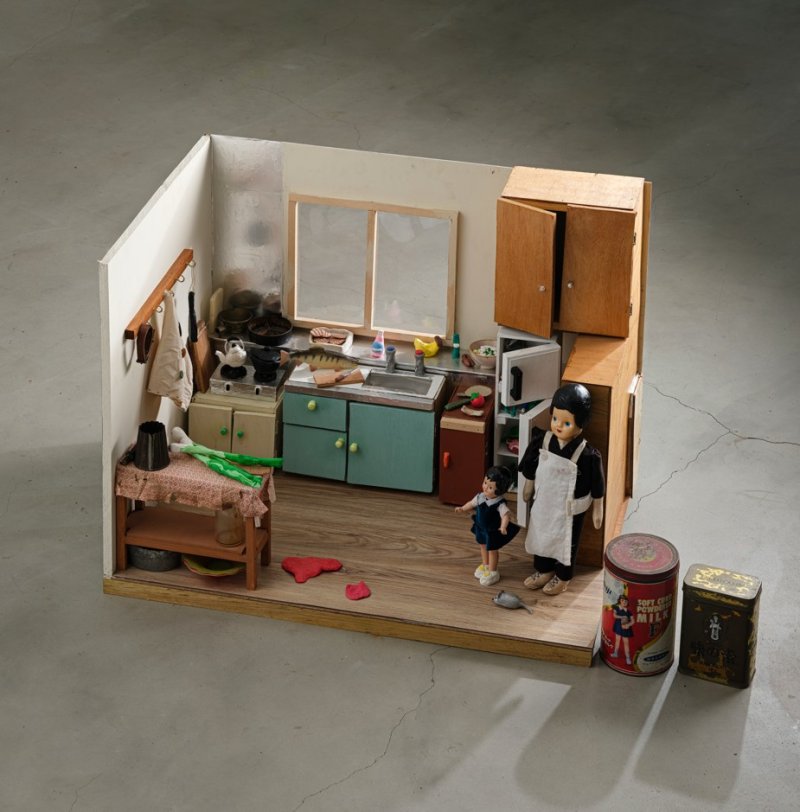
Notably, Hsiung Chun's 'Toy Set (2025)' series consists of three-dimensional works reminiscent of puppet theater stages, mainly in the form of tabletop dioramas.
Each stage is assembled using vintage product packaging, dolls, toys, and children's clay collected by the artist. The series depicts seven different locations, with scenes extracted from these stages recreated as paintings and video works, revealing connections between each piece.
The 24 dolls arranged on the stage serve as characters who drive the narrative, repeatedly appearing across scenes reinterpreted in various media. The seven stages symbolize diverse relationships—such as the bond between mother and child, romantic affection, friendship, and passion for dreams—while also expressing the irony of forbidden emotions like betrayal, competition, and desire lurking beneath the surface.
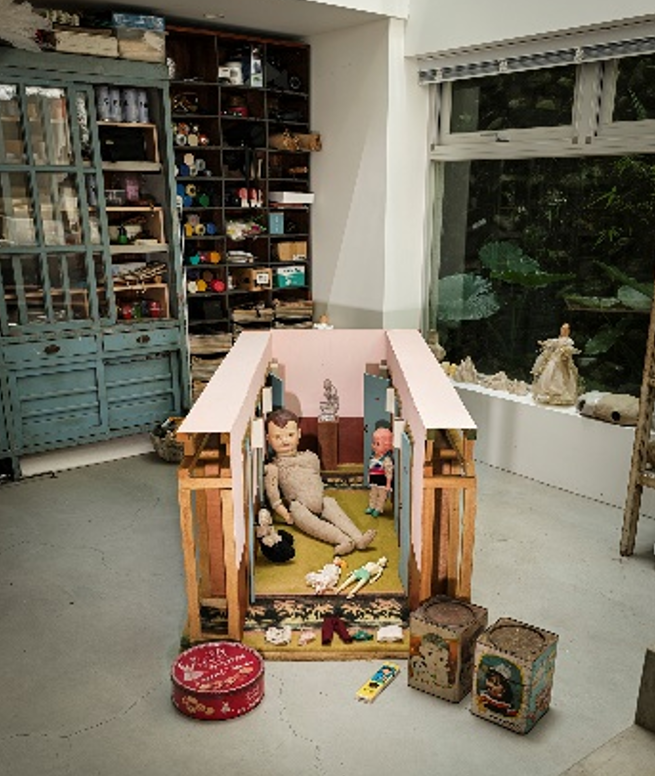
In the 'Toy Packaging (2022)' series, Hsiung Chun compresses and repackages imagined scenes inside plastic or box packaging. The collected toys not only play a central role in the narrative but also paradoxically hint at their nature as mass-produced products.
By staging scenes reminiscent of an absurdist play using various dolls and objects within three-dimensional sets, Hsiung Chun rearranges the vast order of sociocultural reality within his own microcosm.
The series is reinterpreted as a collection of paintings reminiscent of propaganda posters and as time-based video works. Through this process, the real histories embedded in the forms of static objects are transformed into dynamic fictional stories that come alive within the artist's world.
Rather than presenting a single, linear narrative, Hsiung Chun invites viewers to interpret and reflect on the exhibition's themes from multiple perspectives based on their own perceptions.
Cheng Guangyi, director of the National Taiwan Museum of Fine Arts (NTMoFA), commented, "When facing Hsiung Chun's works, viewers may find it difficult to discern whether the original archetype was a toy, a photograph, a painting, an animation, a video, or if any of these could serve as the starting point. At this juncture, it becomes clear that his creative approach is not an escape from reality; rather, the unceasing drive to repeat processes of imitation, appropriation, creation, and representation ultimately brings about changes in reality itself."
Hsiung Chun was born in Taiwan in 1978 and graduated from the Department of Western Painting at the National Taiwan University of Arts in 2003. Growing up during a period of industrialization and consumer culture in Taiwan, he has continued to revive discarded objects and dolls through the language of art.
He has attracted international attention by participating in major group exhibitions at venues such as White Rabbit Gallery (Sydney, 2025 and 2024), Heide Museum of Modern Art (Melbourne, 2024), Taitung Art Museum (Taiwan, 2023), Long Museum West Bund (Shanghai, 2022), New Taipei Art Center (Taiwan, 2020), and Today Art Museum (Beijing, 2012).
Hsiung Chun won the Geisai Taiwan Taikai Award in 2009 and 2011. His works are part of the collections at White Rabbit Gallery (Australia), Long Museum (China), National Taiwan Museum of Fine Arts, Art Bank, and the National Museum of History in Taipei.
rsunjun@fnnews.com Yoo Sun-joon Reporter