Minister Song Mi-ryeong of Agriculture and Food: "K-Chicken Belt to Be Selected Next Year, New Tourism Hubs Will Emerge"
- Input
- 2025-10-19 12:20:10
- Updated
- 2025-10-19 12:20:10
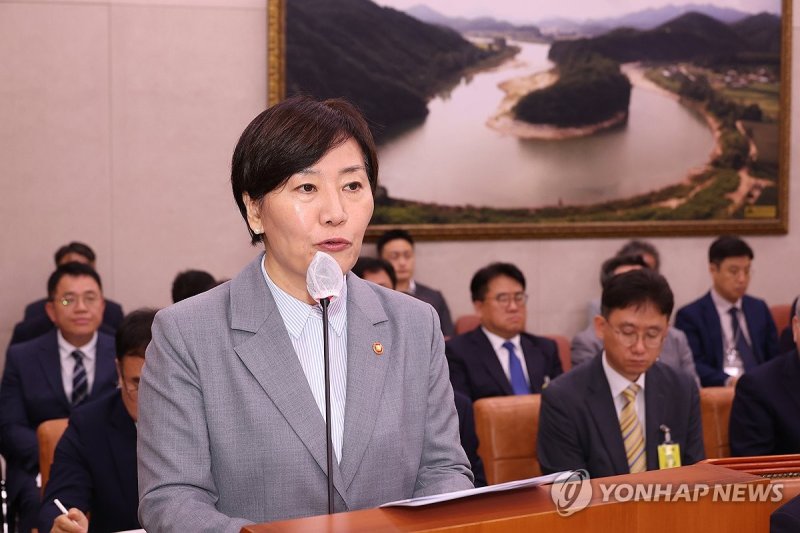
[Financial News] Song Mi-ryeong, Minister of Agriculture, Food and Rural Affairs (MAFRA), announced plans to designate the 'K-Chicken Belt' next year.
On the 19th, appearing on Korean Broadcasting System (KBS) 'Sunday Diagnosis,' Minister Song stated, "There is no need to limit it to a single location. If various types of chicken are commercialized in connection with local tourism hubs, new tourist destinations for foreigners will emerge across the country, helping to revitalize rural areas." Last month, during a State Council of the Republic of Korea meeting, Minister Song told President Lee Jae Myung, "I am considering creating a K-Chicken Belt. There is significant interest from foreigners."
Minister Song also announced plans to slow the production of paddy soybean and floury rice, which are facing concerns of oversupply. Addressing criticism that government policies encouraging the cultivation of alternative crops like soybeans and floury rice to reduce rice paddies have led to a surge in soybean inventories, she explained, "If production increases rapidly without securing enough demand, prices may fall. We are currently discussing how to control the pace of this increase."
She added, "We need to narrow the price gap between imported and domestic soybeans to boost domestic consumption. Food companies could use Korean soybeans to make tofu and develop a premium market." Regarding floury rice, she said, "The previous administration set overly ambitious targets, so we slightly reduced them last year. As we continue to develop new bakery products, it is necessary to promote consumption while adjusting production speed."
Minister Song emphasized that, in response to criticism during the National Assembly audit that the current agricultural distribution structure only benefits Wholesale Market Corporations and large retailers, the government will improve efficiency by lowering wholesale market fees and stabilizing production.
She also responded to suggestions that the expansion of U.S. soybean imports may have been discussed during United States–Korea Free Trade Agreement (KORUS FTA) negotiations, as hinted by Wi Sung-lac, Chief of the Office of National Security (ONS). Song said, "I saw it in the media. It seems this is being discussed because China is not importing U.S. soybeans, but that is all I know." She added, "According to media reports, Kang Kyung-wha, Ambassador to the United States, stated that the United States has not requested further market opening for agricultural and livestock products."
junjun@fnnews.com Choi Yong-jun Reporter