[Editorial] Real Estate Policies That Fail to Grasp Consumer Sentiment Will Repeat Past Mistakes
- Input
- 2025-10-13 20:22:04
- Updated
- 2025-10-13 20:22:04
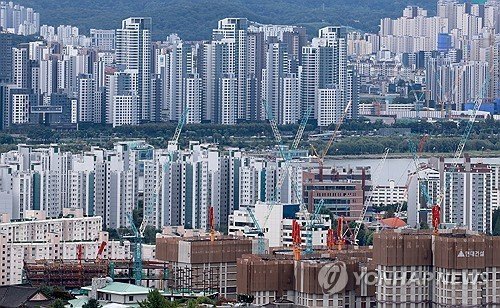
Despite the series of policy announcements, the overheating of housing prices in Seoul and the metropolitan area persists because consumers do not trust the government. While expanding supply is a crucial tool to stabilize prices, the September 7 Housing Supply Plan—which pledged to begin construction on 1,349,000 homes by 2030 under public leadership—has already lost credibility and effectiveness. Construction of the Third New Towns, including Namyangju Wangsuk and Hanam Gyosan New Town, is also facing delays.
The fundamental issue with government measures is their failure to accurately read the hopes and demands of consumers. New towns, which are far from Seoul and require significant time to develop infrastructure—often with further delays—are becoming less attractive. There is also little enthusiasm for public-led real estate supply.
Therefore, supply should be concentrated in Seoul, where demand is highest. Given the lack of available land in Seoul, the only way to increase supply is to identify hidden plots for development and boost the Floor Area Ratio (FAR) to facilitate redevelopment and reconstruction. If necessary, the government should also consider abolishing the Excess Profit Reclamation System and the Capital Gains Tax Surtax for Multiple Homeowners.
For effective results, policies must be multifaceted, expanding supply while also curbing demand. To suppress demand, increasing the Holding Tax should be considered. It is reasonable to impose higher Holding Taxes on homes in high-demand areas like Gangnam, where supply is limited but everyone wants to live. Lowering the transaction tax while raising the Holding Tax could create a balanced and rational tax policy. High Holding Taxes and low transaction taxes may encourage both multiple homeowners and those with a single valuable property to sell, thereby increasing supply.
The failure of the Moon Jae-in administration’s real estate policy, which focused on curbing speculation through higher Holding Taxes, can be attributed to its one-sided emphasis on demand suppression without sufficient supply expansion or reductions in capital gains taxes. The Yoon Suk Yeol administration’s policy of lowering the Holding Tax is not unrelated to the recent rise in housing prices.
In the mid- to long-term, the primary cause—concentration in Seoul and the metropolitan area—must be addressed. Regional areas are experiencing population decline and stagnation, leading to falling home prices. With little prospect for price increases outside Seoul, real estate investment is increasingly concentrated in the capital. The government should also impose restrictions on real estate purchases by foreigners, who currently face few regulations.
Desk-bound policies that fail to grasp the true sentiments of consumers are destined to fail. Recycled and rehashed measures elicit only lukewarm responses from the market. While increasing supply is important, it is essential to provide homes in desirable and livable locations. New towns far from Seoul are less preferred and less effective in stabilizing prices. Accelerating the reconstruction of First-Generation New Towns, which are relatively close to Seoul and well-equipped with infrastructure, could yield positive results.