Vocalist Jang Sa-ik: "There Are Moments When an Old Man’s Song Sounds More Precious"
- Input
- 2025-10-13 11:43:34
- Updated
- 2025-10-13 11:43:34
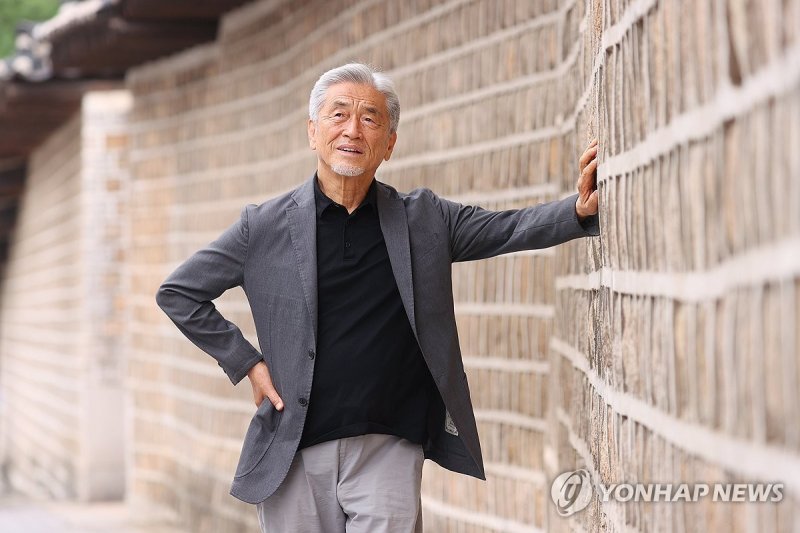
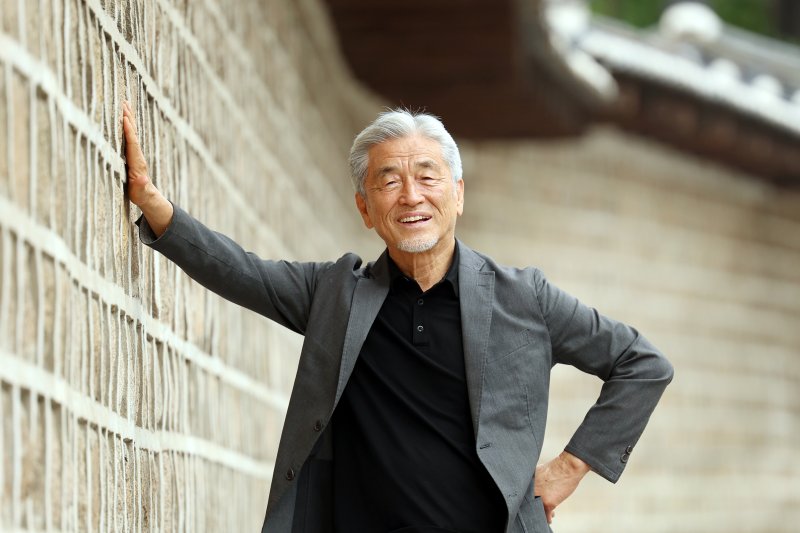
[Financial News] "A durumagi with a red bow tie—what an odd combination. Still, sometimes you want to take an unexpected path. I think I’ll walk that road. With a cheerful step, I’ll sing together with you."
Jang Sa-ik, now 77 and approaching 80, is embarking on a new challenge. For the first time in his 30-year musical journey, he will collaborate with a jazz orchestra. He will take the stage with The Toronto Jazz Orchestra (TJO), an 18-piece big band founded in Canada in 1998.
‘Jang Sa-ik & The Toronto Jazz Orchestra – Jazz in Durumagi’ will be held four times, starting at Mapo Art Center in Mapo-gu, Seoul, on the 19th, and then moving to Daegu, Ansan in Gyeonggi Province, and Busan.■ "My Songs Resemble Jazz"The connection between Jang Sa-ik and TJO began during a joint recording session in Canada in 2018–2019. At that time, 15 of his signature songs were newly recorded in big band arrangements, but the concert was canceled due to the pandemic. Now, six years later, that postponed dream is finally coming true.
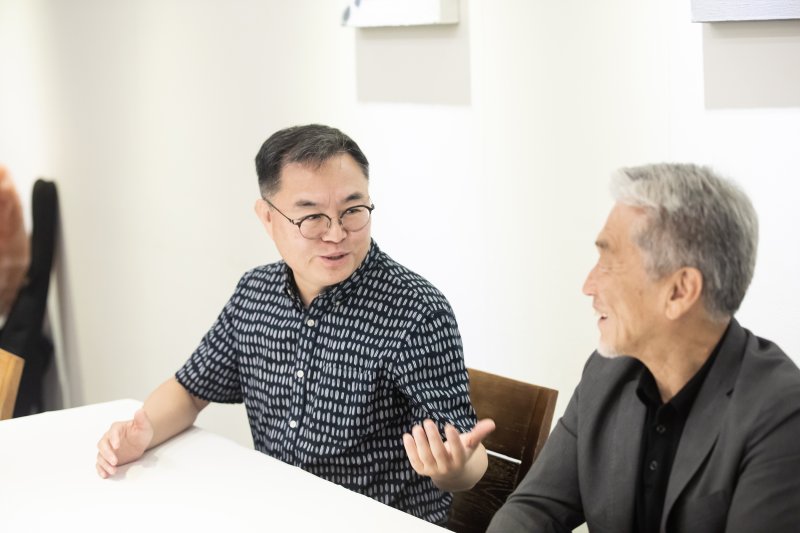
This unique collaboration was led by jazz guitarist and music director Jae-Yeol Jung, who has worked with Jang Sa-ik for over 20 years.
Jae-Yeol Jung recalled, “Jang Sa-ik’s approach to music—singing at his own pace—is already inherently jazzy. When the powerful sound of the brass section merges with his soulful voice, the energy is indescribably intense. During the recording, the local staff described his voice as ‘epic.’”
Jang Sa-ik has often performed his own songs, which are poems set to music, as well as cherished popular songs. For this concert, he selected 15 tracks, mixing both styles, and assigned three songs each to five different arrangers for diversity. For the song “Flower” from his first album, Jang Sa-ik personally suggested the arrangement.
Jae-Yeol Jung explained, “I thought that if those unfamiliar with Korean traditional music interpreted the melodies and combined them with a jazz background, the result would be even fresher. The arrangements span from 1950s big band style to modern jazz, and even include classical and cinematic textures.”
Although Jang Sa-ik claims he doesn’t know much about jazz, his music shares many similarities with the genre. The way he discovered his own vocal style is reminiscent of jazz improvisation.
Jang Sa-ik began singing in earnest after meeting Kim Dae-hwan (1933–2004), a master of free jazz percussion, during his time playing the taepyeongso in a samulnori group.
He recalled, “He told me not to get too caught up in rhythm or harmony, but to sing at my own pace. From then on, I loosened up the rhythm and sang according to my own feelings.” He added, “Once, in Atlanta, I sang ‘Jjillekkot’ to a backing track, and some Southern Black musicians came up to shake my hand, saying my singing was ‘soulful.’ That made me very happy.”
“‘I’ll go ahead, so join in as you wish.’ That’s my attitude. I appreciate it if others follow, but it’s fine if they don’t. My singing isn’t bound by the beat. I think that freedom is what makes it similar to jazz.”
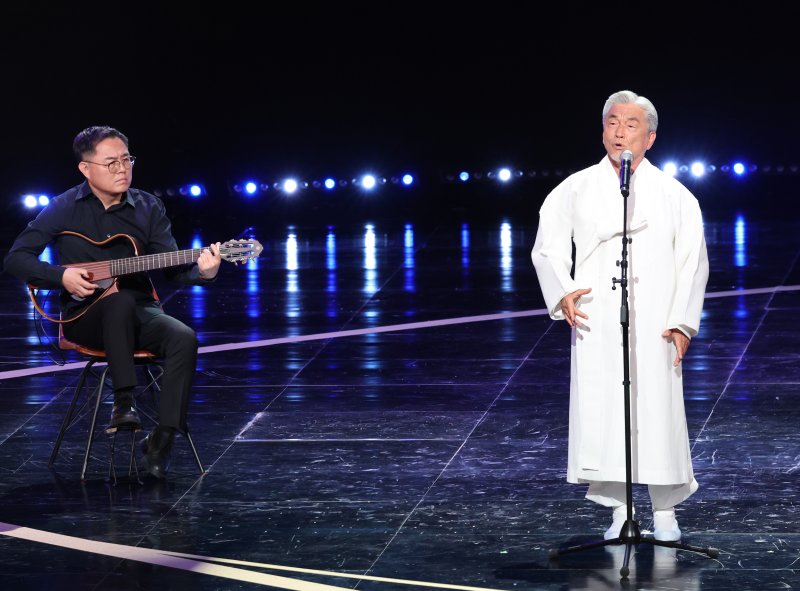
For this concert, Jang Sa-ik’s vocals will be joined by Haegeum player Ha Go-un and a four-member chorus.
Jang Sa-ik joked, “Shouldn’t there be a hint of kimchi and doenjang?” He added, “The most important instrument in a big band that plays strictly by the score is my voice. Only when my voice is added does the foundation truly stand. I couldn’t fully express myself in the studio, so I’m looking forward to this collaboration.”■ Thirty Years of Singing Without a Full Stop"When I stand on stage, a strength I didn’t know I had comes out. Like a shaman possessed by a spirit, I expect incredible synergy."
Jang Sa-ik gave his first performance, ‘The Road to Heaven,’ at a small theater in 1994. The following year, he released his debut album and began his full-fledged music career. Since then, he has released ten studio albums, including ‘Cough,’ ‘Heoheo Sea,’ ‘Dreaming World,’ ‘Longing for People,’ and ‘Self-Portrait,’ building a strong connection with the public.
Jang Sa-ik said, “I started singing at 46, pushed by a friend. What began as a playful experiment has now lasted over 30 years. There were many tough moments when my throat hurt, but I’m simply grateful to have kept singing.” He added, “My mother always said, ‘If you’d sung when you were younger, your life would have been different.’ But looking back, if I’d started then, I don’t think these songs would have come out.”
Now 77, he laughed, “At my age, people used to call you an ‘old man.’ It’s still amazing to be on stage. In our culture, we value the number three—three gods, three tries, three days of resolve. Maybe this 30-year singing journey is a sign to ‘keep going to the end.’” He hinted that his musical journey is far from over.
For Jang Sa-ik, singing is truly life itself. For the past 20 years, whenever close friends passed away, he sang funeral songs in person. “When I comfort sorrow with song, I feel the true power of music,” he emphasized.
“About a year before legendary choreographer Pina Bausch passed away, I saw her dance as if she were singing, and it gave me chills. I thought I should do the same. I’m in the autumn of my life—maybe the eighth inning, if life were baseball. There are moments when the voice of an old person sounds more precious. Thin, rough, and weathered—perhaps the songs sung by the elderly are the truest songs.”
jashin@fnnews.com Jin-ah Shin Reporter