[fn Square] Reflecting on the Life of Yun Dong-ju
- Input
- 2025-10-08 18:35:21
- Updated
- 2025-10-08 18:35:21
Since 2022, a new itinerary has been added: retracing the footsteps of Yun Dong-ju. Visitors now tour the Doshisha University campus and the poetry monument dedicated to him, visit the Uji River Cloud Bridge where he took his last commemorative photo with friends in early summer 1943, and seek out the old Doshisha University dormitory where he was arrested by Japanese police.
The highlight of this journey is the Yun Dong-ju poetry monument on the Doshisha University campus. Next to it stands the monument to Jeong Ji-yong, a senior in the English department whom Yun admired. Yun transferred from the English department at Rikkyo University in Tokyo to Doshisha University for several reasons, one of which was Jeong Ji-yong's influence.
Such trips were once limited to writers and literary enthusiasts, but have now spread to general travelers. This trend is particularly evident in this 80th anniversary year of Yun Dong-ju. On February 16, Doshisha University awarded the poet an honorary Doctor of Literature degree. The event, attended by his nephew, received media attention and renewed focus on Yun Dong-ju's connection to Doshisha University.
Born on December 30, 1917, in Myeongdong Village, Manchuria, Yun Dong-ju lived for 27 years and four months. He spent 20 years in Manchuria, four years at Yonhi College in Gyeongseong, and over three years in Tokyo and Kyoto. Many of the poems we learned in textbooks or often recite were written during his time at Yonhi College. Works such as 'A New Road,' 'Self-Portrait,' 'Record of Repentance,' 'Prologue,' and 'Night of Counting Stars' were all created between 1938 and 1942.
According to Song Uhye, author of 'Yun Dong-ju: A Critical Biography,' the brightest period of the poet's life was his four years at Yonhi College. In 1938, his first year, the Sino-Japanese War was raging on the Chinese mainland and Japanese oppression was severe, but Yonhi College was almost a sanctuary. Korean language classes were freely conducted, and professors taught students the Christian spirit of freedom and truth. Major buildings, including Underwood Hall, were marked with the Taeguk symbol to inspire national consciousness among students. Yonhi College enjoyed such extraterritorial privileges because it was founded by American missionaries.
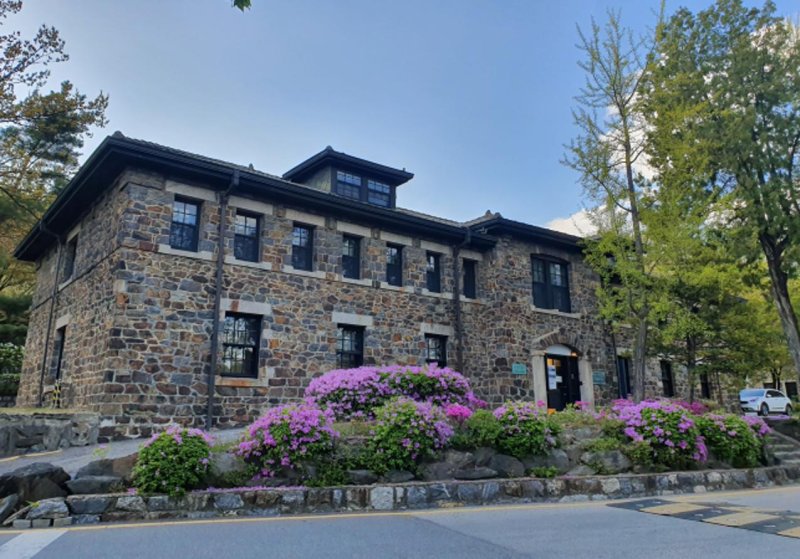
Where can one truly feel the poet's presence in Manchuria, Seoul, and Japan? His birthplace in Myeongdong Village? Doshisha University? It may differ for each person. I strongly recommend the dormitory from his Yonhi College days. Yun Dong-ju spent his first and third years in the dormitory. In his first year, he wrote 'A New Road,' and in his third year, he met his junior, Jeong Byeong-uk.
The old dormitory is now operated by Yonsei University as the Yun Dong-ju Memorial Hall. Designated as a cultural property, everything from the dogidashi floor to the stairs and dormer windows remains as it was in 1922.
Without Jeong Byeong-uk, Yun Dong-ju would not have become the poet we know. Before leaving to study in Japan, Yun compiled three handwritten poetry collections and gave one to Jeong Byeong-uk. Jeong, who was conscripted as a student soldier during the final years of Japanese rule, miraculously survived. In 1946, Jeong met Yun's younger brother Il-ju, who had come from Manchuria, and handed him Yun's handwritten poetry collection. This was the moment Yun Dong-ju was recognized as a poet.
Yun Dong-ju's poem 'A New Road' has been set to music by several composers. There are rock versions and children's songs. The song that best fits the poet's life is 'A New Road,' composed by Yoo Ji-yeon and sung by Im Baek-cheon.
Listen to Im Baek-cheon's rendition of 'A New Road' on the third floor of the dormitory where Yun Dong-ju spent his vibrant first year. The poet's yearning to live without shame under the sky resonates deeply.
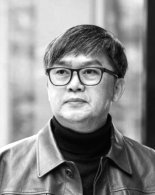
■Profile: △ English Literature, Yonsei University △ Writer and genius researcher △ Head of Genius Table △ Director, International Genius Institute △ Former Editor-in-Chief, Weekly Chosun
Seong-gwan Cho, head of Genius Table