Chuseok Marred by Discord: Surge in Divorce Triggers and Domestic Violence
- Input
- 2025-10-08 15:07:13
- Updated
- 2025-10-08 15:07:13
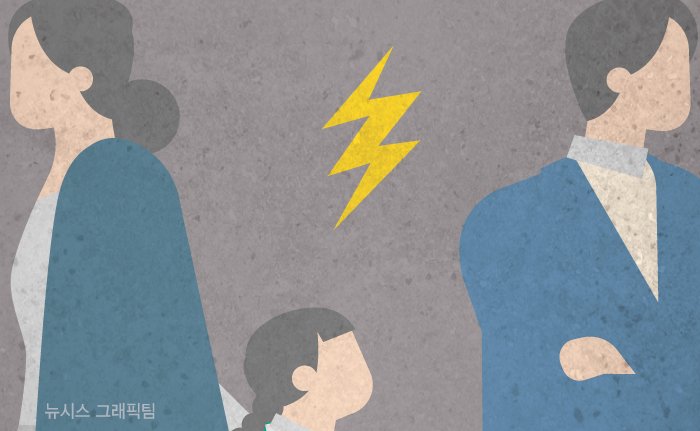
[Financial News]Ms. Park, 33, who has been married for three years, had a major argument with her husband during this Chuseok. The conflict began when her husband, who rarely helps with housework, suddenly volunteered to do the dishes at his parents’ home. This prompted harsh criticism from his father and mother, who questioned whether he helps out at home regularly. Ms. Park lamented, "I can't speak freely at my in-laws' house, and my husband is oblivious. I lost affection for him during Chuseok."According to the '2024 Marriage and Divorce Statistics' released by Statistics Korea on the 8th, over the past ten years (2014–2023), the number of divorces peaked in November (9.1%), right after Chuseok.
Experts note that this trend goes beyond simple holiday stress, indicating that accumulated marital dissatisfaction often erupts during holidays like Chuseok. In other words, the longer the conflict persists, the more holidays serve as a trigger for separation rather than a time for reconciliation.
Experts also agree that inquiries about divorce consultations surge immediately after holidays. Kim Tae-yeon, an attorney at Taeyeon Law Office, explained, "It is rare for a couple to decide on divorce after a single conflict. Usually, holidays become the final catalyst for couples whose relationships are already strained." She added, "Many seek legal advice on divorce due to a range of family issues, including inheritance disputes, child abuse, and domestic violence."
One reason for the rise in post-holiday divorce rates is the changing social status of women. Although women’s status has improved, traditional gender role expectations persist during holidays, intensifying conflicts. Heo Minsuk, a legislative researcher at the National Assembly Research Service (NARS), analyzed, "Gender role stereotypes are reinforced during holidays, making conflicts more likely to escalate." According to the '2024 Social Survey' by Statistics Korea, 68.9% of respondents believe housework should be shared equally, up 4.2 percentage points from two years ago. However, only 24.4% of husbands and 23.3% of wives reported actually sharing housework equally.
However, some argue that the issue is not limited to gender roles. Men also experience emotional strain from long drives, financial burdens, and family hierarchies. Thus, holiday stress is a social event that puts psychological pressure on both men and women. Experts advise that the core issue lies in a breakdown of communication, rather than just gender role conflicts.
Domestic violence cases also increase during holidays. According to the Korean National Police Agency (KNPA), during last year’s Chuseok holiday, the daily average number of emergency calls for domestic violence and dating violence rose by 62.3% and 30.5%, respectively.
Such reports have been rising every year. There were 4,568 cases (an average of 914 per day) over five days in 2021, 3,660 cases (915 per day) over four days in 2022, 5,623 cases (937 per day) over six days in 2023, and 5,246 cases (1,049 per day) over five days in 2024.
The increase in divorces and the surge in violence reports are indicators of deepening family conflict structures. The statistics reflect the reality that family imbalances during holidays often lead to domestic violence. Soo Jung Lee, a professor of criminal psychology at Kyonggi University, stated, "When families spend more time together, harmonious households become even closer, while those with conflicts see those issues surface more intensely."
This year’s Chuseok holiday also saw domestic violence incidents. On the 4th, a man in his 60s in Nowon-gu, Seoul, was arrested for wielding a weapon against his wife and son after they refused to visit the family’s main house during the holiday.
The police conduct special security operations every holiday season to prevent crime. From September 29 to October 12, the Chuseok holiday was designated as a 'comprehensive security period,' with authorities closely monitoring households at risk of repeat offenses, high-risk individuals, and child abuse victims. The Ministry of Gender Equality and Family (MOGEF) also operates protection and support facilities for victims of violence on a 24-hour basis during the holidays.
However, these efforts have their limitations. Because domestic violence often occurs in private homes, it is difficult to detect unless the victim reports it. Considering cases where victims refrain from reporting due to fear of retaliation, the actual number of domestic violence incidents during holidays is likely much higher. Yoon Ho Lee, a professor in the Department of Police Administration at Dongguk University, suggested, "We should not regard domestic violence as merely a private family matter. It is essential to strengthen support systems for victims and provide education on how to respond in crisis situations at home."
[email protected] Seo Ji-yoon Reporter