[fn Editorial] Export Revived by Market Diversification—Let’s Expand to Africa
- Input
- 2025-10-01 18:11:06
- Updated
- 2025-10-01 18:11:06
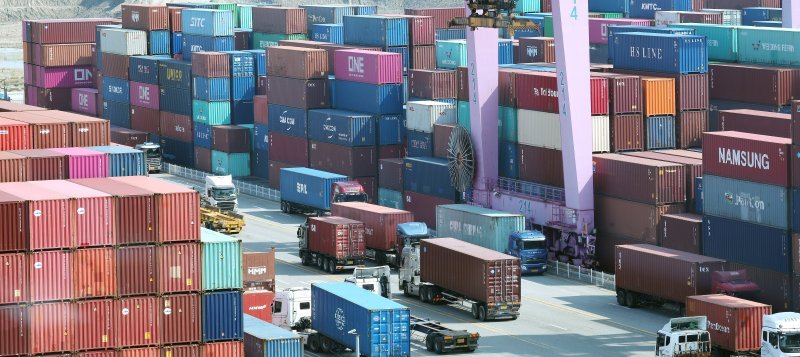
According to the 'September Export-Import Trends' released by the Ministry of Trade, Industry and Energy on the 1st, Korea’s exports last month increased by 12.7% year-on-year, driven by strong performances in semiconductors and automobiles. The export value reached $65.9 billion, the highest since March 2022 ($63.8 billion). While the increase in working days this September—compared to last year, when the Chuseok holiday fell in September—may have contributed, even excluding this factor, average daily exports stood at $2.75 billion, the second highest ever for September. We commend the tireless efforts of our companies.
Semiconductors were once again the main driver of exports, surging 22% year-on-year to set a new record. Exports of $16.6 billion accounted for 25% of the total. While traditional domestic manufacturing continues to struggle due to China’s overproduction, semiconductors are steadfastly fulfilling their role, providing some reassurance. The robust demand for artificial intelligence (AI) server semiconductors from global big tech companies is also a positive sign. Demand is strong not only for high value-added chips such as High Bandwidth Memory (HBM) and Dynamic Random Access Memory (DRAM), but also for DRAM and NAND Flash Memory across the board.
Analysts on Wall Street have suggested that memory semiconductors have entered a supercycle. This opportunity must be seized to further solidify Korea’s position as a semiconductor powerhouse. To outpace China and achieve an unassailable technological lead, the public and private sectors must work as one to find solutions. The government and political circles should take cues from bold support measures in competing countries and significantly upgrade the K-Chips Act, which has so far been largely symbolic. There is no reason for Korea to be stingy with tax incentives and subsidies. Urgent issues also include localization of materials, parts, and equipment, as well as a significant expansion of science and engineering talent.
It is also noteworthy that automobiles, hit hard by U.S. tariffs, continue to perform well in alternative markets such as the European Union (EU). While the U.S. has lowered tariffs on Japanese and EU automobiles to 15%, Korean cars still face a 25% tariff. As a result, exports to the U.S. fell by 2.3%, but sales in other markets surged.
Last month, exports to the EU jumped 54%, setting a new record. Exports to the Commonwealth of Independent States (CIS) soared 78%. Sales of both eco-friendly vehicles, such as pure electric and hybrid cars, as well as internal combustion engine vehicles, increased. Strong performances were also seen in Asian and Middle Eastern markets. Success in these new markets was not limited to automobiles but was also evident in ships, biohealth, and general machinery. These results reflect the effectiveness of companies’ specialized export strategies.
Market diversification has partially offset risks in the U.S. market, but it is not enough. If the 25% tariff on automobiles persists, the damage will accumulate over time. In preparation, efforts to develop and penetrate new markets must be intensified. There are still many untapped regions. Africa should not be underestimated. Just look at how Japanese automobiles are thriving there. Korea has much to learn.